German Shepherds are renowned for their loyalty, intelligence, and protective instincts. They thrive when given a job to do and form incredibly strong bonds with their families. However, without proper guidance and exposure to the world, these natural guarding traits can easily morph into fear-based behaviors or unwanted aggression.
Understanding how to socialize a German Shepherd correctly is the absolute foundation of raising a confident, well-adjusted canine citizen. Proper socialization teaches your dog how to process new information without feeling threatened. It sets the stage for a lifetime of safe, stress-free adventures together.
This guide covers the critical stages of a German Shepherd’s development, explaining why teaching neutrality often trumps forced friendliness. You will learn actionable steps to manage your dog’s environment, navigate fear periods, and build lasting confidence from puppyhood straight through to adulthood.
What is the best way to socialize a German Shepherd?
The best way to socialize a German Shepherd is to start between 7 and 16 weeks of age, focusing on positive exposure to over 100 different environmental stimuli. Aim for neutrality rather than forced friendliness, teaching your puppy to remain calm and focused on you around new people and animals.
The Core Concept: German Shepherd Neutrality Training
Many owners mistakenly believe that a well-socialized dog is one that actively plays with every dog they meet and accepts pets from every stranger. For high-drive breeds like German Shepherds, this expectation often backfires. Forcing interactions can cause stress, leading to a breakdown in trust between you and your dog.
Instead, the goal of German Shepherd neutrality training is to teach your dog that the world is inherently boring and safe. Neutrality means your dog can walk past a barking dog or a crying toddler and completely ignore them. They acknowledge the trigger but choose to focus on their handler instead.
This approach is highly effective in preventing leash reactivity. Reactivity is an overreaction to normal environmental stimuli, often triggered by fear, frustration, or over-arousal. By prioritizing neutrality, you teach your dog emotional regulation. You achieve this through threshold management, which involves keeping your dog at a safe distance where they can observe a trigger without feeling the need to react or defend themselves.
Socialization vs. Interaction: What’s the Difference?
| Feature | Socialization | Interaction |
| Primary Goal | Teaching the dog to be calm and neutral around stimuli. | Physical engagement with a person, animal, or object. |
| Dog’s Focus | The handler (you). | The external trigger (the other dog or person). |
| Emotional State | Relaxed, observant, and indifferent. | Excited, aroused, or potentially anxious. |
| Example | Watching children play at a park from 50 feet away. | Allowing a stranger to pet your dog on the head. |
The Golden Window: Training Across Life Stages
A German Shepherd’s brain develops rapidly. Tailoring your approach to their specific life stage ensures you are working with their psychology rather than against it.
Puppies (Under 16 Weeks)
The period between 7 and 16 weeks is the most critical socialization window in a dog’s life. During this time, a puppy’s brain is like a sponge, eagerly absorbing information about what is safe and what is dangerous. Focus heavily on positive reinforcement during this phase. Positive reinforcement involves rewarding desired behaviors with high-value treats, praise, or toys to encourage the dog to repeat those behaviors. Pair every new, slightly scary experience with a reward to build positive associations.
Adolescents (6 to 18 Months)
As your German Shepherd enters adolescence, they will likely experience canine fear periods. These are developmental phases where a previously confident dog suddenly becomes terrified of familiar objects, like a trash can or a fire hydrant. It is crucial to be patient during these phases. Do not force your dog to approach the scary object.
Instead, use desensitization. Desensitization is the process of gradually exposing the dog to a trigger at a very low, manageable level to reduce their fear response over time. This is also the stage where owners often misinterpret fear as stubbornness. It is important to note that dominance theory—the outdated idea that dogs act out to assert alpha status over humans—has been widely debunked by modern canine behaviorists. Your dog isn’t trying to dominate you; they are likely just overwhelmed.
Adults and Rescues
Socializing an older German Shepherd requires a different strategy. You cannot simply expose a fearful adult dog to a busy environment and expect them to adapt. You must rely heavily on counter-conditioning. Counter-conditioning involves changing the dog’s underlying emotional response to a trigger by pairing the presence of the trigger with something incredibly positive, like a piece of steak. If your adult dog exhibits severe behavioral issues, seeking professional help from a certified dog trainer is highly recommended.
The GSD Puppy Socialization Checklist
To help your dog build a robust catalog of safe experiences, work through this step-by-step checklist. Move at your dog’s pace and always provide an exit route if they become overwhelmed.
Step 1: Household Sounds
Begin in the safety of your own home. Introduce your puppy to the noises they will hear every day. Run the vacuum cleaner in another room, drop a metal pan on the floor, and ring the doorbell. Reward your dog immediately for remaining calm or showing mild curiosity instead of panic.
Step 2: Different Surfaces
Confidence is built from the ground up. Encourage your German Shepherd to walk across a variety of textures. Guide them over wet grass, slippery tile floors, wooden decks, and gravel driveways. You can even lay down a plastic tarp in the yard and scatter treats on it to make the unfamiliar texture rewarding.
Step 3: New People
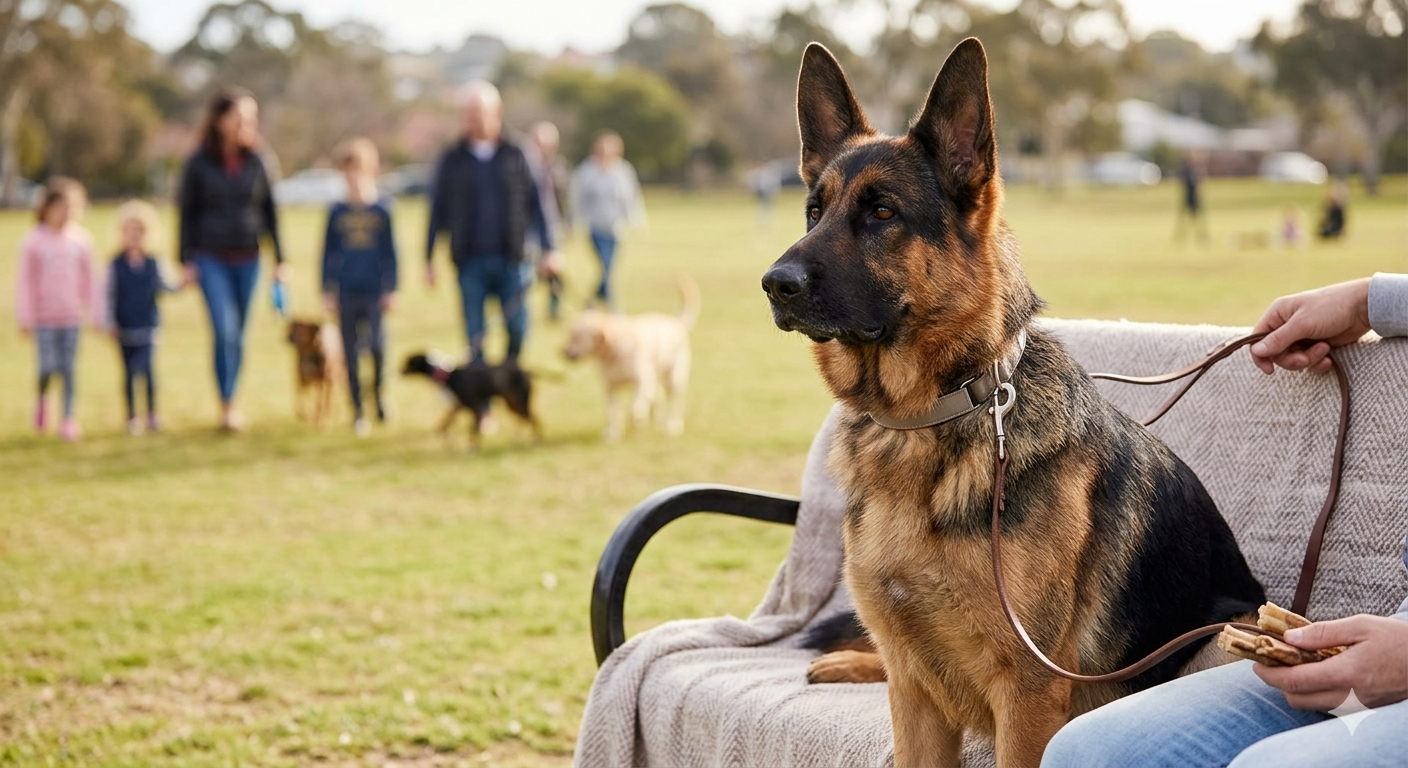
Expose your dog to humans of all shapes, sizes, and movement patterns. This includes running children, men with deep voices, people wearing large hats or sunglasses, and individuals in uniforms. Remember the rule of neutrality: your dog does not need to be touched by these people. Simply watching them from a park bench while receiving treats is perfect socialization.
Step 4: Distant Dogs
Overcoming leash reactivity starts with proper exposure to other animals. Find a neutral environment, like the outer perimeter of a large park, and let your dog observe other dogs walking by at a distance. Reward your German Shepherd every time they look at the other dog and then look back at you.
Frequently Asked Questions
Is it ever too late to socialize a German Shepherd?
It is never too late to improve a dog’s behavior, but socializing an older dog is fundamentally different than socializing a puppy. With adults, you are often engaging in behavior modification rather than primary socialization. It requires significantly more time, patience, and controlled setups to help an older dog unlearn established fears.
Why is my German Shepherd friendly at home but aggressive on a leash?
This is a classic case of barrier frustration or leash reactivity. At home, your dog has the freedom to move away from things that make them uncomfortable. On a leash, that choice is removed. The leash restricts their movement, which builds tension. When they see a trigger, that trapped feeling quickly escalates into barking or lunging to make the scary thing go away.
Should I take my GSD puppy to a dog park for socialization?
No. Dog parks are highly unpredictable environments filled with unknown dogs of varying temperaments. A single negative encounter with an aggressive dog can cause lifelong trauma for a young puppy. Instead, opt for controlled environments like structured puppy classes or organized pack walks where all dogs are managed by responsible owners.
Building a Lifelong Bond Through Proper Guidance
Socializing your German Shepherd is not a task you check off a list in a single weekend. It is an ongoing commitment to showing your dog how to safely navigate human society. By focusing on neutrality, respecting their developmental stages, and advocating for their personal space, you empower them to make good choices.