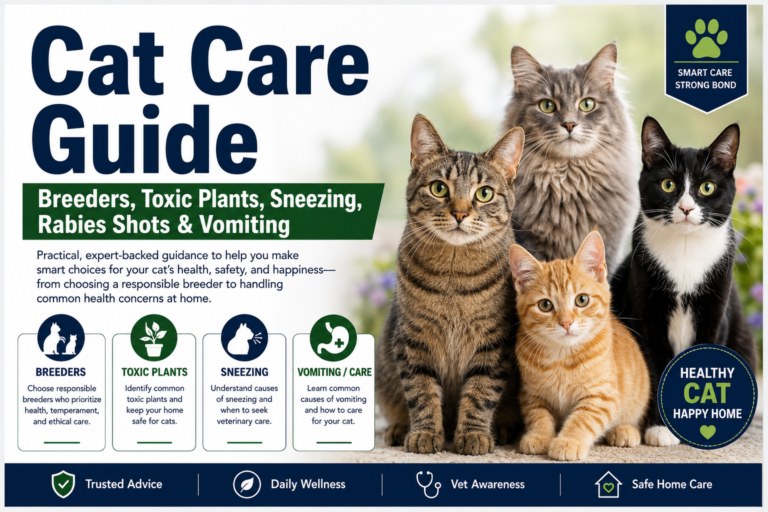
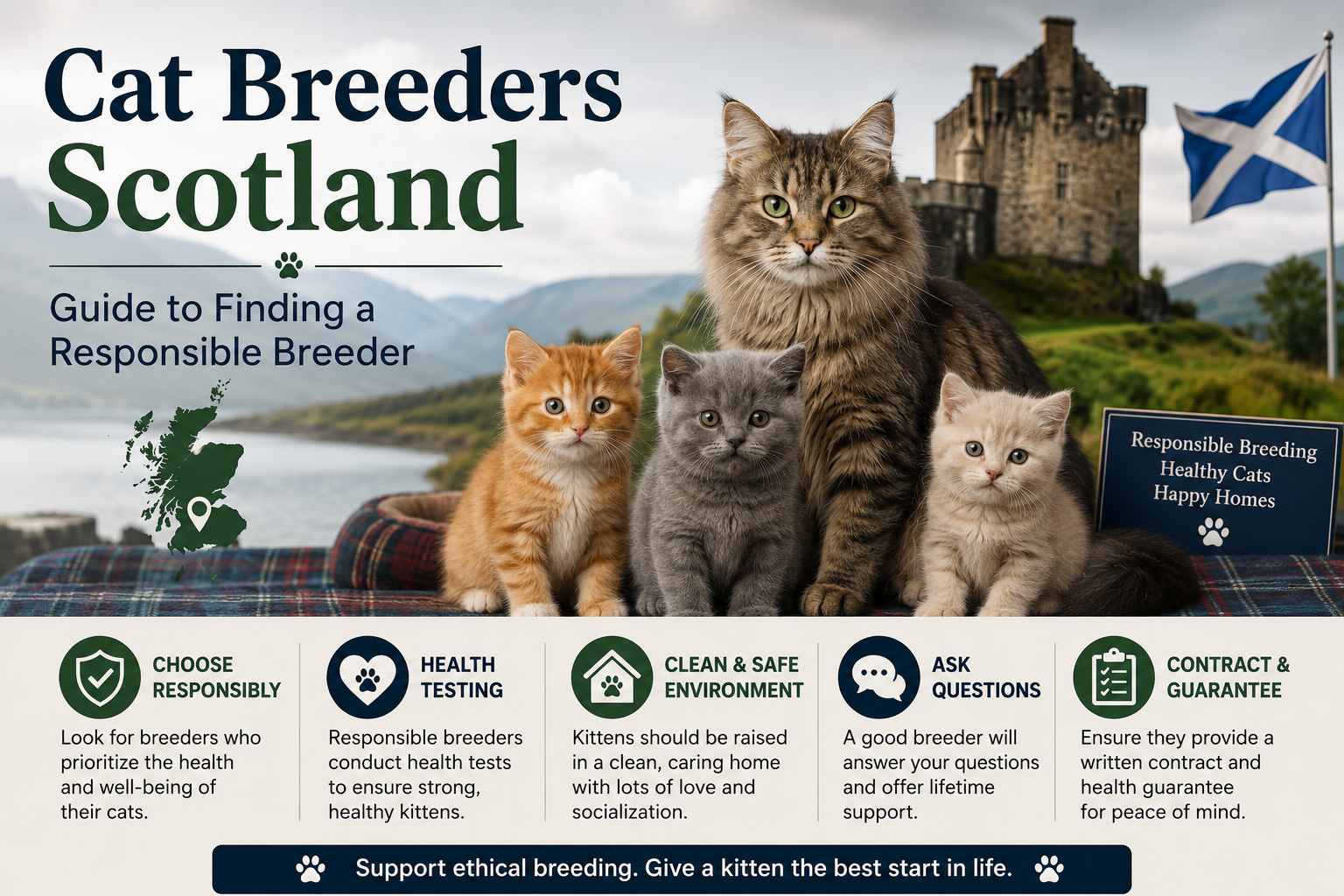
Searching for cat breeders Scotland can bring up many websites, social media pages and kitten adverts. The difficult part is not finding a seller. The difficult part is choosing a responsible breeder who puts the health and welfare of cats before quick sales.
A good breeder should be open about the kitten parents living conditions, health testing registration and aftercare. You should be able to meet the kitten with its mother and see where the litter has been raised. You should also receive clear paperwork before taking the kitten home.
This guide explains how to find a responsible cat breeder in Scotland and how to avoid sellers who may place kittens at risk.
Important Information
Breeder listings licence details kitten availability and legal requirements can change. Always verify current information with the breeder, the relevant cat registry and the local council before paying a deposit.
How to Find Cat Breeders in Scotland
Start with recognised cat organisations rather than random classified adverts. A breeder appearing on a registry or breed club list is not an automatic guarantee of quality. It does give you a stronger starting point for checking identity registration and breeding standards.
Use the GCCF Breeder Scheme
The Governing Council of the Cat Fancy provides a breeder scheme and an interactive map for people looking for pedigree kittens. GCCF states that breeders in its scheme have committed to its code of ethics.
Use the official GCCF Breeder Scheme to search by breed and location. Contact more than one breeder and compare how they answer questions about health testing socialisation and kitten care.
Contact Recognised Breed Clubs
Breed clubs can help you learn which health tests are recommended for a particular breed. They may also provide breeder contacts and explain the normal temperament grooming needs and inherited health risks of the breed.
Ask the club whether the breeder is currently active and whether the litter can be registered with the claimed organisation.
Speak With Local Veterinary Practices
A veterinary practice cannot always recommend an individual breeder. However a vet can explain breed related health concerns and tell you which certificates or screening results should be requested.
Consider Rescue and Rehoming
A pedigree kitten is not the only option. Scottish rescue organisations often have kittens adult cats and sometimes pedigree cats needing homes.
Adoption may be a better choice for families who are flexible about breed or age. Visit the Cats Protection adoption service or a recognised Scottish animal rescue organisation.
What Makes a Responsible Cat Breeder
A responsible breeder plans each litter carefully and does not breed only because kittens can be sold. The breeder should understand genetics health testing pregnancy kitten development socialisation and lifetime care.
The Breeder Welcomes Questions
A good breeder should be willing to explain why the litter was planned and how the parents were selected. They should answer questions without pressure or irritation.
The breeder should also ask you questions about your home work schedule other pets children and experience with cats. Careful breeders want to know where their kittens will live.
The Breeder Allows a Home Visit
You should normally see the kitten in the place where it was raised. The environment should be clean safe and suitable for cats.
Be cautious when a seller offers to meet in a car park service station or other public location. A seller who refuses every home visit may be hiding poor conditions or acting as a dealer rather than the breeder.
You Can See the Kitten With Its Mother
Ask to see the kitten interacting with its mother and littermates. The mother should appear comfortable with the environment and should show a natural relationship with the kittens.
A seller may give excuses when the mother is absent. Some explanations can be genuine but repeated excuses are a serious warning sign.
The Cats Look Healthy and Comfortable
The mother and kittens should have clear eyes clean noses clean coats and normal movement. The kittens should be alert curious and appropriately social.
Do not ignore sneezing discharge diarrhoea extreme thinness swollen bellies breathing difficulty or obvious fear. Ask for veterinary guidance before proceeding when anything appears unusual.
The Breeder Provides Ongoing Support
A responsible breeder remains available after the kitten goes home. They should provide feeding information routine guidance and help with registration documents.
Many responsible breeders also require the owner to contact them if the cat ever needs a new home.
Questions to Ask Cat Breeders in Scotland
Prepare your questions before contacting a breeder. Written answers can make it easier to compare several breeders.
Is the Breeder Registered
Ask which organisation registers the breeder and the kittens. Request the breeder prefix and verify it directly with the registry.
Registration alone does not prove that every breeding decision is responsible. It should be considered together with health testing welfare conditions and breeder behaviour.
Does the Breeder Need a Council Licence
Scotland has licensing rules for certain activities involving animals. Cat breeding activity may require a licence from the local authority depending on the scale and circumstances of the breeding operation.
Ask whether the breeder holds a current council licence when one is required. Request the licence number and confirm it with the relevant Scottish council rather than relying only on a photograph.
Which Health Tests Were Completed
Required tests vary by breed. Ask for copies of the actual results rather than accepting a verbal statement that the parents are healthy.
Possible checks may include DNA testing heart screening kidney screening blood group testing and veterinary examinations. A breed club or veterinarian can explain which tests are relevant.
Our guide to common health issues in Persian cats explains why breed specific health research is important before choosing a kitten.
How Old Will the Kitten Be
The GCCF breeder scheme checklist says a kitten should be at least 13 weeks old before leaving. It also advises buyers to check vaccination registration and whether the kitten has been seen with its mother and siblings.
A breeder offering a very young kitten for immediate collection should be treated with caution.
What Vaccinations and Veterinary Care Are Included
Ask for the vaccination record and the name of the veterinary practice. Confirm which treatments the kitten has received and when the next appointment is due.
Also ask about worming flea control microchipping neutering and insurance. Requirements can differ by breeder and registry so all promises should be written into the agreement.
What Food Is the Kitten Eating
A sudden food change can cause digestive upset. Ask the breeder for the brand formula portion size and feeding schedule used for the litter.
Keep the kitten on the familiar food at first unless a veterinarian advises otherwise. Change diets gradually after the kitten has settled.
Visit the Serlig Pet Nutrition guide for more information about feeding and balanced diets.
Can I Read the Sales Agreement Before Paying
Ask for the full contract before sending money. Read the health guarantee return conditions breeding restrictions registration terms and responsibilities of both parties.
Do not rely on promises made only through a phone call or social media message.
Documents You Should Receive
Paperwork helps confirm what the breeder has promised. The exact documents depend on the breed registry and agreement.
Registration Documents
For a pedigree kitten ask for the official registration certificate and pedigree information. Verify that names dates breed details and registration numbers match the kitten.
Vaccination Record
The vaccination record should show dates product information and veterinary details. Contact the veterinary practice if you need to confirm the record.
Health Test Results
Ask for copies of relevant test results for both parents. Check the registered names and identification details shown on each certificate.
Written Sales Agreement
The agreement should identify the breeder buyer and kitten. It should explain payment registration health information neutering terms and what happens if the owner can no longer keep the cat.
Feeding and Care Instructions
The breeder should provide information about food litter grooming routines and the kittens normal daily schedule.
Our Serlig Cat Care hub provides additional help with feeding grooming health and settling a cat into a new home.
Warning Signs of a Poor Breeder or Scam
Do not let excitement pressure you into ignoring warning signs. Walking away can protect both your money and animal welfare.
The Seller Demands Immediate Payment
Be cautious when a seller says several buyers are waiting and demands a deposit within minutes. Responsible breeders may have waiting lists but they should still allow time for questions and checks.
The Price Is Unusually Low
A very low price can be used to attract quick payments. It may also mean that registration health testing vaccinations and proper care have not been provided.
The Seller Has Many Breeds Available
A seller advertising many unrelated breeds and many litters at the same time may be operating as a dealer or obtaining kittens from multiple sources.
The Breeder Refuses Video or Home Visits
Distance can make an initial video call useful. Ask the seller to show the kitten mother and environment live rather than sending only edited pictures.
A video does not replace an in person visit before collection.
The Mother Is Never Available
Repeated excuses about the mother can indicate that the kitten was bred elsewhere or separated too early.
Health Records Cannot Be Verified
Do not accept blurred certificates incomplete screenshots or documents with different names. Verify records with the issuing registry laboratory or veterinary practice.
The Seller Offers Delivery Without Meeting You
Delivery to an unknown buyer without checks can suggest that the seller cares more about payment than the kitten home.
The Kitten Is Unwell
Do not buy a sick kitten because you feel pressured to rescue it from the seller. Paying may support further poor breeding. Contact an animal welfare organisation or local authority when you believe cats are at risk.
Health Testing by Cat Breed
Health testing should match the known risks of the breed. One general veterinary check does not replace breed specific screening.
British Shorthair Breeders
Ask about heart health and any DNA tests recommended by the breed club. Discuss weight management and family history because British Shorthairs can gain excess weight.
Maine Coon Breeders
Ask about heart screening and genetic tests relevant to Maine Coons. Request proof for both parents and ask how often clinical screening is repeated.
Ragdoll Breeders
Ask about breed relevant heart testing and the health history of the breeding lines. A DNA result should be interpreted with other veterinary information.
Persian and Exotic Breeders
Ask about kidney screening breathing eye health dental health and the degree of facial flattening. Choose breeders who prioritise normal breathing and welfare rather than extreme appearance.
Bengal Breeders
Ask about heart screening eye tests and relevant DNA testing. Also discuss temperament activity needs and whether the home can meet the needs of an energetic cat.
A Note About Scottish Fold Cats
The term cat breeders Scotland does not mean Scottish Fold breeders. Scottish Fold is a breed name and not a general term for cats bred in Scotland.
The folded ear trait is linked to abnormal cartilage and bone development. This can cause pain and serious welfare problems. GCCF does not recognise the Scottish Fold breed.
Scottish licensing rules state that a cat should not be kept for breeding when its genotype can reasonably be expected to harm its health or welfare or the health or welfare of its offspring.
Choose health and normal function over unusual physical features. Speak with a veterinarian before considering any breed associated with inherited structural problems.
How Much Do Pedigree Kittens Cost in Scotland
Prices vary by breed breeder location demand health testing and what is included. A high price does not prove quality and a low price does not prove value.
Ask for a written breakdown of registration vaccinations veterinary checks insurance and other included services. Budget for lifetime costs rather than only the purchase price.
Ongoing Costs to Consider
- Complete and balanced cat food
- Litter and cleaning supplies
- Veterinary examinations
- Vaccinations and parasite control
- Neutering when required
- Insurance or emergency savings
- Carrier bed scratching posts and toys
- Grooming needs for long haired breeds
The right kitten is one whose health temperament and care needs fit your household. Price should never be the only deciding factor.
Visiting a Cat Breeder
Observe the Environment
The area should be clean and free from strong waste smells. Cats should have clean water suitable food comfortable resting places litter trays and opportunities to play.
Watch the Kittens Behaviour
Healthy well socialised kittens are usually curious and responsive after they feel safe. Extreme fear dullness weakness or poor coordination needs further investigation.
Check the Mother
The mother should be present and should appear healthy. Ask how many litters she has had and how much recovery time she receives between litters.
Do Not Collect on the First Visit
Take time to review documents and verify information. A responsible decision should not depend on emotional pressure during one visit.
Preparing Before Bringing the Kitten Home
Register With a Veterinarian
Choose a veterinary practice before collection and arrange a new kitten health examination soon after arrival.
Create a Safe Room
Prepare a quiet room with food water a litter tray a bed hiding places toys and a scratching surface. Keep food and water away from the litter tray.
Use the Same Food and Litter
Familiar food and litter can reduce stress during the first days. Make any changes gradually after the kitten settles.
Watch for Signs of Illness
Contact a veterinarian if the kitten stops eating develops repeated vomiting has diarrhoea struggles to breathe or becomes unusually weak.
Read our guide about why cats vomit for common causes and urgent warning signs.
Frequently Asked Questions
Where Can I Find Registered Cat Breeders in Scotland
Start with the GCCF Breeder Scheme map and recognised breed clubs. Verify every breeder directly because membership and kitten availability can change.
Are All Registered Breeders Responsible
No single registration proves that every litter is responsibly bred. Check health testing living conditions paperwork socialisation and the breeders willingness to answer questions.
Should I Pay a Deposit Before Visiting
Do not send money until you have verified the breeder identity address registration and kitten details. Read the deposit terms in writing and use a traceable payment method.
What Age Should a Pedigree Kitten Leave the Breeder
The GCCF breeder scheme checklist says the kitten should be at least 13 weeks old. Ask for vaccination and registration records before collection.
Should I See the Kitten With Its Mother
Yes. Seeing the kitten with its mother and littermates helps confirm where it was raised and allows you to observe health behaviour and social development.
Do Cat Breeders in Scotland Need a Licence
Some cat breeding activities require a licence from the relevant local council. The requirement depends on the activity and current Scottish regulations. Ask the breeder for licence details when applicable and verify them with the council.
Is a Scottish Fold the Same as a Cat From Scotland
No. Scottish Fold is a specific breed linked to an inherited cartilage problem. A cat bred in Scotland can belong to any recognised breed or can be a non pedigree cat.