When your dog has an upset stomach, knowing what to feed a dog with diarrhea can help them recover comfortably at home. For mild cases, a simple, easy-to-digest bland diet, most often boiled chicken and white rice, gives the gut a chance to rest and helps firm up stool. This vet-informed guide walks you through the first steps, the classic bland diet, other gentle foods, how much to feed and for how long, what to avoid, and the warning signs that mean it is time to call your veterinarian.
Quick answer: The best food for a dog with mild diarrhea is a bland diet of boiled, skinless chicken breast and plain white rice in small, frequent meals for 3–5 days, then a gradual return to regular food. Plain canned pumpkin, sweet potato, and probiotics can also help. Always keep fresh water available, and see a vet if diarrhea lasts more than 24–48 hours or comes with other symptoms.
First Steps When Your Dog Has Diarrhea
Before changing the diet, focus on two things.
Keep water available. Diarrhea causes fluid loss, so dehydration is the main risk. Always give your dog free access to fresh, clean water.
Consider a short rest for the gut — with caution. In otherwise healthy adult dogs, some veterinarians suggest briefly withholding food for around 12–24 hours to let the digestive tract settle. However, this is not safe for puppies, senior dogs, small breeds, or dogs with medical conditions, who can become dangerously low on blood sugar or dehydrated. When in doubt, skip fasting and call your vet.
What to Feed a Dog With Diarrhea: The Bland Diet
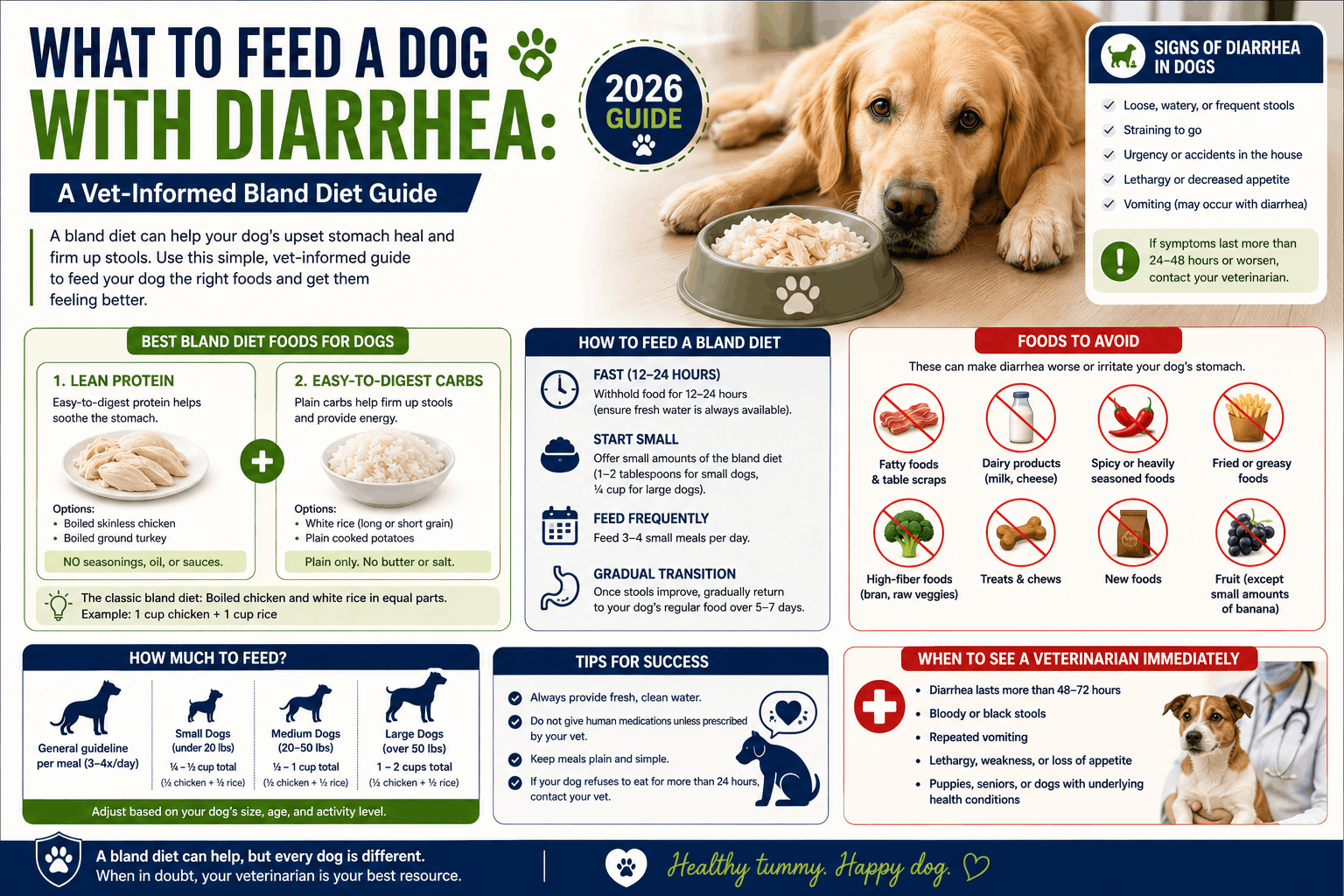
The most widely recommended food for a dog with diarrhea is a simple bland diet. As veterinarians explain, a bland diet uses neutral-tasting, easy-to-digest foods that reduce intestinal irritation and help firm up stool.
The classic combination is boiled chicken and white rice:
- Boiled, skinless, boneless chicken breast — a lean protein that is gentle on the stomach. Boiling removes as much fat as possible, which matters because fat can worsen diarrhea. Use no oil, butter, salt, or seasoning.
- Plain cooked white rice — an easy-to-digest carbohydrate. White rice is preferred over brown rice here because it is lower in fiber and easier on an irritated gut.
A common starting ratio is roughly one part chicken to one or two parts rice, though exact ratios vary by source, so confirm with your vet for your dog. Boiled lean ground beef (with the fat drained off) can be substituted for the chicken.
Keep in mind: chicken and rice is helpful short-term, but it is not complete or balanced nutrition, so it should never become your dog’s long-term main meal.
Other Safe Foods for a Dog With Diarrhea
Beyond chicken and rice, several gentle foods can help settle the stomach:
- Plain canned pumpkin (not pumpkin pie filling): High in fiber, it can help firm up loose stool. A common rule of thumb is about 1 teaspoon per 10 pounds of body weight, once or twice daily — confirm the amount with your vet.
- Cooked sweet potato: Another high-fiber option that works much like pumpkin. Serve plain and mashed.
- Plain boiled potato: Bland and easy to digest.
- Plain cooked oatmeal: Gentle and high in soluble fiber. Avoid any flavored varieties.
- Plain scrambled egg: Cooked without butter, oil, or seasoning, it offers gentle protein in small portions.
- Low-fat cottage cheese: A mild source of protein for dogs that tolerate dairy.
- Probiotics: Support healthy gut bacteria and can be given alongside a bland diet.
For chronic or severe cases, your vet may recommend a prescription gastrointestinal diet, often made with hydrolyzed proteins that are especially easy to digest.
How Much to Feed and for How Long
Portion control matters as much as the food itself.
Start small and frequent. Offer small amounts every few hours rather than one large meal, which is easier on an inflamed gut. A commonly cited starting point is about 2 tablespoons of the bland mix per 10 pounds of body weight, given every 2–3 hours on the first day. It is better to offer too little than too much.
Follow a gradual timeline:
- Days 1–3: Feed small, frequent bland meals as diarrhea improves.
- Days 3–5: Slowly increase portion size and space meals further apart.
- Days 5–7: Begin blending in your dog’s regular food, increasing it a little each day.
- By about day 7: Most dogs are back on their normal diet and feeling well.
If diarrhea returns when you reintroduce regular food, slow the transition down and consult your vet.
Foods to Avoid When Your Dog Has Diarrhea
While the gut is recovering, steer clear of:
- Fatty, greasy, or fried foods, which can worsen diarrhea
- Seasoned or salted foods, table scraps, and rich leftovers
- Dairy (for dogs that are sensitive to it)
- Pumpkin pie filling — it contains added sugar and spices that are not safe
- Any foods toxic to dogs, such as onions, garlic, grapes, raisins, and anything containing xylitol
Stick to plain, simple ingredients until your dog is fully recovered.
When to See the Veterinarian
Mild diarrhea often clears up with a bland diet and rest, but some situations need professional care. Contact your vet promptly if your dog has:
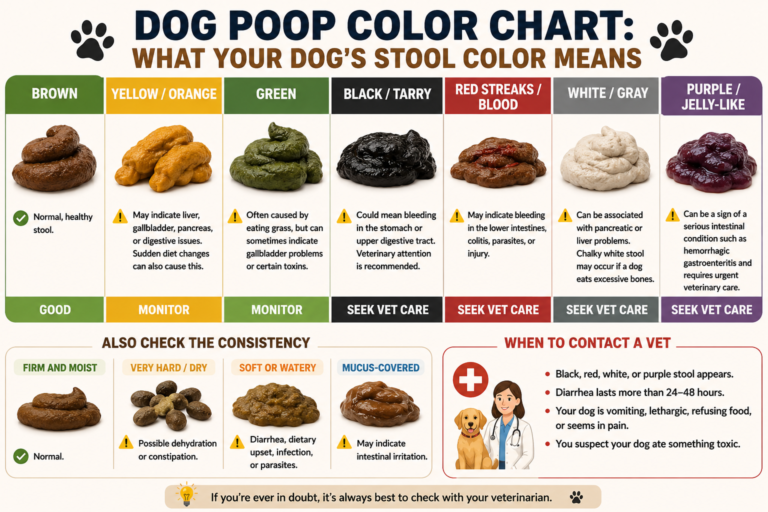
- Diarrhea lasting more than 24–48 hours or not improving
- Blood in the stool (bright red or black and tarry)
- Vomiting alongside the diarrhea
- Lethargy, weakness, or fever
- Loss of appetite or signs of dehydration
- Signs of pain or a bloated abdomen
Puppies, senior dogs, and dogs with existing health conditions should be seen sooner rather than later, because they can decline quickly. Persistent diarrhea often points to an underlying cause that needs veterinary diagnosis.
Frequently Asked Questions
What is the best food for a dog with diarrhea? A bland diet of boiled, skinless chicken breast and plain white rice is the most recommended option. Plain canned pumpkin, sweet potato, and probiotics can also help firm up stool and soothe the gut.
How much chicken and rice should I feed my dog with diarrhea? Start with small, frequent meals — roughly 2 tablespoons of the bland mix per 10 pounds of body weight every 2–3 hours on the first day — then gradually increase portions as your dog improves. Confirm amounts with your vet.
Can I give my dog pumpkin for diarrhea? Yes. Plain canned pumpkin (never pie filling) is high in fiber and can firm up loose stool. A general guide is about 1 teaspoon per 10 pounds of body weight, once or twice daily.
Should I fast my dog when it has diarrhea? A short fast of 12–24 hours may help otherwise healthy adult dogs, but never fast puppies, seniors, small breeds, or dogs with health conditions without veterinary guidance. Always keep water available.
Is scrambled egg good for a dog with diarrhea? Yes, in small portions. Plain scrambled egg cooked without butter, oil, or seasoning is gentle on the stomach and provides easy protein.
How long does dog diarrhea last? Mild diarrhea often improves within 24–48 hours on a bland diet. If it lasts longer, returns, or comes with other symptoms, see your veterinarian.
When should I worry about my dog’s diarrhea? Seek veterinary care if there is blood in the stool, vomiting, lethargy, fever, or if the diarrhea lasts more than a day or two — especially in puppies, seniors, or dogs with health issues.
Final Thoughts
Knowing what to feed a dog with diarrhea makes a stressful situation much easier to handle. For mild cases, a bland diet of boiled chicken and white rice — supported by fresh water, small frequent meals, and helpers like plain pumpkin or probiotics — usually settles things within a day or two. Keep the food simple, transition back to regular meals gradually, and never fast a puppy, senior, or sick dog on your own. Most importantly, watch for the warning signs, and call your veterinarian whenever the diarrhea is severe, bloody, persistent, or paired with other symptoms.
About the Author
The Serlig Pet Care Team creates researched, plain-language pet care and nutrition guides for everyday owners. Our content is written from hands-on pet-care experience and cross-checked against established veterinary sources.