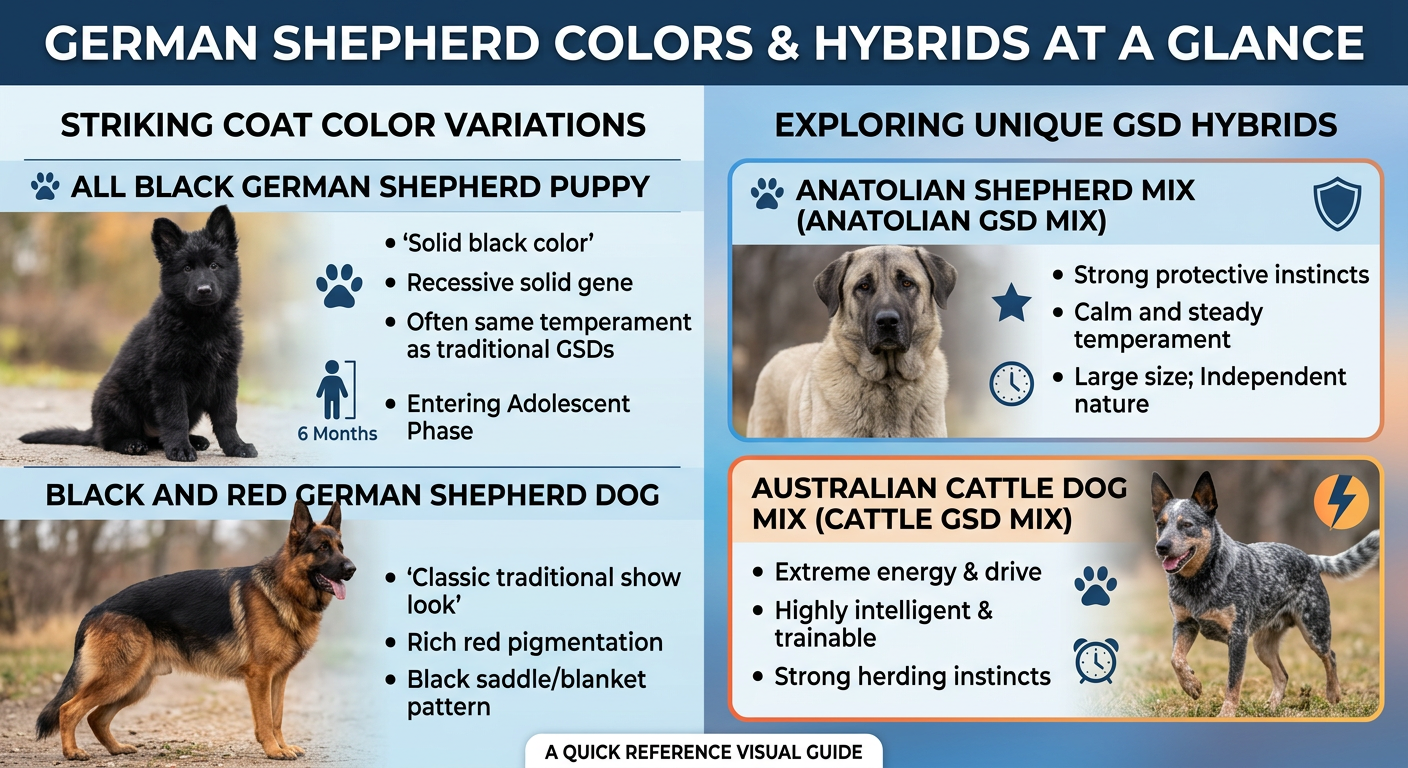
German Shepherds are one of the world’s most loved dog breeds, prized for their intelligence, loyalty, and striking looks. But there is far more variety within the breed than most people realize, from rare solid-black coats to powerful crossbreeds. This guide walks you through the main German Shepherd coat colors, the most popular mixes, and what to expect as your puppy grows, especially around the important six-month mark.
Note: This article is for general education only and is not a substitute for veterinary advice. For health, nutrition, or behavior concerns specific to your dog, always speak with your veterinarian.
German Shepherd Coat Colors
A German Shepherd’s coat color comes down to genetics, and the breed carries more variety than the classic look most people picture. If you want a deeper breakdown, see our guide to the different types of German Shepherds.
The All-Black German Shepherd
All-black German Shepherds are rare and genuinely stunning, with their solid coat caused by a recessive gene, meaning both parents must carry it to produce a black puppy.
- Coat types: Can be straight or plush (a fuller, slightly longer coat).
- Availability: Less common, and more often found in working lines than show lines.
- Temperament: Loyal, confident, and protective, the same core GSD personality regardless of color.
A common myth is that black GSDs are more aggressive. Color does not change temperament, training, socialization, and genetics do.
The Classic Black and Red German Shepherd
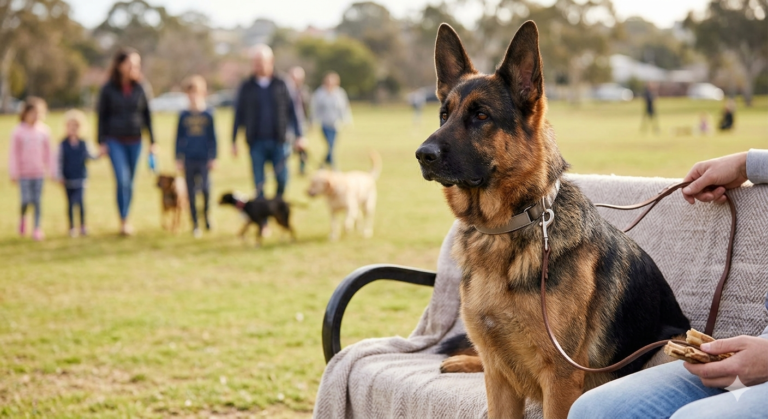
The black-and-red coat is most commonly associated with West German show lines, and it is what many people picture as the “show dog” German Shepherd. You can read more about how show and working lines differ in our guide to working-line and DDR German Shepherds.
- Patterns: Typically a saddle or blanket pattern across the back.
- Pigmentation: Rich red tones paired with deep black markings.
- Popularity: Highly sought after for their show-quality appearance.
Other Common German Shepherd Colors
- Black and tan: The most common and recognizable coloring.
- Sable: Banded hairs giving a wolf-like, blended look, common in working lines.
- Bicolor: Mostly black with small tan markings on the legs and face.
- White: Caused by a separate recessive gene. White GSDs are healthy but are not eligible for the standard show ring.
German Shepherd Coat Types
Color is only half the story, coat type matters too. German Shepherds generally fall into:
- Short/medium double coat: The breed standard, weather-resistant and moderate-shedding.
- Long-haired (long stock coat): Longer, softer fur that needs more grooming.
Whatever the type, German Shepherds are heavy seasonal shedders, so regular brushing is essential. For a full breakdown of coats, health, and cost, see our German Shepherd coat types guide.
What to Expect from a 6-Month-Old German Shepherd
At six months, a German Shepherd is in a critical adolescent stage, no longer a small puppy, but not yet a mature adult. Here is what is usually happening.
Physical Growth
- Rapid growth spurts, often looking lanky or “all legs” for a while.
- Adult teeth have usually replaced the puppy teeth by now.
- A six-month-old is typically around 50–70% of its adult weight, with plenty of filling out still to come.
Behavioral Changes
- Testing boundaries, much like a rebellious teenager.
- Higher energy, curiosity, and sometimes selective hearing during training.
- This is a key window for shaping good habits, so consistency matters.
Training and Socialization Focus
This is the ideal age to reinforce the basics:
- Recall, so your dog reliably comes when called.
- Leash walking, to manage their growing size and strength.
- Socialization, to prevent fear or reactivity later in life.
Start with our guide to basic German Shepherd training commands, and pair it with steady socialization tips for a friendly, confident dog.
Exercise and Nutrition at Six Months
A six-month-old GSD has lots of energy, but its growth plates are still open (they typically close around 18–24 months). That means you should avoid high-impact, repetitive exercise like long runs, jumping, or stair sprints, which can stress developing joints. Instead, aim for several shorter sessions of walks, gentle play, and training throughout the day rather than one exhausting workout.
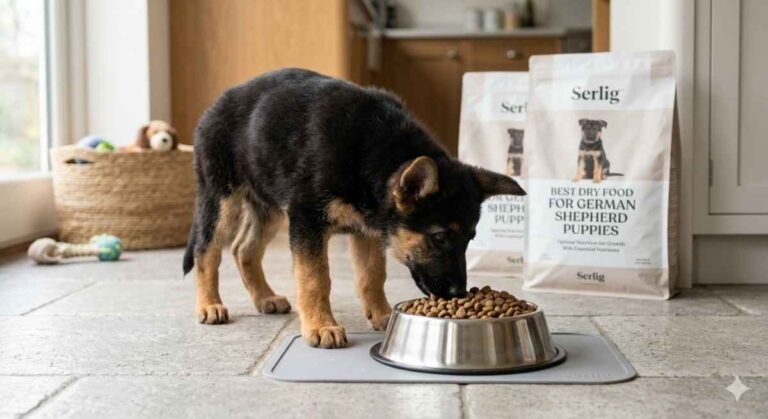
Nutrition is just as important during this stage. A large-breed puppy formula supports steady, controlled growth, too-rapid growth can actually raise the risk of joint problems. See our pick of the best dry food for German Shepherd puppies for guidance, and confirm portions with your vet.
Popular German Shepherd Mixes (Hybrids)
Crossing a German Shepherd with another breed can blend the best (and most demanding) traits of both. Here are some of the most notable mixes.
Anatolian Shepherd Mix
This hybrid combines the guardian instincts of the Anatolian Shepherd with the intelligence of a GSD.
- Size: Large and muscular, often exceeding 100 lbs.
- Temperament: Independent, protective, and calm.
- Best suited for: Families with large properties or livestock to watch over.
Australian Cattle Dog Mix
A powerhouse of energy and intelligence, blending two hard-working herding breeds.
- Energy levels: Extremely high, needs daily, intense exercise.
- Temperament: Loyal, alert, and highly trainable.
- Best suited for: Active people who can provide both physical exercise and mental stimulation.
German Shepherd Husky Mix
Another popular cross, often energetic, vocal, and striking in appearance. It needs plenty of activity and consistent training. We cover this one in detail in our White German Shepherd Husky mix care guide.
Mixes can inherit traits from either parent in unpredictable ways, so meeting the parents (where possible) and understanding both breeds is the best way to know what you are signing up for.
Caring for Any German Shepherd
No matter the color or mix, German Shepherds share core care needs:
- Nutrition: A complete, high-quality, age-appropriate diet.
- Exercise: Daily activity matched to age and joint development.
- Grooming: Regular brushing, especially during heavy shedding seasons.
- Health: The breed is prone to hip and elbow dysplasia, so responsible breeding and regular vet checks matter.
- Mental stimulation: These are working dogs, boredom often leads to destructive behavior.
Frequently Asked Questions
Does an all-black German Shepherd puppy change color as it grows?
No. A true all-black German Shepherd keeps its solid black coat for life. (Black-and-tan puppies, by contrast, often lighten or shift in pattern as they mature.)
How much exercise does a 6-month-old German Shepherd need?
Enough to burn energy without overloading growing joints, several short sessions of walking, play, and training across the day. Avoid long runs, repetitive jumping, and forced exercise until the growth plates close, usually around 18–24 months. Your vet can advise based on your individual dog.
Are German Shepherd mixes good family dogs?
They can be, but it depends on the mix and the family. High-energy crosses like the Australian Cattle Dog mix suit active households that can meet their exercise and training needs. Always match the dog’s energy level to your lifestyle.
Is coat color linked to temperament?
No. A German Shepherd’s behavior is shaped by genetics (lines), training, and socialization, not by coat color.
Final Thoughts
From the rare all-black coat to powerful Anatolian and Cattle Dog crosses, German Shepherds offer remarkable variety, but underneath it all, they share the same need for good nutrition, steady training, early socialization, and attentive care. Whether you are raising a six-month-old pup or choosing a mix that fits your lifestyle, focus on the fundamentals and lean on your veterinarian for guidance, and you will set your dog up for a healthy, happy life. needs.