The German Shepherd is one of the most intelligent, loyal, and versatile dog breeds in the world, equally at home as a family companion, a working dog, or a devoted guardian. But before you bring one home, it helps to understand the breed properly: the different coat types, show versus working lines, the health issues to watch for, and the real cost of ownership. This complete guide walks you through all of it.
Note: This article is for general education only and is not a substitute for veterinary advice. For health, diet, or behavior concerns specific to your dog, always consult your veterinarian.
German Shepherd Key Facts
- Coat types: Short (stock) coat, plush coat, and long coat.
- Average cost: $800 to $3,000+, depending on breeder and bloodline.
- Main health concerns: Hip dysplasia, elbow dysplasia, and degenerative myelopathy (DM).
- Show lines vs working lines: Show lines are bred mainly for appearance (often a sloped back), while working lines are known for a straighter back and high drive.
- Lifespan: Roughly 9–13 years with good care.
A Deep Dive into German Shepherd Coat Types
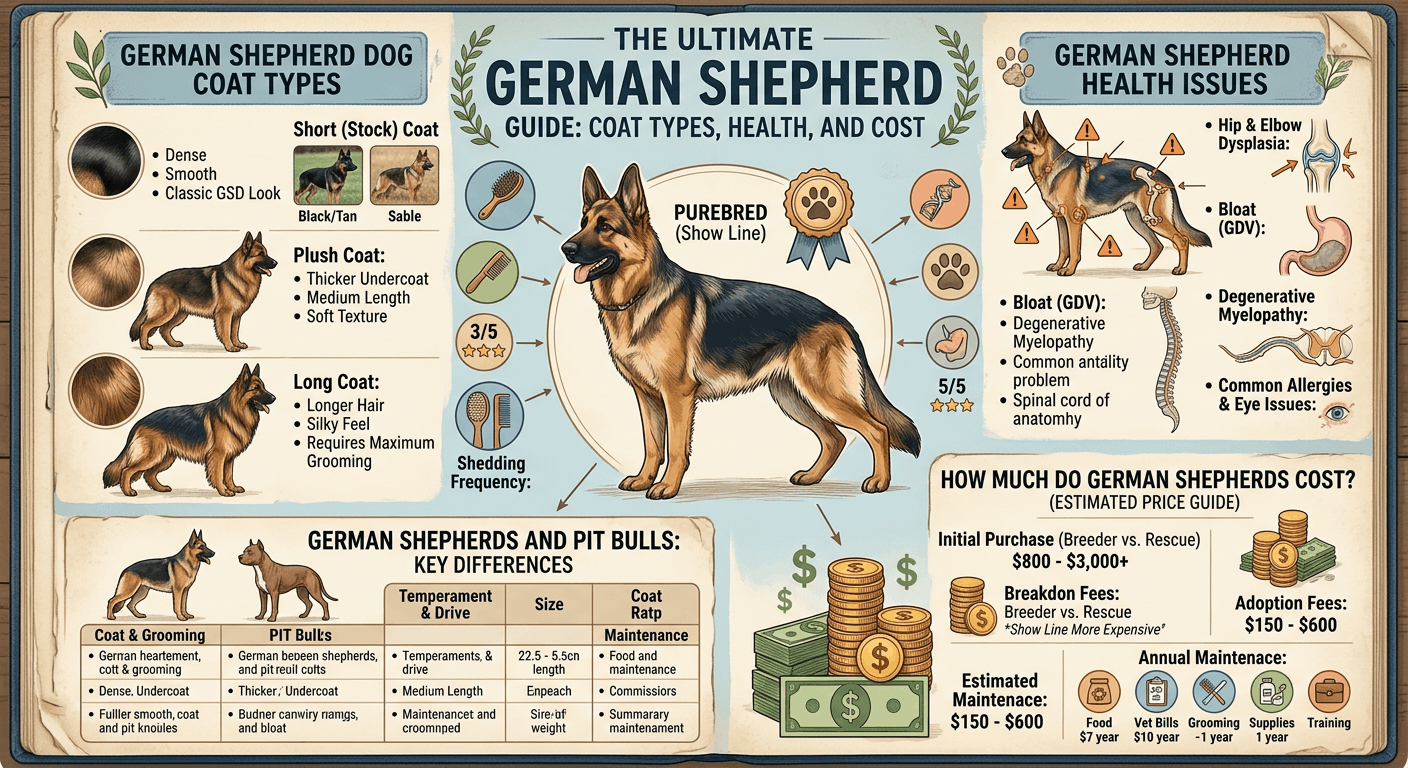
German Shepherds carry a double coat in most cases, and the length and texture vary by type.
The Short Coat (Stock Coat)
- Appearance: The traditional German Shepherd look, with a dense, weather-resistant undercoat beneath a short outer coat.
- Shedding: Moderate to heavy, year-round.
- Grooming: Weekly brushing is usually enough to manage loose hair.
The Plush Coat
- Appearance: Slightly longer than the stock coat, with a thicker, fuller texture.
- Shedding: Heavy, especially during seasonal “coat blow” periods.
- Grooming: Brushing two to three times a week.
The Long Coat
- Appearance: Long and flowing. Some long-coated dogs lack the dense undercoat of the other types.
- Shedding: Heavy, particularly in warmer months.
- Grooming: Daily brushing to prevent matting and tangles.
Coat color is a whole topic of its own, from the classic black-and-tan to rare solid black and sable. For the full breakdown, see our guide to German Shepherd colors and patterns. For a wider look at the breed’s variations, our overview of the different types of German Shepherds is a good starting point.
Show Lines vs Working Lines
One of the biggest differences within the breed is bloodline, and it affects looks, temperament, and energy.
American Show Line
- Traits: Sloped back, lighter build, bred for the conformation ring.
- Temperament: Generally calm and family-friendly, with less working drive.
West German Show Line
- Traits: Rich red-and-black coloring, balanced build, moderate angulation.
- Temperament: Protective and loyal, suited to both family life and light working roles.
Working Lines
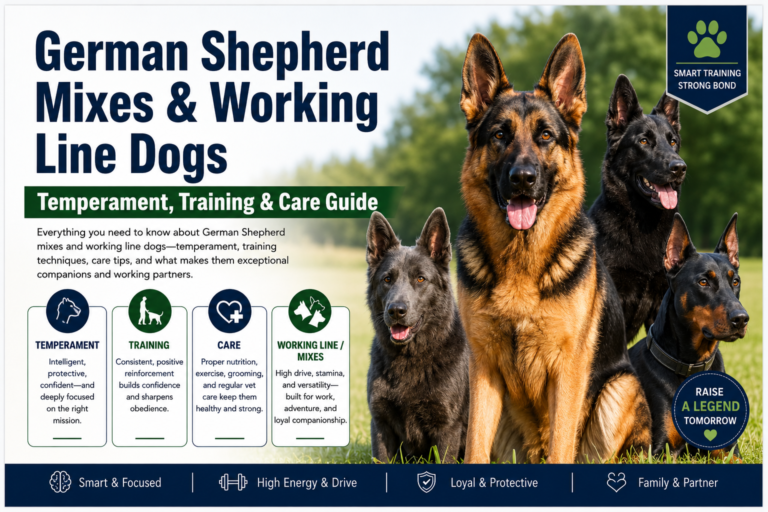
Working lines (including West German working, Czech, and the East German DDR lines) are bred for drive, stamina, and a straighter back. They are fantastic for sport, protection, and active homes, but they need serious mental and physical work. We compare these in detail in our guide to standard vs East German DDR German Shepherds.
Temperament, Training & Socialization
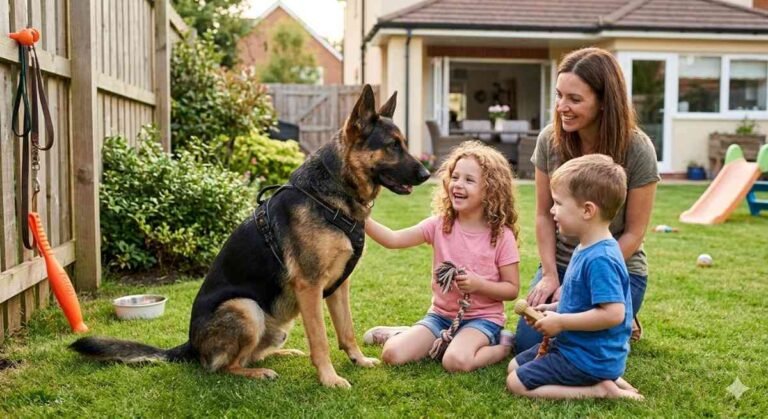
German Shepherds are highly intelligent and form strong bonds with their families. They are naturally protective and can be aloof with strangers, which makes early training and socialization essential, not optional.
- Training: Start young and keep it consistent. Begin with our guide to basic German Shepherd training commands.
- Socialization: Expose your puppy to new people, dogs, and environments early to build a confident, friendly adult, see our socialization tips for German Shepherds.
- Mental stimulation: These are working dogs. Without jobs, puzzles, or training, boredom often turns into destructive behavior.
Common German Shepherd Health Issues
Like all purebred dogs, German Shepherds have some breed-specific health risks. Knowing them helps you prevent or catch them early.
- Hip and elbow dysplasia: Genetic joint conditions. Prevention: keep your dog at a healthy weight, avoid over-exercising puppies, and buy from breeders who health-test their dogs.
- Bloat (Gastric Dilatation-Volvulus): A sudden, life-threatening stomach emergency. Prevention: feed smaller meals, slow down fast eaters, and avoid hard exercise right after eating. Seek emergency vet care immediately if you suspect bloat.
- Degenerative Myelopathy (DM): A progressive spinal cord disease seen in older GSDs. Prevention: there is no cure, but genetic testing before breeding helps reduce it.
- Exocrine Pancreatic Insufficiency (EPI): A digestive condition the breed is prone to, causing weight loss despite a good appetite. It is manageable with veterinary care.
Regular check-ups, a balanced diet, and sensible exercise are your best everyday defenses.
Feeding & Nutrition
A German Shepherd’s diet should match its life stage, size, and activity level. Puppies in particular need a large-breed formula that supports slow, steady growth, growing too fast can worsen joint problems. For specific picks, see our guide to the best dry food for German Shepherd puppies, and confirm portions with your vet.
German Shepherd vs Pit Bull: A Quick Comparison
| Feature | German Shepherd | Pit Bull Terrier |
|---|---|---|
| Coat & grooming | Double coat, heavy shedding | Single coat, low shedding |
| Temperament | Loyal, protective, aloof with strangers | Affectionate, energetic, people-loving |
| Training needs | Needs mental stimulation and tasks | Needs consistent obedience training |
| Typical size | Larger, longer-bodied | Stocky, muscular, usually smaller |
Both are loyal, trainable dogs. The right choice comes down to your lifestyle, activity level, and grooming tolerance.
Popular German Shepherd Mixes
Crossbreeds can blend GSD intelligence with another breed’s traits. One of the most popular is the energetic, striking German Shepherd Husky mix, which we cover in our White German Shepherd Husky mix care guide. As with any mix, understanding both parent breeds is the best way to predict temperament and needs.
How Much Do German Shepherds Cost?
Costs vary widely by source, location, and bloodline. As a general guide:
Buying from a Reputable Breeder
- Show-line German Shepherd: $2,000 to $3,000+
- Pet-quality German Shepherd: $800 to $1,500
Adoption
- Rescue or shelter: $150 to $500, depending on the organization
Annual Ownership Costs
- Food: $500 to $1,000 per year
- Routine vet care: $300 to $700 per year
- Grooming: $100 to $300 per year
Remember to budget for the unexpected too, emergencies and conditions like dysplasia can add significant costs, which is why many owners consider pet insurance.
Is a German Shepherd Right for You?
A German Shepherd thrives with an owner who can offer time, training, exercise, and companionship. They are not a “leave them in the yard” breed, they want to be part of the family and to work. If you can meet those needs, few breeds are more rewarding.
Frequently Asked Questions
Which German Shepherd coat type sheds the most?
The long coat tends to shed the most because of its length, though all German Shepherds are heavy seasonal shedders. Regular brushing is the best way to manage it.
Are German Shepherds more expensive to maintain than Pit Bulls?
Generally yes. Their larger size, heavier shedding (more grooming), bigger appetite, and breed-specific health risks usually make them more expensive to care for over a lifetime.
How can I prevent health issues in my German Shepherd?
Buy from health-testing breeders, keep your dog at a healthy weight, feed an age-appropriate diet, avoid over-exercising puppies, and keep up with regular vet check-ups.
What is the difference between show lines and working lines?
Show lines are bred mainly for appearance and tend to be calmer, while working lines are bred for drive and stamina, with a straighter back and higher energy needs.
Final Thoughts
The German Shepherd is a remarkable breed, intelligent, loyal, and endlessly capable, but it rewards owners who do their homework. Understand the coat type and line you are getting, stay ahead of the breed’s health risks, feed and train thoughtfully, and budget realistically. Do that, and you will have one of the most devoted companions a dog owner could ask for.