German Shepherds are intelligent, loyal, and hard-working, and when you cross them with another breed, you can get some of the most capable and striking dogs around. German Shepherd mixes are increasingly popular, but each one inherits a different blend of traits, energy levels, and care needs. This guide covers the most popular German Shepherd crossbreeds, what to expect from each, and how to choose and care for one.
Note: This article is for general education only and is not a substitute for veterinary advice. Always consult your veterinarian for guidance specific to your dog.
Before You Choose a German Shepherd Mix
A crossbreed can inherit traits from either parent in unpredictable ways, two puppies from the same litter can turn out quite differently. Before committing, keep these in mind:
- Meet the parents where possible, so you can see temperament and size.
- Ask about health testing. German Shepherds and many large breeds are prone to hip and elbow dysplasia, so responsible breeders test their dogs.
- Match energy to your lifestyle. Many GSD mixes are high-drive working dogs that need real exercise and mental work.
- Avoid puppy mills. Prioritize reputable breeders or rescue organizations that focus on health and temperament.
Popular German Shepherd Mixes
1. German Shepherd Husky Mix (Gerberian Shepsky)
A striking, high-energy cross between a German Shepherd and a Siberian Husky.
- Temperament: Loyal, intelligent, often vocal and playful.
- Energy: Very high, needs lots of daily exercise and stimulation.
- Grooming: Heavy shedder with a thick double coat.
- Best for: Active owners who enjoy outdoor activity. We cover this one in depth in our White German Shepherd Husky mix care guide.
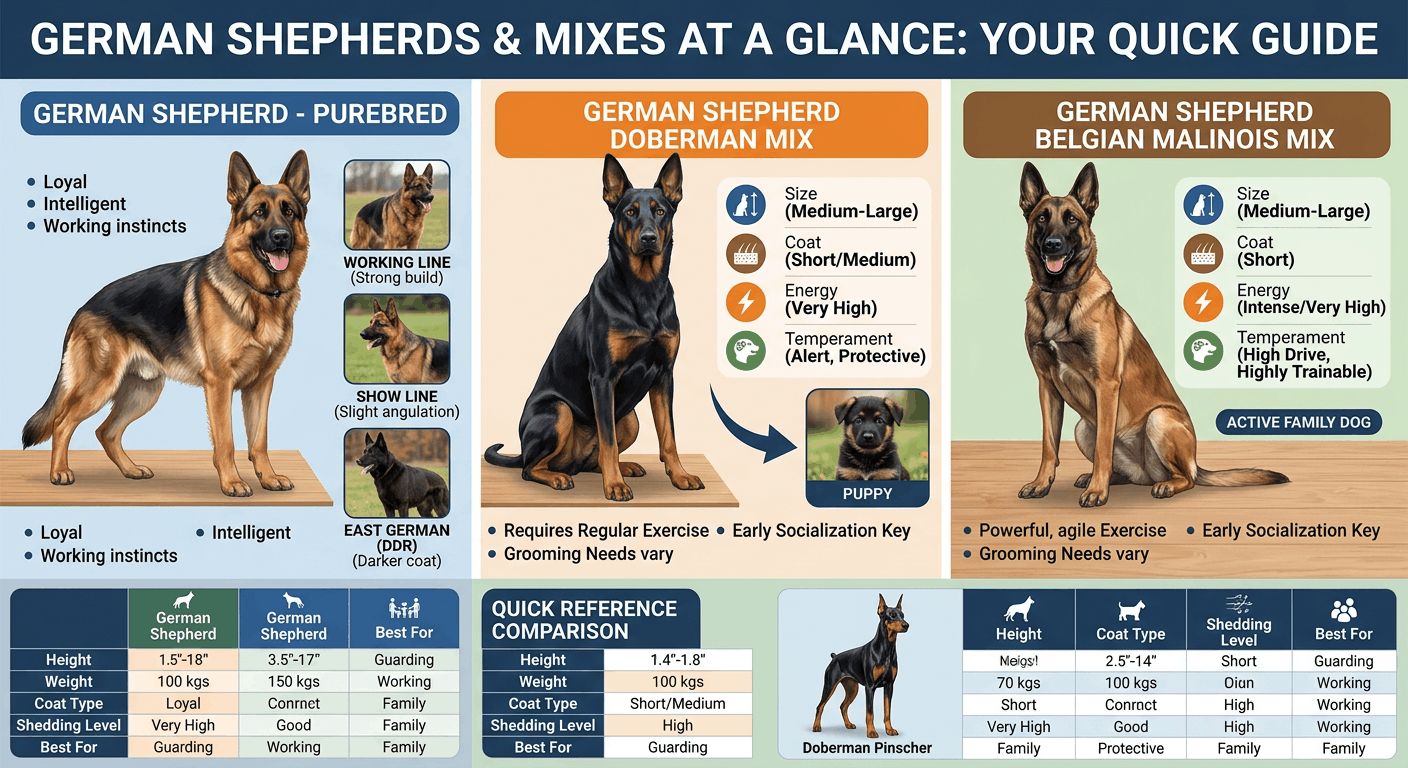
2. German Shepherd Doberman Mix
This mix combines the intelligence of a GSD with the protective instincts of a Doberman.
- Temperament: Loyal, alert, and highly trainable.
- Training: Early socialization and consistent training are essential.
- Exercise: At least 60–90 minutes of daily activity, including mental stimulation.
- Best for: Experienced owners who want a protective, devoted companion.
3. German Shepherd Belgian Malinois Mix
A high-drive working hybrid built for serious activity.
- Temperament: Extremely energetic, intelligent, and focused.
- Training: Needs an experienced handler and a real “job” to do.
- Best for: Working roles or very active, dog-savvy owners, not first-time owners.
4. German Shepherd Anatolian Shepherd Mix
A large guardian cross blending the GSD’s intelligence with the Anatolian’s protective nature.
- Size: Large and muscular, often exceeding 100 lbs.
- Temperament: Independent, calm, and naturally protective.
- Best for: Homes with large properties or livestock to guard.
5. German Shepherd Australian Cattle Dog Mix
A powerhouse blend of two herding breeds.
- Energy: Extremely high, needs intense daily exercise.
- Temperament: Loyal, alert, and highly trainable.
- Best for: Very active individuals or families who can provide constant physical and mental engagement.
6. German Shepherd Golden Retriever Mix (Golden Shepherd)
A friendlier, family-oriented cross.
- Temperament: Affectionate, loyal, and good with families.
- Grooming: Regular brushing; both parent breeds shed.
- Best for: Families wanting a loving, trainable companion with moderate-to-high energy.
7. German Shepherd Labrador Mix (Sheprador)
One of the most popular GSD crosses, blending two beloved family breeds.
- Temperament: Friendly, energetic, and eager to please.
- Training: Highly trainable and people-focused.
- Best for: Active families looking for an outgoing, sociable dog.
8. German Shepherd Rottweiler Mix (Shepweiler)
A large, powerful, and protective cross.
- Temperament: Confident, loyal, and devoted to family.
- Training: Needs firm, consistent training and thorough socialization from a young age.
- Best for: Experienced owners who can provide structure and leadership.
German Shepherd vs Doberman: Which Makes the Better Guard Dog?
Since many people choose a GSD mix for protection, here is how the two most popular guarding breeds compare.
| Feature | German Shepherd | Doberman Pinscher |
|---|---|---|
| Energy level | Very high | High to very high |
| Grooming needs | High (heavy shedding) | Low (short coat) |
| Trainability | Extremely high | High |
| Best suited for | Families, police, utility | Personal protection, guarding |
Both are excellent guardians. The German Shepherd is more versatile and family-friendly, while the Doberman tends to be more territorial, which is exactly why their mix can be such a capable protection dog in the right hands.
How to Choose the Right German Shepherd Mix
- Be honest about your activity level. Most GSD mixes need substantial daily exercise.
- Consider your experience. High-drive crosses (Malinois, Cattle Dog) suit experienced owners; gentler crosses (Golden, Lab) are friendlier for first-timers.
- Think about space and grooming. Large guardian mixes need room; double-coated mixes need regular brushing.
- Plan for training. Every GSD mix benefits from early, consistent training and socialization.
Caring for a German Shepherd Mix
Whatever the cross, these fundamentals apply:
- Training: Start early. Our guide to basic German Shepherd training commands is a great foundation.
- Socialization: Expose your dog to new people, dogs, and places early, see our socialization tips for German Shepherds.
- Nutrition: Feed a quality, age-appropriate diet, large-breed puppies need controlled growth. See the best dry food for German Shepherd puppies.
- Health: Many large breeds share risks like hip and elbow dysplasia, so keep up with vet checks. For the full breed health picture, see our ultimate German Shepherd guide.
- Exercise: Match it to age and energy, and avoid over-exercising puppies whose joints are still developing.
Frequently Asked Questions
What is the most popular German Shepherd mix?
The German Shepherd Husky mix (Gerberian Shepsky) and the German Shepherd Lab mix (Sheprador) are among the most popular, thanks to their looks, intelligence, and family-friendly nature.
Are German Shepherd mixes good family dogs?
Many are, but it depends on the cross. Friendly mixes like the Golden Shepherd or Sheprador suit families well, while high-drive mixes like the Malinois cross are better for experienced, very active owners.
Is a German Shepherd Belgian Malinois mix good for beginners?
No. This is a very high-energy, high-drive mix that needs an experienced handler, plenty of exercise, and consistent training, not ideal for first-time owners.
Do German Shepherd mixes shed a lot?
Most do. German Shepherds are heavy shedders, and many mixes inherit a thick double coat. Regular brushing helps keep shedding under control.
Are mixed-breed dogs healthier than purebreds?
Mixes can benefit from more genetic diversity, but they can still inherit health problems from either parent, including joint issues common in large breeds. Health-tested parents are still the best predictor of a healthy puppy.
Final Thoughts
German Shepherd mixes range from gentle family companions to intense working dogs, so the “best” one depends entirely on your lifestyle and experience. Whichever cross you choose, the essentials stay the same: early training, steady socialization, good nutrition, enough exercise, and regular veterinary care. Get those right, and a German Shepherd mix can be one of the most loyal and capable dogs you will ever own.