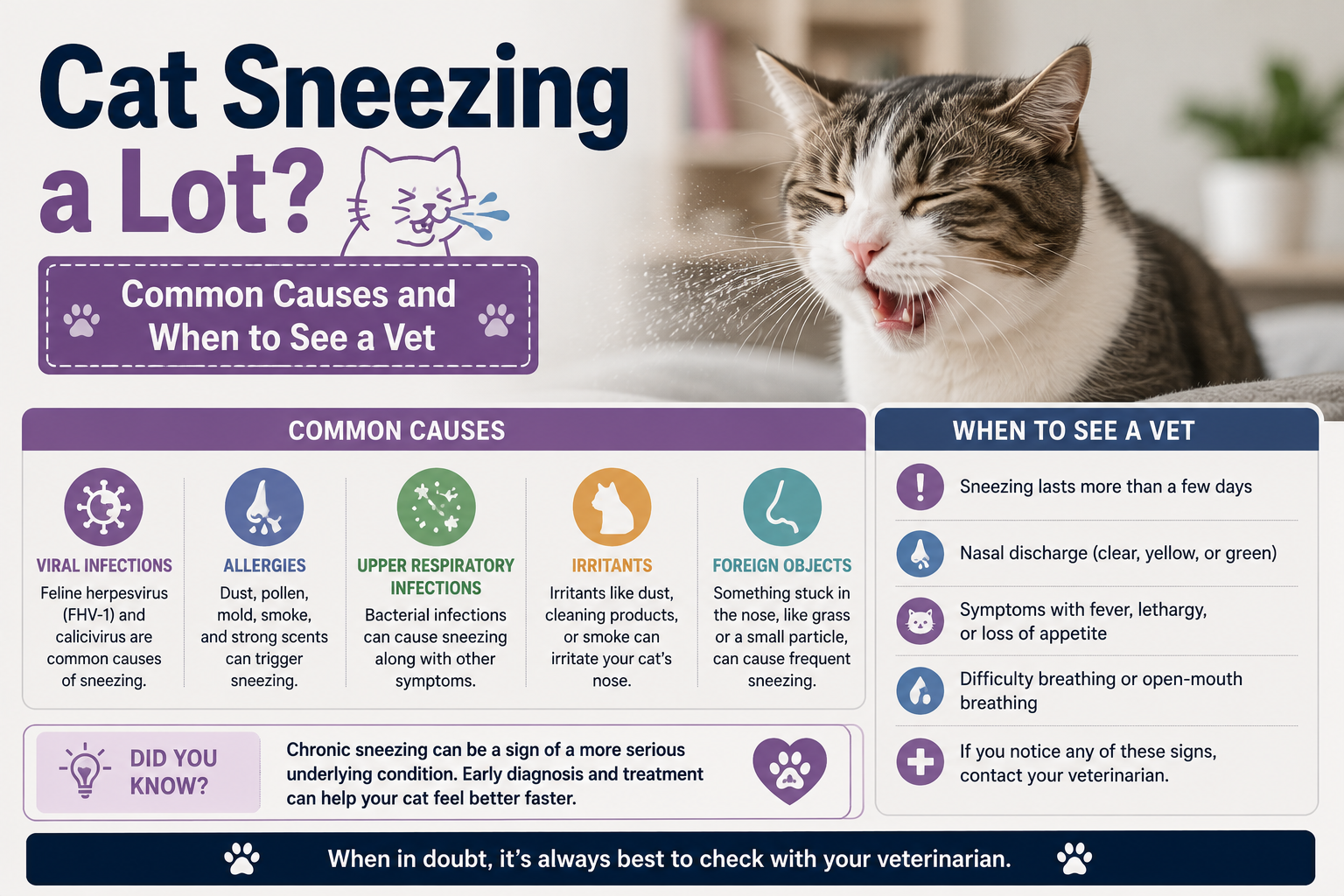
A cat sneezing once or twice may simply have dust or another mild irritant inside the nose. A cat sneezing a lot may have an infection inflammation dental disease or another problem that needs veterinary attention.
Frequent sneezing becomes more concerning when it continues for several days or appears with eye discharge nasal discharge poor appetite tiredness coughing mouth ulcers or difficult breathing.
This guide explains why cats sneeze often. It also covers warning signs safe home care and what a veterinarian may do to identify the cause.
Important Information
This article provides general educational information. It does not replace an examination diagnosis or treatment from a veterinarian. Contact a veterinary professional when your cat is unwell or when you are unsure about the severity of the symptoms.
Is It Normal for a Cat to Sneeze
An occasional sneeze can be normal. Sneezing helps remove dust hair and other irritants from the nasal passages.
Frequent sneezing is different. Cats Protection advises contacting a veterinarian when regular sneezing lasts for more than a couple of days or when the discharge becomes thick green brown yellow or bloody.
Record how often your cat sneezes and whether the episodes happen after eating after using the litter tray or after exposure to cleaning products. This information can help the veterinarian identify possible triggers.
Why Is My Cat Sneezing a Lot
Many conditions can cause repeated sneezing. Some are mild and temporary. Others need testing and specific treatment.
Dust and Airborne Irritants
Dust smoke perfume aerosol sprays scented candles strong cleaning products and dusty litter can irritate the nasal passages.
Sneezing caused by an irritant may begin soon after exposure and improve when the irritant is removed. Open windows when safe and move the cat to an area with clean air.
Do not spray fragrance deodoriser disinfectant or insect product close to your cat. Some household products can irritate the eyes lungs and skin as well as the nose.
Cat Flu and Upper Respiratory Infection
Upper respiratory infection is one of the most common reasons for repeated sneezing. Viruses such as feline herpesvirus and feline calicivirus are important causes of cat flu.
Cornell Feline Health Center explains that upper respiratory infections can cause sneezing coughing eye discharge nasal discharge conjunctivitis mouth ulcers lethargy and reduced appetite.
These infections spread more easily where many cats live close together. Examples include shelters breeding catteries boarding facilities and multi cat homes.
Vaccination reduces the risk of severe illness but may not prevent every infection. Cats that recover from feline herpesvirus can carry the virus for life and may develop recurring symptoms during stress or illness.
Feline Herpesvirus
Feline herpesvirus can cause sneezing fever eye inflammation and corneal disease. Some cats show repeated flare ups after moving home boarding surgery illness or other stressful events.
Supportive care and veterinary treatment depend on the severity of the disease. A veterinarian may recommend eye medication antiviral treatment or other care when appropriate.
If your cat recently stayed away from home read our guide about choosing safe cat boarding. A good facility should ask about vaccinations and should separate cats from different households.
Feline Calicivirus
Feline calicivirus can cause sneezing nasal discharge eye discharge fever poor appetite and painful ulcers inside the mouth.
Some cats develop limping or lower respiratory disease. Severe cases can become dangerous and need urgent treatment.
A cat with mouth pain may approach food and then walk away. It may drool or chew slowly. Contact a veterinarian when you notice these signs.
Bacterial Infection
Bacteria can sometimes contribute to respiratory illness. They may cause a primary infection or develop after a viral infection has damaged the normal protective tissues.
Antibiotics do not treat viruses. A veterinarian decides whether antibiotics are appropriate based on the examination symptoms and test results.
Never give leftover antibiotics or medication prescribed for another animal.
Something Stuck Inside the Nose
A blade of grass seed small piece of plant material or another object can enter the nasal passage. This may cause sudden forceful sneezing pawing at the face retching or discharge from one nostril.
Do not place tweezers or cotton swabs inside the nose. Do not try to make the cat sneeze. This can push the object deeper or damage delicate tissue.
A veterinarian may need sedation and specialised equipment to examine the nasal passage and remove the object safely.
Dental Disease
The roots of some upper teeth are close to the nasal structures. Severe dental disease or infection may contribute to nasal discharge and sneezing.
Other signs can include bad breath drooling difficulty chewing dropping food facial swelling or reduced appetite.
Dental disease does not always cause obvious pain at home. A veterinary oral examination and dental imaging may be required.
Nasal Polyps
A polyp is a non cancerous growth that can develop in the nasal area or behind the throat. Polyps may cause sneezing noisy breathing swallowing problems nasal discharge or head shaking.
Young cats can develop inflammatory polyps. Treatment may involve imaging and removal by a veterinarian.
Nasal Tumours
Growths inside the nasal cavity can cause persistent sneezing discharge facial changes noisy breathing or blood from the nose.
Nasal tumours are not the most common cause of sneezing. They become a greater concern when symptoms are ongoing and mainly affect one side or when blood is present.
Veterinary testing may include imaging tissue sampling or examination of the nasal passages.
Fungal Infection
Fungal disease can affect the nose and surrounding tissues. Risk differs by location and the type of fungus present in the environment.
Possible signs include ongoing sneezing nasal swelling discharge skin changes or poor general health.
A veterinarian may need laboratory testing imaging and tissue samples to confirm fungal disease.
Allergies
Allergies are a less common cause of sneezing in cats than they are in people. Cats with allergies more often show skin or breathing problems.
Do not assume repeated sneezing is an allergy without veterinary assessment. Infection dental disease foreign material and nasal growths may look similar.
Trauma to the Nose or Face
A fall collision fight or other injury can lead to swelling bleeding and sneezing.
Seek urgent advice when the cat has facial swelling active bleeding pain breathing changes or a known injury.
What Other Symptoms Should I Watch For
Sneezing alone provides limited information. Check the eyes nose mouth breathing appetite energy and behaviour.
Eye Discharge
Clear watery eyes may occur with irritation or infection. Thick discharge redness swelling squinting cloudiness or an eye held closed needs veterinary attention.
Eye problems can become painful and may threaten vision. Do not use human eye drops unless a veterinarian tells you to use a specific product.
Nasal Discharge
Clear discharge may occur early in an infection or after irritation. Yellow green brown thick or bloody discharge is more concerning.
Discharge from one nostril may suggest a foreign object dental problem or local growth. Discharge from both nostrils may occur with infection or widespread inflammation.
Loss of Appetite
A congested cat may not smell food properly. This can reduce interest in eating. Mouth ulcers fever pain and nausea can also affect appetite.
Cats should not go for prolonged periods without food. Contact a veterinarian promptly when your cat stops eating or eats much less than normal.
For general feeding information visit the Serlig Pet Nutrition guide.
Lethargy and Fever
A cat that sleeps more than usual hides or avoids interaction may feel unwell. Fever and infection can reduce energy.
Do not try to measure temperature through the mouth. Ask your veterinarian for guidance if temperature assessment is needed.
Mouth Ulcers and Drooling
Calicivirus and other conditions can cause painful mouth ulcers. Affected cats may drool refuse food or cry while eating.
Mouth pain and reduced eating need prompt veterinary care.
Coughing or Difficult Breathing
Sneezing comes from the upper airway. Coughing may involve the lower airway or lungs.
Open mouth breathing pronounced abdominal effort blue grey or very pale gums and collapse are emergencies. Take the cat to an emergency veterinary service immediately.
When Cat Sneezing Needs Emergency Care
Seek urgent veterinary care when your cat shows any of the following signs.
- Open mouth breathing
- Severe breathing effort
- Blue grey or very pale gums
- Collapse or extreme weakness
- Heavy bleeding from the nose
- Severe facial swelling
- Suspected injury to the head or face
- Inability to eat or drink
- Repeated vomiting with weakness
- A kitten becoming rapidly unwell
- A known toxin exposure
Call the veterinary clinic before arrival when possible. This allows staff to prepare and can reduce exposure to other cats when an infectious disease is suspected.
When to Book a Veterinary Appointment
Arrange an appointment when sneezing continues for more than a couple of days or becomes more frequent.
Book sooner when the cat also has eye discharge nasal discharge reduced appetite mouth ulcers coughing tiredness weight loss or changes in behaviour.
Kittens senior cats and cats with weakened immune systems may become seriously ill more quickly. These cats should be assessed early.
Cats Protection recommends contacting a veterinarian when sneezing is regular for more than a couple of days or when discharge is thick coloured or bloody.
What Can I Do at Home
Home care can support a cat with mild symptoms while you follow veterinary advice. It should not delay care when warning signs are present.
Keep the Cat Warm and Quiet
Provide a comfortable resting area away from noise children and other pets. Reduce unnecessary handling.
Clean Eye and Nose Discharge
Use a soft clean pad dampened with warm water to gently remove discharge from around the eyes and nose.
Use a separate pad for each eye. Do not scrub sore skin and do not place anything inside the nostrils.
Encourage Eating
Offer the cats normal food. Warming wet food slightly can increase the smell and may make it more appealing.
Do not force food into a cat that is struggling to breathe or swallow. Contact the veterinarian when appetite is poor.
Encourage Drinking
Keep fresh water available in several quiet locations. Wet food may provide additional moisture when it is part of the cats normal diet.
Use Gentle Humidity
Cats Protection suggests that supervised time in a steamy bathroom may help relieve congestion. Keep the cat away from hot water and never force the cat to remain in the room.
Do not use essential oils vapour rub or human decongestant products. These can be harmful to cats.
Reduce Nasal Irritants
Stop using scented sprays candles smoke and dusty litter near the cat. Choose a low dust unscented litter and clean the tray regularly.
Separate a Sick Cat From Other Cats
Respiratory infections can spread through sneezing discharge shared bowls bedding hands and surfaces.
Use separate bowls litter trays and bedding. Wash your hands after handling the sick cat and before touching another cat.
Ask the veterinarian how long separation should continue because infectious periods vary.
What Not to Give a Sneezing Cat
Do Not Give Human Cold Medicine
Human decongestants pain relievers and cold remedies can be dangerous or fatal to cats.
Do Not Give Leftover Antibiotics
The medication may be unsuitable for the cause or the dose may be unsafe. Incorrect antibiotic use can also delay diagnosis.
Do Not Use Essential Oils
Essential oils can irritate the respiratory tract and some are toxic to cats through inhalation skin exposure or swallowing.
Do Not Use Human Eye Drops
Some eye problems require urgent diagnosis. The wrong product can worsen pain or damage.
Do Not Try to Remove a Nasal Object
Home removal attempts can cause bleeding tissue damage or movement of the object deeper into the airway.
How a Veterinarian May Diagnose Frequent Sneezing
The veterinarian will ask when the sneezing started and whether it affects one nostril or both. They may also ask about vaccination status other cats recent boarding new kittens outdoor access and household irritants.
Physical Examination
The veterinarian may examine the eyes nose mouth teeth throat lymph nodes lungs hydration and body temperature.
Respiratory Testing
Samples from the eyes nose or throat may be tested for infectious organisms in selected cases.
A positive result must be interpreted with the symptoms because some cats carry respiratory organisms without showing severe disease.
Dental Examination
Dental imaging may be needed when infection or damaged tooth roots are suspected.
Imaging
Radiographs or advanced imaging may help assess the nasal cavity teeth sinuses and lungs.
Rhinoscopy and Tissue Sampling
A small camera may be used to inspect the nasal passages. Samples may be collected when a foreign object polyp fungal disease or tumour is suspected.
How Cat Sneezing Is Treated
Treatment depends on the cause and severity. There is no single medicine that is appropriate for every sneezing cat.
Supportive Care
Mild viral respiratory illness may be managed with hydration nutrition rest discharge cleaning and monitoring under veterinary guidance.
Antibiotics
A veterinarian may prescribe antibiotics when a bacterial infection or secondary bacterial complication is suspected.
Eye Medication
Eye drops or ointment may be prescribed for conjunctivitis corneal disease or secondary infection.
Antiviral Treatment
Some cats with feline herpesvirus may benefit from antiviral medication. The decision depends on the symptoms and examination.
Dental Treatment
Dental cleaning extraction or other treatment may be required when tooth disease is contributing to nasal symptoms.
Removal of Foreign Material or Polyps
Objects and polyps may require removal under sedation or anaesthesia.
Treatment for Tumours or Fungal Disease
These conditions need specific diagnosis and a tailored treatment plan. Your veterinarian may refer the cat to a specialist.
Can Vaccination Prevent Sneezing
Vaccination cannot prevent every respiratory infection. It can reduce the severity of important diseases such as feline herpesvirus and calicivirus.
Cornell states that vaccination against feline herpesvirus is recommended for all cats. Vaccines may not prevent every infection but can reduce severe disease and virus shedding.
Ask your veterinarian for a vaccination schedule based on age health lifestyle travel and contact with other cats.
How to Reduce the Risk of Respiratory Infection
- Keep vaccinations current
- Reduce contact with sick cats
- Quarantine new cats when advised
- Wash bowls bedding and litter equipment regularly
- Avoid overcrowding
- Reduce stress during moves and introductions
- Use clean low dust litter
- Keep indoor air free from smoke and strong fragrance
- Arrange routine veterinary examinations
- Monitor appetite weight eyes nose and breathing
People choosing a kitten should ask about vaccination health records and respiratory illness in the litter. Our guide to finding responsible cat breeders in Scotland explains useful breeder checks.
Why Is My Kitten Sneezing a Lot
Kittens can develop upper respiratory infections more easily because their immune systems are still developing. Infection can spread quickly where several cats share space.
A sneezing kitten should be monitored for reduced appetite eye discharge nasal discharge tiredness fever mouth ulcers and breathing changes.
Young kittens can become dehydrated or weak quickly. Contact a veterinarian early rather than waiting for symptoms to become severe.
Why Is My Senior Cat Sneezing a Lot
Senior cats can develop infections but ongoing sneezing may also be linked to dental disease nasal growths chronic inflammation or reduced immune function.
Book an examination when a senior cat develops new or persistent sneezing. Mention weight loss appetite changes bad breath blood from the nose or discharge from one side.
Why Is My Cat Sneezing but Acting Normal
A cat may sneeze after mild irritation and continue acting normally. Remove possible irritants and observe closely.
Contact a veterinarian when the sneezing continues for more than a couple of days or becomes frequent. Cats can hide illness and may still appear active during the early stages of a problem.
Why Is My Cat Sneezing and Vomiting
Sneezing and vomiting may be separate problems. Forceful coughing or gagging can sometimes look like vomiting. Respiratory illness can also reduce appetite and lead to nausea.
Record a video when safe because it may help the veterinarian distinguish sneezing coughing retching regurgitation and vomiting.
Read our detailed guide about why cats vomit and contact a veterinarian when both symptoms repeat.
Frequently Asked Questions
Why Is My Cat Sneezing Repeatedly
Repeated sneezing may be caused by dust smoke fragrance respiratory infection dental disease a foreign object a polyp fungal disease or a nasal growth. A veterinarian should assess ongoing or severe symptoms.
How Long Is Too Long for a Cat to Sneeze
Contact a veterinarian when regular sneezing lasts more than a couple of days. Seek help sooner when discharge is coloured thick or bloody or when your cat has another symptom.
Can Cat Flu Cause Frequent Sneezing
Yes. Cat flu commonly causes sneezing along with eye discharge nasal discharge drooling fever poor appetite and tiredness.
Can Dusty Cat Litter Cause Sneezing
Dust from litter can irritate the nose. Change to a low dust unscented product and clean the tray often. Persistent sneezing still needs veterinary assessment.
Can I Give My Cat an Antihistamine
Do not give an antihistamine unless your veterinarian has recommended a specific product and dose for your cat. Human products may contain unsafe ingredients or may not address the true cause.
Why Is My Cat Sneezing Blood
Blood may result from severe irritation injury a foreign object dental disease fungal infection or a nasal growth. Contact a veterinarian urgently.
Is Cat Sneezing Contagious to Other Cats
Sneezing itself is not contagious. Many infections that cause sneezing can spread between cats. Separate the sick cat and ask your veterinarian for infection control guidance.
Can Humans Catch Cat Flu
The common viruses that cause cat flu do not infect people. Wash your hands after cleaning discharge or handling a sick cat because other rare infections may have different risks.
Should I Take My Cat to the Vet for Sneezing
Book an appointment when sneezing is frequent lasts more than a couple of days or appears with discharge appetite loss eye problems tiredness coughing or breathing changes.