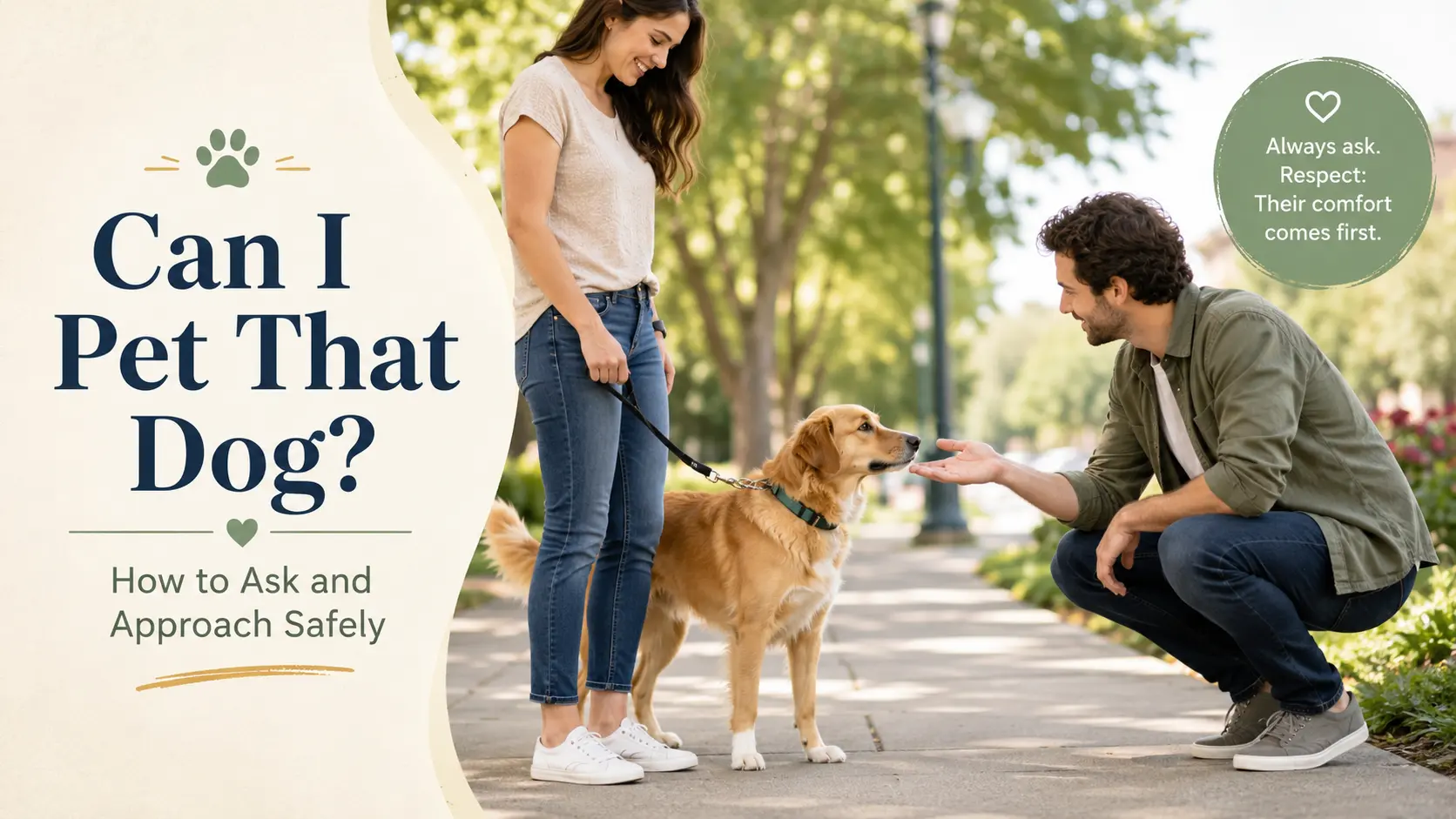
Yes, you can pet that dog, but only after doing two things first: asking the owner for permission, and then letting the dog choose whether it wants to meet you. Skipping either step is where most dog interactions go wrong. Permission from the owner tells you if it is safe. Permission from the dog tells you if it is welcome. Both matter.
Dog bites send millions of people to emergency rooms every year in the US, most involve a dog the person knew or had approached. The steps in this guide exist to protect you, the dog, and the owner. They take about 30 seconds and make a real difference.
We have all been there. You spot a dog on the street and your brain immediately short-circuits. Can I pet that dog? It is fluffy. It looks friendly. It is wagging. Surely it is fine.
Maybe. But looks friendly and is ready to be touched by a stranger are two different things. And that gap is exactly where most dog bites happen.
Here is how to get it right every time.
Always Ask the Owner First
Before you take a single step toward a dog you do not know, find the owner and ask. Not after you have already started walking toward the dog. Not while you are already reaching out. Before.
A simple phrase is all it takes:
- Can I pet your dog?
- Is your dog friendly with strangers?
- Would your dog like to say hello?
Any of these works. What matters is that you ask and that you genuinely accept whatever answer you get.
If the owner says no: Move on. Do not pout, do not argue, do not try to convince them. You do not know the dog’s history, its training situation, its mood today, or whether it has a painful spot you might accidentally touch. The owner does. Respect that.
If the owner says yes: You have cleared the first gate. Now comes the more important one.
Ask the Dog
This is the part most people skip and the reason why so many petting attempts end badly.
A dog’s owner saying yes does not mean the dog is saying yes. Dogs are individuals. Some love strangers and will try to climb into your lap before you have even crouched down. Others tolerate their owners letting people approach even when they would honestly prefer to be left alone. You need to read the dog, not just trust the owner’s answer.
Here is how to give the dog the choice:
- Crouch down: To the dog’s level do not loom over them. Standing over a dog feels threatening.
- Turn slightly sideways: A direct face-on approach signals confrontation to a dog.
- Do not reach out your hand: The old “let them sniff your fist” advice is outdated. Just hold still and let the dog come to you.
- Avoid direct eye contact In the dog world, a hard stare is a challenge, not a greeting.
- Wait: If the dog approaches you with a loose, relaxed body tail moving freely, soft expression that is a yes. If it hangs back, looks away, or shows any of the warning signs below, that is a no. Respect it just as you would the owner’s refusal.
Signs a Dog Wants to Be Petted
| Body language | What it means |
|---|---|
| Loose, wiggly body movement | Relaxed and open to interaction |
| Tail wagging at mid-height | Friendly, comfortable |
| Moving toward you willingly | Dog is choosing to engage |
| Soft eyes, relaxed ears | Calm and at ease |
| Leaning into your hand | Enjoying the contact |
Signs a Dog Does NOT Want to Be Petted
These are the signals most people miss and ignoring them is how but it seemed friendly becomes a dog bite:
| Body language | What it means |
|---|---|
| Stiff, tense body | Uncomfortable or on alert |
| Tail tucked or very still | Anxious or warning |
| Whale eye (whites of eyes showing) | Stressed |
| Yawning or lip-licking when you approach | Stress signal, not tiredness |
| Turning or backing away | Clear no thanks |
| Growling | Final warning before a bite back off immediately |
If you see any of these, the answer to can I pet that dog is no regardless of what the owner said. Thank the owner and move on. Never push past a dog’s discomfort signals.
Where and How to Actually Pet a Dog
If both the owner and the dog have said yes, here is how to do it well:
Start here:
- Under the chin
- Side of the neck
- Chest
- Shoulders or back (if the dog has moved in close)
Avoid these at least at first:
- Top of the head (most dogs dislike strangers reaching over them)
- Face or muzzle
- Tail and hindquarters
- Paws (sensitive for many dogs)
Go slowly. Keep your movements calm and predictable. Give the dog a few strokes, then pause. If the dog pushes into you or stays close, it is enjoying the interaction. If it steps away or shakes off, it has had enough. Let it end there.
A quick tip from Serlig: after the first few moments, ask the owner where their dog likes to be scratched. Nobody knows better than them and most owners love being asked.
Special Situations
Service dogs
Never pet a service dog without explicit permission from the handler and generally, the answer will be no. These dogs are working, and distracting them from their job can genuinely put their handler at risk.
Dogs that are tied up or alone
If there is no owner present, do not approach the dog. Even a friendly dog may feel more defensive when it cannot move away or seek its owner.
Dogs that are eating or sleeping
Leave them alone. Waking a sleeping dog or interrupting a meal are among the most common triggers for defensive biting.
Children and dogs
Children are statistically the most common victims of dog bites, and they are often bitten by dogs they know. Teach children the same rules ask the owner, let the dog choose, never approach a dog that is showing any discomfort and supervise every interaction with an unfamiliar dog, no matter how gentle the dog seems.
If a dog approaches a child and the child is unsure, teach the Be a Tree method: stand still, arms folded, looking down. Do not run, do not scream. Running triggers chase instinct; stillness gives the dog a chance to lose interest and move on.
What About Your Own Dog?
If you have a dog and someone asks can I pet that dog, you are the expert. Be honest. If your dog is nervous around strangers, in training, tired, or just not in the mood, saying no is the right answer and you owe no one an explanation.
And if your dog is social and loves meeting new people, great but still guide the interaction. Watch your dog’s body language and be ready to step in if they become overstimulated or if the person is approaching in a way your dog is not comfortable with. You know your dog best. Use that knowledge.
For dogs that struggle with anxiety around strangers, building confidence early makes a real difference. Our guide to socializing your German Shepherd covers principles that apply to any breed because the foundations of a calm, confident dog are the same across the board.
Frequently Asked Questions
Can I pet that dog if it is wagging its tail?
Not automatically. A wagging tail means arousal which can be excitement, but can also be anxiety or agitation. Read the whole dog: body tension, ear position, eye softness. A loose, full-body wiggle with a wagging tail is a yes. A stiff body with a low, fast wag is not.
Is it rude to ask someone if I can pet their dog?
Never. Dog owners almost universally appreciate being asked. It shows respect for the dog, for the owner, and for the safety of everyone involved. The only awkward moment is when people do not ask.
What if a dog runs up to me and I did not approach it?
Stay calm. Do not run, do not shriek, do not make sudden movements. Let the dog sniff you, watch the body language, and if it seems relaxed and friendly, you can offer slow, calm contact. If it seems tense or jumpy, stand still and let it move away on its own.
How do I stop my dog from being too enthusiastic when strangers want to pet it?
Consistent training helps enormously. Our German Shepherd training commands guide covers the foundation skills sit, stay, calm greeting that make public interactions manageable for any breed.
Conclusion:
Can I pet that dog? Usually yes, but ask the owner, read the dog, approach calmly, pet gently, and stop when the dog says so. Thirty seconds of doing this right is the difference between a lovely moment and a trip to urgent care. The dogs that get the most affection from strangers are the ones whose interactions always start the same way: with a question and a little patience.