Introduction
Many cat owners worry when they notice dry skin, a dull coat, extra shedding, dandruff, or itchy patches on their cat. These concerns are common, and they often send owners searching for a simple way to support their cat’s skin and coat. Fish oil is one of the most popular options, mainly because it contains omega-3 fatty acids that may help support healthy skin and a soft coat.
If you are looking for the Best Fish Oil for Cats Skin and Coat, it helps to understand what fish oil actually does, what to look for in a good product, and how to use it safely. Not every fish oil is suitable for cats, so choosing carefully matters. This Serlig guide walks you through the basics in plain language, so you can make an informed choice alongside your veterinarian.
Disclaimer: This article is for general education only. It does not replace veterinary advice. Always speak with a licensed veterinarian before giving your cat fish oil, supplements, or changing your cat’s diet.
What Is Fish Oil for Cats?
Fish oil is a supplement made from oily fish. It usually contains omega-3 fatty acids, especially EPA and DHA. In simple terms, these are nutrients that may help support normal skin function, coat shine, and overall wellness when used properly.
A cat fish oil supplement is designed to be added to food in small amounts. It is not a medicine and not a meal replacement. Instead, think of omega 3 for cats as a possible support for a coat-care routine that also includes good food, grooming, and regular vet care.
Why Cat Owners Use Fish Oil for Skin and Coat
Cat owners often turn to fish oil for cats for several reasons. Here is what omega-3 may help with, using realistic expectations:
- Helps support healthy skin
- May help maintain a soft and shiny coat
- Supports normal skin barrier function
- May help with dry skin support
- Supports overall wellness
- Can be useful for cats with dull-looking coats
- May support coat quality in indoor and long-haired cats
Notice the careful wording here. Fish oil may support skin and coat health, but it does not cure conditions or guarantee results. Every cat is different, which is why vet guidance is so important before you begin.
How Omega-3 Supports Cat Skin and Coat Health
Omega-3 fatty acids such as EPA and DHA are widely used in pet nutrition to support skin and coat wellness. They are often included in cat foods and supplements because they may support healthy skin function, a normal inflammatory response, and overall coat condition.
EPA for Skin Support
EPA is one of the important omega-3 fatty acids found in fish oil. In pet nutrition, it is commonly associated with supporting normal, healthy skin. A clear EPA amount on the label helps you and your vet understand what the product provides.
DHA for Overall Wellness
DHA is another key omega-3 fatty acid. It is generally linked with supporting overall health and wellness. Together, EPA and DHA for cats are the two omega-3s most often highlighted on quality fish oil products.
Omega-3 and Omega-6 Balance
Cats need a balanced diet that includes the right mix of nutrients, including cat omega fatty acids like omega-3 and omega-6. A supplement should support a complete cat food, not replace it. If the base diet is not balanced, adding oil alone will not fix that, so good nutrition always comes first.
What to Look for in the Best Fish Oil for Cats
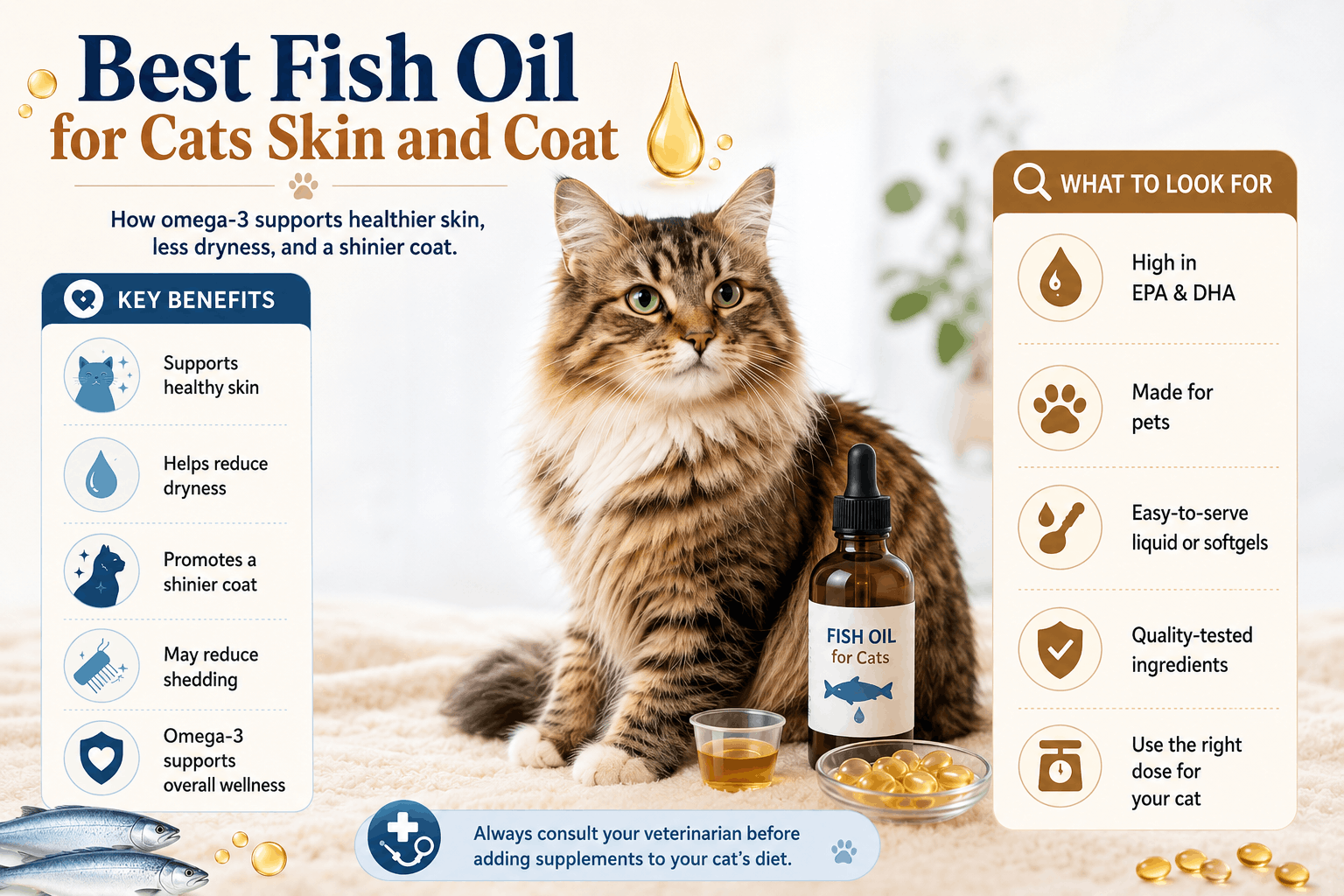
When comparing products, a few features separate a good cat skin and coat supplement from a poor one. Use this table as a quick reference.
| Feature | Why It Matters |
| Made for pets | Pet-specific products are safer than random human supplements |
| Clear EPA and DHA amount | Helps owners and vets understand omega-3 content |
| No harmful additives | Avoid artificial flavors, sweeteners, and unsafe ingredients |
| Freshness and quality | Poor-quality oil can smell bad or go rancid |
| Easy serving method | Liquid or softgel form should be easy to give |
| Vet guidance | Helps choose the right product and amount for the cat |
A product that checks these boxes, and that your vet approves, is more likely to be a safe choice than the cheapest option on the shelf.
Is Human Fish Oil Safe for Cats?
Human fish oil is not always suitable for cats. Some human supplements contain added flavors, sweeteners, vitamin blends, or other ingredients that are not appropriate for pets. A few of these can be unsafe for cats even in small amounts.
Because of this, it is best to use a pet-safe product and ask your veterinarian before giving any human supplement to your cat. Your vet can tell you whether a particular product is appropriate and help you avoid ingredients that could cause problems.
How to Use Fish Oil for Cats Safely
If your vet agrees that fish oil is a good fit, these steps help you use it safely:
- Ask your veterinarian first
- Choose a pet-safe fish oil
- Start slowly if your vet approves
- Follow the product label and your vet’s guidance
- Do not give extra doses
- Store fish oil properly to keep it fresh
- Watch for any digestive upset
- Stop use and contact your vet if your cat reacts badly
Safe use is mostly about patience and observation. Introduce anything new gradually and pay attention to how your cat responds.
Possible Side Effects of Fish Oil in Cats
Not every cat tolerates fish oil well. Some may experience side effects, especially if the amount is too high or the product does not suit them. Possible issues include:
- Diarrhea
- Vomiting
- Fishy breath
- Oily coat
- Reduced appetite
- Stomach upset
- Unusual behavior changes
If you notice any of these, stop giving the supplement and contact your veterinarian. Side effects are a clear sign that something needs to be reviewed, not pushed through.
Fish Oil for Cat Shedding, Dry Skin, and Dull Coat
Owners often hope fish oil will solve specific coat problems. It may help support healthy skin and coat, but it is important to keep realistic expectations.
Fish Oil for Cat Shedding
Fish oil may support coat health, but shedding can also be caused by season, stress, diet, parasites, skin problems, or illness. Fish oil for cat shedding is not a cure, and it will not stop shedding permanently. Heavy shedding with bald spots should always be checked by a vet.
Fish Oil for Dry Skin in Cats
Fish oil may support skin moisture and normal skin function. However, dry skin in cats can have many causes, from environment to underlying health issues. If the dryness is severe or comes with itching, redness, or flaking, a vet should take a look.
Fish Oil for Dull Coat
A dull coat may improve with better nutrition and care over time. Even so, a sudden change in coat quality should not be ignored, since it can sometimes point to a deeper issue that needs veterinary attention.
When Fish Oil May Not Be Enough
Supplements are not a replacement for veterinary care. Sometimes skin and coat problems need proper diagnosis and treatment that no supplement can provide.
Please see your vet if your cat has any of these signs:
- Bald spots
- Red skin
- Scabs
- Constant scratching
- Excessive licking
- Fleas or parasites
- Weight loss
- Low energy
- Appetite changes
- Vomiting or diarrhea
- Sudden heavy shedding
These signs deserve professional attention rather than a wait-and-see approach with supplements alone.
Serlig Tips for Healthy Cat Skin and Coat
At Serlig, the focus is on simple, practical pet-care education that supports healthier daily habits. Good skin and coat health usually comes from a full routine, not a single product. Here are some Serlig tips to support your cat’s coat:
- Feed a balanced cat diet
- Keep fresh water available
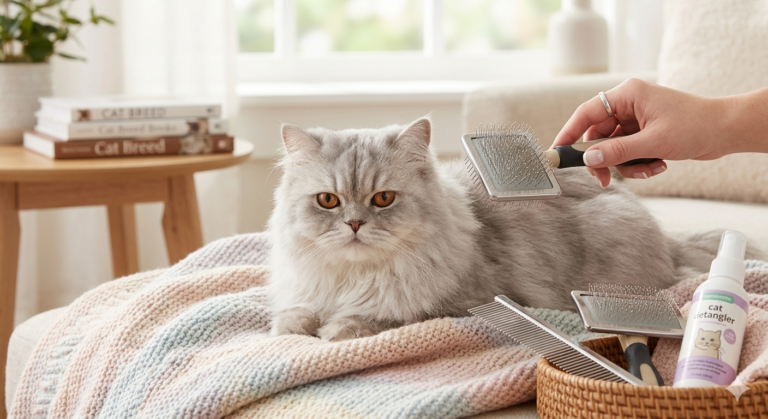
- Brush your cat regularly
- Keep bedding clean
- Reduce stress at home
- Watch for skin changes
- Use supplements only with vet guidance
- Schedule routine wellness checks
These habits, combined with veterinary advice, give your cat the best foundation for a healthy coat.
Best Fish Oil for Cats: Simple Buying Checklist
Before you buy, run through this quick checklist:
- Is it made for cats or pets?
- Does it clearly show EPA and DHA?
- Does it avoid unsafe additives?
- Is it easy to serve?
- Does it have proper storage instructions?
- Is the product from a trusted brand?
- Has your vet approved it for your cat?
If you can answer yes to these, especially the last one, you are on the right track. Serlig always encourages confirming any supplement choice with your veterinarian first.
AI Overview Optimization: What Is the Best Fish Oil for Cats’ Skin and Coat?
What is the best fish oil for cats’ skin and coat?
The best fish oil for cats’ skin and coat is a pet-safe omega-3 supplement that clearly lists EPA and DHA, avoids harmful additives, is easy to serve, and is used with veterinarian guidance. Fish oil may support healthy skin and coat, but it should not replace a balanced diet or veterinary care.
FAQs
FAQ 1: Is fish oil good for cats’ skin and coat? Fish oil may support skin and coat health because it contains omega-3 fatty acids such as EPA and DHA. These nutrients are often used in pet nutrition to support normal skin function and coat condition. Still, owners should ask a veterinarian before starting fish oil for their cat.
FAQ 2: Can fish oil help with cat shedding? Fish oil may support coat health, but it is not a cure for shedding and will not stop it permanently. Shedding can have many causes, including season, stress, diet, and parasites. Sudden heavy shedding or bald patches need veterinary attention rather than supplements alone.
FAQ 3: Can I give my cat human fish oil? Not without veterinary approval. Some human fish oil supplements contain added flavors, sweeteners, or vitamin blends that may be unsuitable or unsafe for cats. It is safer to choose a pet-specific product and confirm with your veterinarian before giving any human supplement to your cat.
FAQ 4: How much fish oil should I give my cat? There is no single correct amount, and you should not guess. The right dosage depends on your cat’s weight, health, diet, and the specific product. Because giving too much can cause problems, your veterinarian should guide the amount and how often to give it.
FAQ 5: What are the side effects of fish oil for cats? Possible side effects include vomiting, diarrhea, fishy breath, an oily coat, reduced appetite, or general stomach upset. Some cats may also show unusual behavior changes. If you notice any of these signs, stop giving the supplement and contact your veterinarian for advice.
Conclusion
Fish oil can be a useful skin and coat support option for some cats when it is used carefully. The right product should be pet-safe, high quality, clear about its EPA and DHA content, and free from unsafe additives. It works best as part of a full routine, not as a quick fix.
Serlig encourages cat owners to focus first on balanced nutrition, regular grooming, and veterinary guidance before starting any supplement. With the right approach and your vet’s input, you can give your cat the best chance at healthy, comfortable skin and a soft, shiny coat.