

Yes, dogs can eat okra. Plain, cooked or raw okra is safe and non-toxic for dogs, and it is actually one of the healthier vegetable treats you can offer. Okra is low in calories and rich in fiber and vitamins. The catch is preparation: fried, salted, or seasoned okra is not safe for dogs, so it must be served plain.
Okra, also known as lady’s finger, is a green pod that shows up in soups, stews, and southern fried dishes. If some ended up in your dog’s bowl or on the floor, you may be wondering: can dogs eat okra? The reassuring answer is that plain okra is a genuinely good, low-calorie treat for most dogs. What matters is how it is prepared and how much you give.
Interestingly, okra is botanically a fruit, even though we cook it like a vegetable. If you are putting together a list of dog-safe produce, our main guide on what fruits dogs can eat pairs well with this article.
Can Dogs Eat Okra Safely?
Dogs can eat okra safely when it is served plain, without oil, salt, or seasoning, and in a sensible portion. A few small pieces of cooked or raw okra make a healthy, low-calorie treat for most dogs. Okra itself contains no compounds that are toxic to dogs.
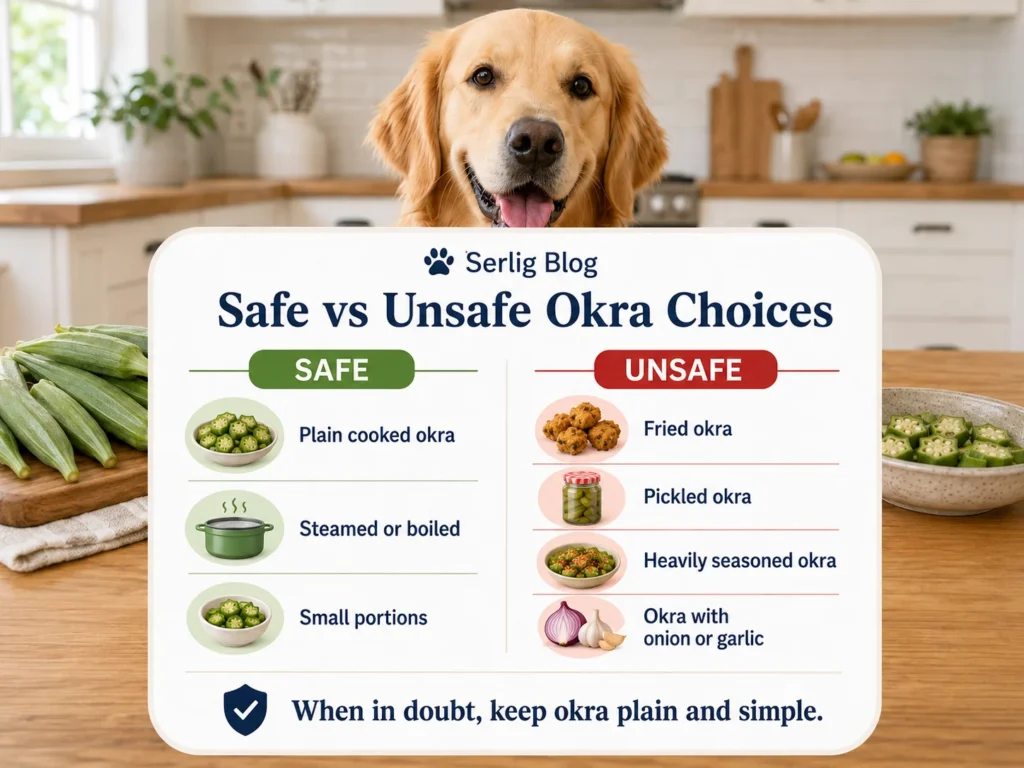
The safety of okra comes down to preparation rather than the vegetable itself. Plain okra is dog-friendly. The moment it is fried, buttered, salted, or cooked with garlic and onion, it becomes something you should not share. Because okra is so often served fried or spiced in human meals, the version on your plate is usually not the version your dog should eat.

Is Okra Good for Dogs? Health Benefits
Okra stands out because it delivers real nutrition with very few calories, which makes it an excellent treat for dogs watching their weight. Here is what plain okra brings to the bowl:
- Fiber supports healthy digestion and can help firm up loose stools.
- Vitamin C helps support the immune system and acts as an antioxidant.
- Vitamin K contributes to healthy blood clotting and bone health.
- Vitamin A supports vision, skin, and coat health.
- Folate and magnesium aid cell function and muscle health.
- Low calorie count makes okra a guilt-free alternative to fatty treats.
For overweight dogs, okra is a smart swap for high-fat snacks like nut butters. Compared with a spoonful of almond butter, a few pieces of plain okra deliver fiber and vitamins for a fraction of the calories. Still, treats of any kind should stay within a small share of the daily diet.
Raw vs Cooked Okra: Which Is Better for Dogs?
Both raw and cooked okra are safe for dogs, but they behave a little differently. This table breaks it down.
| Type | Safe for dogs? | Notes |
|---|---|---|
| Plain cooked okra (steamed or boiled) | Yes, best option | Softer and easier to digest; gentle on the stomach |
| Plain raw okra | Yes, in small pieces | Crunchy; cut small to prevent choking |
| Fried okra | No | Oil and batter can cause stomach upset and pancreatitis |
| Seasoned okra (garlic, onion, salt) | No | Garlic and onion are toxic to dogs |
| Pickled okra | No | High salt and vinegar can upset the stomach |
Steamed or boiled okra is the gentlest choice, especially for dogs with sensitive stomachs. Raw okra is fine too, as long as you slice it into small, manageable pieces.
When Okra Is Bad for Dogs
Plain okra is healthy, but certain versions and habits can turn it into a problem.
Fried and Buttered Okra
Fried okra is one of the most common ways people eat this vegetable, and it is one of the worst ways to share it with a dog. The oil, batter, and butter add a heavy load of fat that can cause vomiting, diarrhea, and even pancreatitis in sensitive dogs. If a fatty food ever upsets your dog’s stomach, our guide on what to feed a dog with diarrhea can help you get things back to normal.
Garlic, Onion, and Heavy Seasoning
Okra is often cooked with garlic, onion, or spice blends. Garlic and onion are toxic to dogs and can damage red blood cells, even in fairly small amounts. Always serve okra completely plain, with no seasoning at all.
Too Much Fiber
Okra is high in fiber, which is a benefit in small amounts but a problem in large ones. Feeding too much can cause gas, bloating, and loose stools. Introduce okra slowly and keep portions modest.
Choking Risk From Whole Pods
A whole okra pod can be a choking hazard, particularly for small dogs. Always cut okra into bite-sized pieces before offering it.
Can Okra Help With a Dog’s Digestion?
Because okra is naturally high in fiber, it can gently support a healthy digestive system. Fiber adds bulk to the stool and helps food move smoothly through the gut, which may benefit dogs that deal with occasional irregularity. The vegetable also holds a lot of water, so it adds moisture as well as roughage.
That said, fiber is a balancing act. A small, steady amount can help, but a sudden large serving can swing the other way and cause loose stools or gas. If your dog has ongoing digestive trouble, okra is not a cure, and a vet visit is the right first step. Used correctly, though, a few plain pieces now and then can be a helpful, low-calorie addition to a balanced diet.
How Okra Compares to Other Dog-Safe Foods
One reason okra is such a useful treat is its nutrition-to-calorie ratio. Many popular dog snacks are either high in fat or high in sugar, while okra delivers vitamins and fiber for very little energy cost.
- Compared with fatty treats like nut butter, okra is far lighter and better for weight control.
- Compared with sweeter fruits, okra has much less natural sugar, which suits dogs with weight or blood-sugar concerns.
- Compared with processed store-bought treats, plain okra has no additives, preservatives, or added salt.
This makes okra a smart everyday option to rotate alongside other dog-safe produce, rather than a rare indulgence. Variety keeps treat time interesting while keeping calories in check.
How Much Okra Can a Dog Eat?
Follow the 10% rule: vegetables and treats should make up no more than 10% of your dog’s daily calories. Because okra is low in calories, it is easier to stay within that limit than with richer treats.
A safe starting guide by size:
- Small dogs (under 20 lbs): one or two small pieces, occasionally
- Medium dogs (20–50 lbs): two or three small pieces, occasionally
- Large dogs (over 50 lbs): a few small pieces, occasionally
Offer okra a couple of times a week at most. For a first taste, give a single small piece and wait 24 hours to check for gas or digestive upset before offering more.
How to Prepare Okra for Your Dog
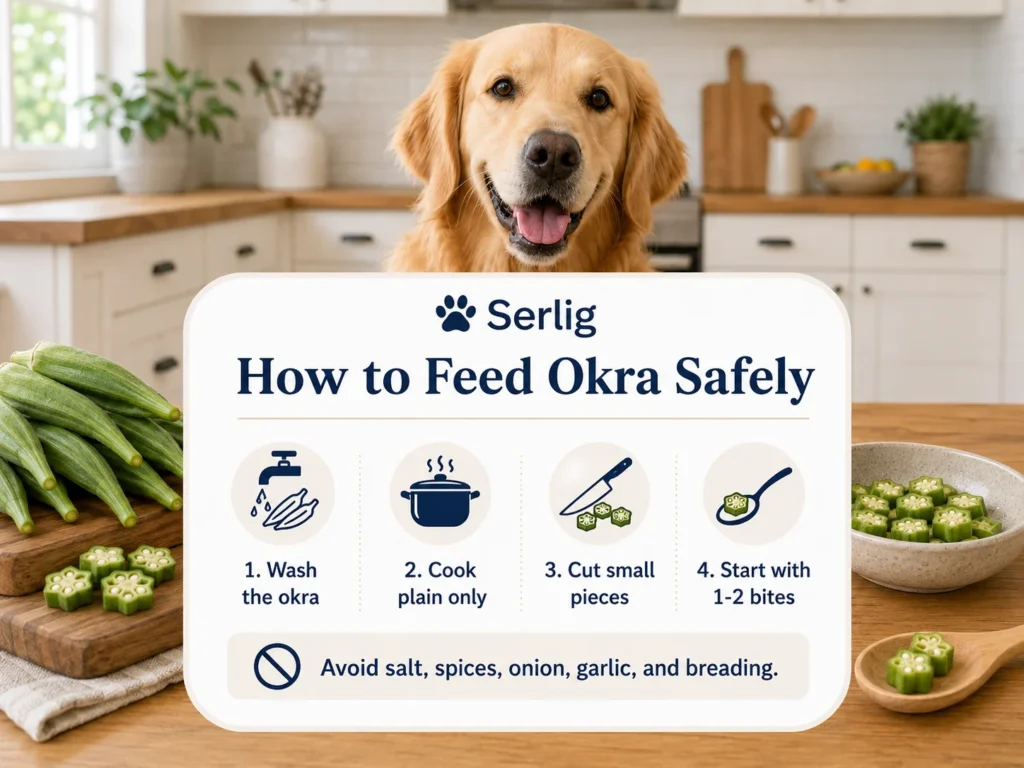
Preparing okra the right way keeps it safe and easy to digest. Follow these steps:
- Choose fresh, firm okra. Avoid pods that are slimy, moldy, or overly soft.
- Wash it thoroughly to remove dirt and pesticide residue.
- Trim the ends and cut the pod into small, bite-sized pieces.
- Cook it plain if you can. Steaming or boiling with no oil, salt, or seasoning is ideal.
- Let it cool before serving so it does not burn your dog’s mouth.
- Start small and watch how your dog handles it.
Easy Ways to Serve Okra
Plain steamed okra can be chopped and sprinkled over your dog’s regular food as a fiber and vitamin boost. You can also mash cooked okra into a homemade puzzle-toy filling, or freeze small pieces for a crunchy summer snack. Keep it simple: plain is always best.
Which Dogs Should Be Careful With Okra?
Okra suits most dogs, but a few should eat it cautiously or skip it:
- Dogs with a sensitive stomach or a tendency toward gas and loose stools
- Dogs on a special or prescription diet, unless your vet approves it
- Young puppies, whose digestive systems are still developing
- Dogs with a known food allergy or who react to new foods easily
If your dog falls into any of these groups, check with your veterinarian before adding okra to the menu.
Signs Okra Isn’t Agreeing With Your Dog: When to Call the Vet
Stop feeding okra and contact your veterinarian if your dog shows any of these signs:
- Vomiting or ongoing diarrhea (if your dog keeps throwing up, call your vet rather than waiting)
- Excessive gas or a visibly bloated, uncomfortable belly
- Loss of appetite lasting more than a day
- Signs of an allergic reaction, such as itching or facial swelling
Most okra-related issues are mild and pass on their own, but a bloated, painful belly can be serious. When in doubt about your dog’s health, it is always safer to make the call.
What to Do If Your Dog Eats Too Much Okra
If your dog eats a large amount of plain okra, there is usually no need to panic, because okra is not toxic. The most likely result is gas, bloating, or loose stools from the extra fiber, which typically settles within a day.
Provide fresh water, pause other treats, and keep meals plain and light for the next 24 hours. Watch for the warning signs above. If your dog ate fried or heavily seasoned okra, or if vomiting and discomfort are severe, contact your veterinarian promptly.
No, plain okra is not toxic to dogs. The risk comes from frying, salt, and seasonings like garlic and onion, not from the okra itself.
Yes, dogs can eat raw okra in small, chopped pieces. Cooked okra is gentler on the stomach, but raw is safe in moderation.
No. Fried okra is high in fat and often salted, which can cause stomach upset and pancreatitis.
Yes, the small seeds inside okra pods are safe for dogs to eat.
It is best to wait and check with your vet, since puppies have sensitive, developing stomachs.