Quick answer: To create a pet care schedule, start with the four non-negotiables feeding, exercise, grooming, and vet care then build a daily, weekly, and monthly routine around your pet’s specific age and species. A schedule does not need to be complicated to be effective. The goal is consistency, not perfection, and a routine that fits your life is far more useful than an elaborate one you will not maintain.
A note from Serlig: A good pet care schedule is one of the most practical things you can do for your pet’s long-term health. The habits you build today consistent feeding, regular grooming, annual vet visits are what prevent problems before they start. When in doubt about specific timing or quantities, consult your veterinarian.
Most pet owners know roughly what their pets need. The problem is rarely knowledge it is consistency. Without a clear structure, feeding times drift, grooming gets skipped, and vet appointments get pushed back “until next month” indefinitely.
Learning how to create a pet care schedule is the practical solution to that drift. A written, realistic routine turns good intentions into reliable habits, and consistent habits are what genuinely healthy pets are built on.
Here is how to build one that lasts.
Step 1: Understand What Your Pet Actually Needs
Before you schedule anything, you need to understand what goes on the schedule. Every pet’s routine covers the same core categories the timing and detail within each varies by species, age, and individual health.
The five core categories:
| Category | Dogs | Cats |
| Feeding | 2x daily (adults); 3–4x (puppies) | 2x daily or small frequent meals |
| Exercise | 30–90 min daily (breed-dependent) | 15–30 min interactive play |
| Grooming | Weekly brushing minimum; bath monthly | Self-grooming + weekly brush (long coats: daily) |
| Vet care | Annual exam + parasite prevention | Annual exam + parasite prevention |
| Mental stimulation | Training, puzzle toys, scent work | Puzzle feeders, climbing, rotation toys |
This table is your starting framework. Everything else builds from it.
Step 2: Match the Schedule to Your Pet’s Life Stage
The biggest mistake people make when they create a pet care schedule is using adult requirements for a young pet or failing to adjust as their pet ages. Needs change significantly at different life stages.
Puppies and Kittens (0–12 months)
Young pets need more of almost everything: more meals, more bathroom breaks (puppies), more sleep, and more patience. A puppy under 6 months typically needs feeding 3–4 times a day and a potty trip outside every 1–2 hours. Kittens need similar feeding frequency and should start litter box training immediately.
The priority at this stage is establishing the routine early — the habits you build now will carry into adulthood. Keep training sessions short (5–10 minutes), socialization consistent, and vet visits on track for vaccination schedules.
Adult Pets (1–7 years)
This is when your routine stabilizes. Most adult dogs thrive on two meals, two walks, and one training or enrichment session per day. Most adult cats do well with two measured meals, one dedicated play session, and regular grooming.
The adult stage is also when prevention matters most. Staying on top of parasite prevention, dental care, and annual vet exams during these years is far cheaper and kinder than treating the conditions that develop from years of neglect.
Senior Pets (7+ years, or earlier for large breeds)
Senior pets need more frequent vet check-ups (twice yearly is standard), adjustments to diet and exercise intensity, and closer monitoring for behavioral or appetite changes. Shorter, gentler walks replace long runs; softer food may replace hard kibble; and more rest time needs to be built into the day.
If you notice sudden changes in your senior pet’s routine appetite, energy, stool quality these are worth investigating promptly. Our dog poop color chart is a practical reference for one of the easiest daily health indicators to monitor.
Step 3: Build Your Daily Schedule
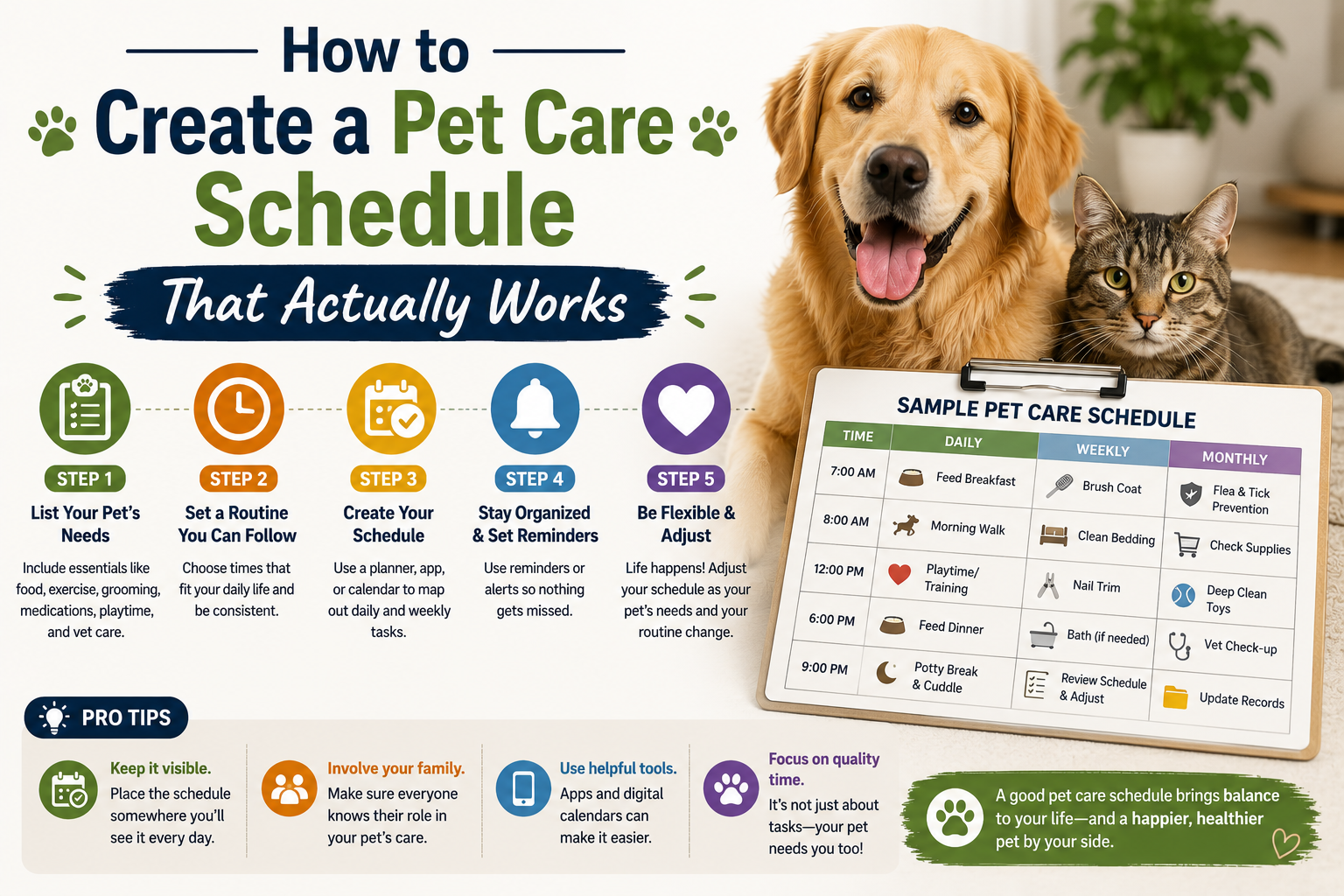
Here is a sample daily pet care schedule that works for most adult dog or cat owners. Adjust the timing to your actual day the specific hours matter far less than the consistency.
Sample Daily Schedule (Adult Dog)
| Time | Task |
| 7:00 AM | Morning walk (20–30 min) + breakfast |
| 8:00 AM | Fresh water check |
| 12:00 PM | Midday walk or outdoor potty break (if possible) |
| 5:30 PM | Evening walk (30–45 min) |
| 6:00 PM | Dinner + fresh water |
| 7:00 PM | Training or enrichment (10–15 min) |
| 9:00 PM | Final potty break before bed |
Sample Daily Schedule (Adult Cat)
| Time | Task |
| 7:00 AM | Breakfast (measured portion) |
| 7:15 AM | Litter box check and scoop |
| 6:00 PM | Interactive play session (15–20 min) |
| 6:30 PM | Dinner (measured portion) |
| 7:00 PM | Brush coat (daily for longhaired breeds, weekly for shorthaired) |
| Before bed | Fresh water check |
Step 4: Add Weekly and Monthly Tasks
A good pet care schedule runs on three rhythms: daily, weekly, and monthly. The daily routine covers feeding, exercise, and basics. The weekly routine adds grooming and deeper cleaning. The monthly routine covers prevention and records.
Weekly Tasks (Dogs and Cats)
- Brush teeth (ideally 2–3x per week minimum dental disease is one of the most common preventable conditions in pets)
- Check and clean ears particularly important for floppy-eared dogs and Persian cats who are prone to moisture and infection
- Inspect paws and trim nails if needed
- Wipe around eyes especially important for flat-faced breeds (Persian cats, pugs, bulldogs)
- Clean food and water bowls thoroughly
Monthly Tasks
- Administer flea, tick, and parasite prevention as prescribed by your vet
- Weigh your pet and compare to their healthy range weight changes are among the earliest signs of health problems
- Check coat condition dullness, excessive shedding, or dry patches often signal nutritional gaps (see Serlig’s guide to how to improve cat coat naturally and our article on best dog food for weight loss for diet-related coat improvements)
- Review and restock medications, supplements, and food supply
Annual/Bi-annual Tasks
- Veterinary wellness exam (bi-annual for seniors)
- Vaccinations (per your vet’s schedule)
- Dental cleaning (as recommended)
- Review diet with your vet especially for aging pets or those with weight changes
Serlig’s Printable Pet Care Checklist
Use this as a starting point for your own schedule. Print it, put it on the fridge, or save it somewhere accessible to everyone in the household.
Daily:
- ☐ Feed (morning)
- ☐ Fresh water
- ☐ Exercise / walk / play session
- ☐ Potty check / litter box scoop
- ☐ Feed (evening)
- ☐ Brief interaction / bonding time
Weekly:
- ☐ Brush teeth
- ☐ Check ears
- ☐ Brush coat
- ☐ Inspect paws / trim nails if needed
- ☐ Clean food and water bowls
Monthly:
- ☐ Parasite prevention treatment
- ☐ Weigh pet
- ☐ Check coat and skin condition
- ☐ Restock food and supplies
Annually:
- ☐ Vet wellness exam
- ☐ Vaccinations (as scheduled)
- ☐ Dental check / cleaning
Tips for Making Your Schedule Stick
Involve everyone in the household. A pet care schedule only works if everyone follows it. Assign tasks clearly, especially if children are helping.
Use reminders. Phone alarms for feeding times, calendar reminders for monthly prevention treatments, and annual vet bookings made at the current visit rather than remembered later.
Build flexibility in. Zoetis Petcare’s veterinary experts note that overly rigid schedules can actually increase anxiety in both pets and owners when life inevitably disrupts them. Your pet needs to know their needs will be met; they do not need exact-to-the-minute precision.
Watch for behavioral signals. A pet that starts acting differently clingy, withdrawn, off their food, restless at night is often telling you the current schedule is not meeting a need. Observe and adjust.
Adjust as your pet ages. Review the schedule every 6–12 months, and definitely whenever your pet moves into a new life stage. What worked for a 2-year-old dog will not suit an 8-year-old one without modification.
Frequently Asked Questions
How long does it take to establish a pet care schedule?
Most pets adjust to a new routine within 1–2 weeks when it is applied consistently. The first few days may be messier, but pets are faster to adapt to structure than most owners expect.
Is a pet care schedule necessary for indoor cats?
Yes indoor cats especially benefit from scheduled feeding (which prevents obesity) and scheduled play (which prevents boredom-related behavior problems). Free-feeding indoor cats is one of the leading contributors to feline obesity.
What if my schedule changes day to day?
Build in a consistent anchor same feeding times, even if walk times vary. Pets can tolerate variation in some areas if the core needs (food, water, basic interaction) happen predictably.
How do I create a pet care schedule for multiple pets?
List each pet’s core needs separately, then look for overlap. Feeding times may align; exercise needs may differ significantly. A shared whiteboard or shared phone calendar with each pet’s tasks color-coded can prevent anything from being missed.
Conclusion
When you create a pet care schedule for the first time, start with the daily non-negotiables: consistent feeding times, exercise, and a potty or litter routine. Add the weekly grooming tasks once the daily rhythm feels natural. Layer in monthly prevention and annual vet bookings after that.
A schedule that covers the basics consistently outperforms an elaborate one followed sporadically. For more on the specific nutritional habits that support your pet’s health, explore Serlig’s pet nutrition hub because a schedule is only as good as what goes into the bowl.