
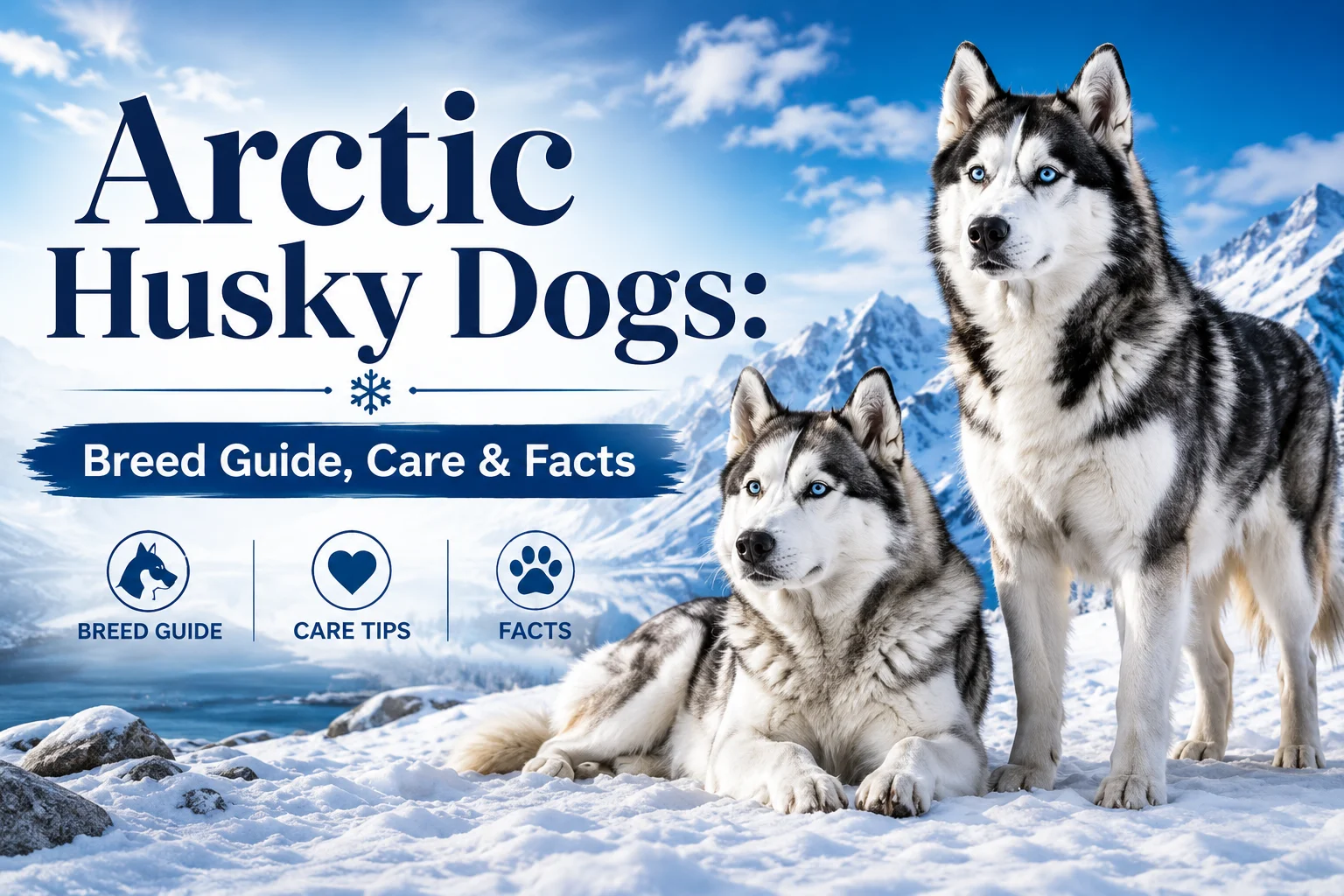
Arctic Husky dogs are medium-sized, cold-weather sled dogs known for their thick double coats, striking eyes, and boundless energy. They are friendly, pack-oriented, and highly active, which makes them wonderful family companions for owners who can meet their heavy exercise and grooming needs. They are not the easiest breed for first-time owners.
Few dogs turn heads like a husky. With their wolf-like looks, piercing eyes, and famously chatty personalities, Arctic Husky dogs have become one of the most recognizable breeds in the world. But behind that beautiful coat is a working dog built for endurance, and that comes with real commitments. This complete breed guide covers everything you need to know: their history, temperament, exercise needs, grooming, health, and whether this breed is the right fit for your home.
Thinking about which breed suits your lifestyle? This guide pairs well with our overview of the friendliest dog breeds if you are still comparing options.
Arctic Husky Quick Facts
- Size: Medium (35–60 lbs)
- Lifespan: 12–15 years
- Coat: Thick double coat, heavy seasonal shedding
- Energy level: Very high
- Temperament: Friendly, social, independent, vocal
- Good with kids: Yes, generally
- Good guard dog: No, too friendly
- Best for: Active owners with time, space, and patience
What Are Arctic Husky Dogs?
Arctic Husky dogs are cold-climate sled dogs originally bred to pull loads across long distances in freezing conditions. The term usually refers to the Siberian Husky and closely related Arctic sled breeds, all built for endurance, teamwork, and survival in harsh northern environments.
The breed’s roots trace back to the Chukchi people of northeastern Siberia, who relied on these dogs for transport and companionship. Their bodies were shaped by the Arctic itself: a dense coat for warmth, efficient metabolism for stamina, and a strong pack instinct for working alongside other dogs. Understanding this working heritage is the key to understanding the breed, because everything from their energy to their stubborn streak comes from generations of life as sled dogs.
Arctic Husky Appearance and Size
Arctic Huskies are medium-sized dogs with an athletic, balanced build. Males typically weigh 45 to 60 pounds and stand about 21 to 23 inches tall, while females are slightly smaller at 35 to 50 pounds.
Their most striking features include:
- Eyes that can be blue, brown, amber, or even one of each, a trait called heterochromia.
- A thick double coat that comes in colors like black and white, gray and white, red and white, agouti, and pure white.
- Erect, triangular ears and a soft, wolf-like expression.
- A bushy, sickle-shaped tail often curled over the back.
That double coat is not just for looks. It has a soft insulating undercoat beneath a longer protective topcoat, which together keep the dog warm in extreme cold.
Arctic Husky Temperament and Personality
Arctic Huskies are famous for their friendly, outgoing, and social nature. They were bred to live and work in packs, so they tend to love company, both human and canine. This makes them affectionate family dogs, but it also means they do not like being left alone for long periods.
A few personality traits define the breed:
- Highly social: They usually get along with people and other dogs.
- Independent and stubborn: Their working background makes them think for themselves.
- Vocal: Huskies howl, “talk,” and are known for their expressive sounds.
- High prey drive: Small animals and cats can trigger their chase instinct.
- Escape artists: They dig, climb, and jump to explore.
One thing they are not is a guard dog. A husky is far more likely to greet a stranger with a wagging tail than a warning bark.
Exercise Needs: How Much Do Arctic Huskies Need?
Arctic Huskies are one of the highest-energy breeds you can own, and meeting that need is non-negotiable. These dogs were built to run for miles, so a short daily walk is not enough. Most huskies need at least one to two hours of vigorous activity every day.
Good outlets include running, hiking, dog sports, and interactive play. Mental stimulation matters just as much as physical exercise, so puzzle toys and training games help keep their clever minds busy. A bored husky is a destructive husky, and under-exercised dogs often dig, chew, and escape out of sheer frustration.
Because they are such skilled escape artists, a secure, high fence is essential. Huskies should also stay on a leash or long line in unfenced areas, since their strong prey drive and love of running make reliable recall very difficult.
Grooming an Arctic Husky
Arctic Huskies are heavy shedders, and grooming is a year-round commitment. Their double coat sheds moderately most of the time and then “blows” heavily twice a year, releasing large amounts of undercoat.
To keep shedding manageable:
- Brush weekly during normal periods, and daily during heavy shedding seasons.
- Use an undercoat rake to remove loose hair from beneath the topcoat.
- Bathe only occasionally, since huskies are naturally clean and have little odor.
One crucial rule: never shave a husky. The double coat insulates against both cold and heat and protects the skin from the sun. Shaving disrupts this natural system and can harm the coat’s ability to regrow properly. If your dog develops flaky skin or heavy dandruff during shedding season, our guide on dog dandruff and skin care explains how to keep the coat and skin healthy.
Keeping an Arctic Husky in a Hot Climate
This section matters enormously for owners in warm regions. Arctic Huskies were built for the cold, which means they can overheat quickly in hot weather. If you live in a hot climate, protecting your husky from heat is one of your most important daily jobs.
Practical heat-safety steps include:
- Walk during cool hours, early morning or late evening, never in the midday heat.
- Provide constant shade and fresh water, and consider a cool indoor space with a fan or air conditioning.
- Watch for overheating. Heavy panting, drooling, weakness, and bright red gums are warning signs.
- Never leave a husky in a car or an unshaded yard.
Heavy or unusual panting can signal that your dog is struggling with the heat. Our article on why a dog pants so much helps you tell normal panting from a heat emergency, and you may also notice your husky drinking a lot more water in warm weather, which is normal as long as it is not extreme. If you ever suspect heatstroke, treat it as an emergency and contact your vet immediately.
Arctic Husky Diet and Nutrition
Despite their high energy, Arctic Huskies have an efficient metabolism and often eat less than owners expect. They were bred to travel long distances on relatively little food, so it is easy to overfeed them and cause weight gain.
Feed a high-quality, balanced dog food suited to their age and activity level, and measure portions rather than free-feeding. Many huskies are also naturally picky eaters, which is usually not a cause for concern. For safe treats, stick to dog-friendly options and keep them within 10% of daily calories. Our guide on what fruits dogs can eat lists healthy, low-calorie treat ideas that suit an active breed like this.
Common Health Problems in Arctic Huskies
Arctic Huskies are generally a hardy, healthy breed with a long lifespan, but they are prone to a few specific conditions. Responsible breeding and regular vet checkups help reduce the risk.
Common health concerns include:
- Hip dysplasia, a joint condition that can affect mobility.
- Eye disorders, including cataracts, progressive retinal atrophy, and corneal dystrophy.
- Hypothyroidism, a hormonal condition that can affect coat and weight.
- Zinc-responsive dermatosis, a skin condition linked to zinc absorption.
Routine veterinary care, a good diet, and eye and joint screening are the best ways to keep a husky healthy across its 12 to 15 year lifespan.
Training an Arctic Husky
Training a husky requires patience, consistency, and a sense of humor. These dogs are intelligent, but their independent, working-dog mindset means they often decide whether they feel like listening. They are not stubborn out of defiance; they are simply used to thinking for themselves.
Successful husky training relies on:
- Early socialization with people, dogs, and new environments.
- Positive reinforcement, using rewards rather than harsh corrections.
- Short, engaging sessions that hold their attention.
- Consistent rules from every member of the household.
Because recall is so unreliable in this breed, leash training and secure containment are safety essentials, not optional extras. For these reasons, huskies are often not recommended as a first dog for inexperienced owners.
Is an Arctic Husky Right for You?
An Arctic Husky can be an incredible companion, but only in the right home. This breed rewards active, committed owners and frustrates those who underestimate its needs.
A husky may be a great fit if you:
- Lead an active lifestyle and enjoy daily exercise
- Have a securely fenced yard or space to run
- Are home often or can avoid leaving the dog alone for long
- Do not mind heavy shedding and regular grooming
A husky may not suit you if you:
- Want a low-energy or low-maintenance dog
- Live in a very hot climate without ways to keep the dog cool
- Are looking for a guard dog
- Are a first-time owner with limited time for training
If a husky sounds like more dog than you want, our guides on the friendliest dog breeds and the best dogs for elderly people can help you find a gentler match.
Yes, huskies are usually friendly and social with families, including children. They do best in active homes that can meet their exercise needs.
Yes. They shed year-round and “blow” their undercoat heavily twice a year, so regular brushing is essential.
They can, but only with careful heat management, including shade, fresh water, cool spaces, and exercise during cooler hours.
Not especially. They are intelligent but independent, so they need patient, consistent, positive training and early socialization.
No. They are far too friendly toward strangers to make effective guard dogs.
A Note on Pet Health
Serlig publishes researched pet care information for everyday owners. It is general guidance, not veterinary advice, and it does not replace an examination by a licensed veterinarian who knows your pet. If your pet is unwell, or anything in this guide does not match what you are seeing at home, contact your vet.

One Comment