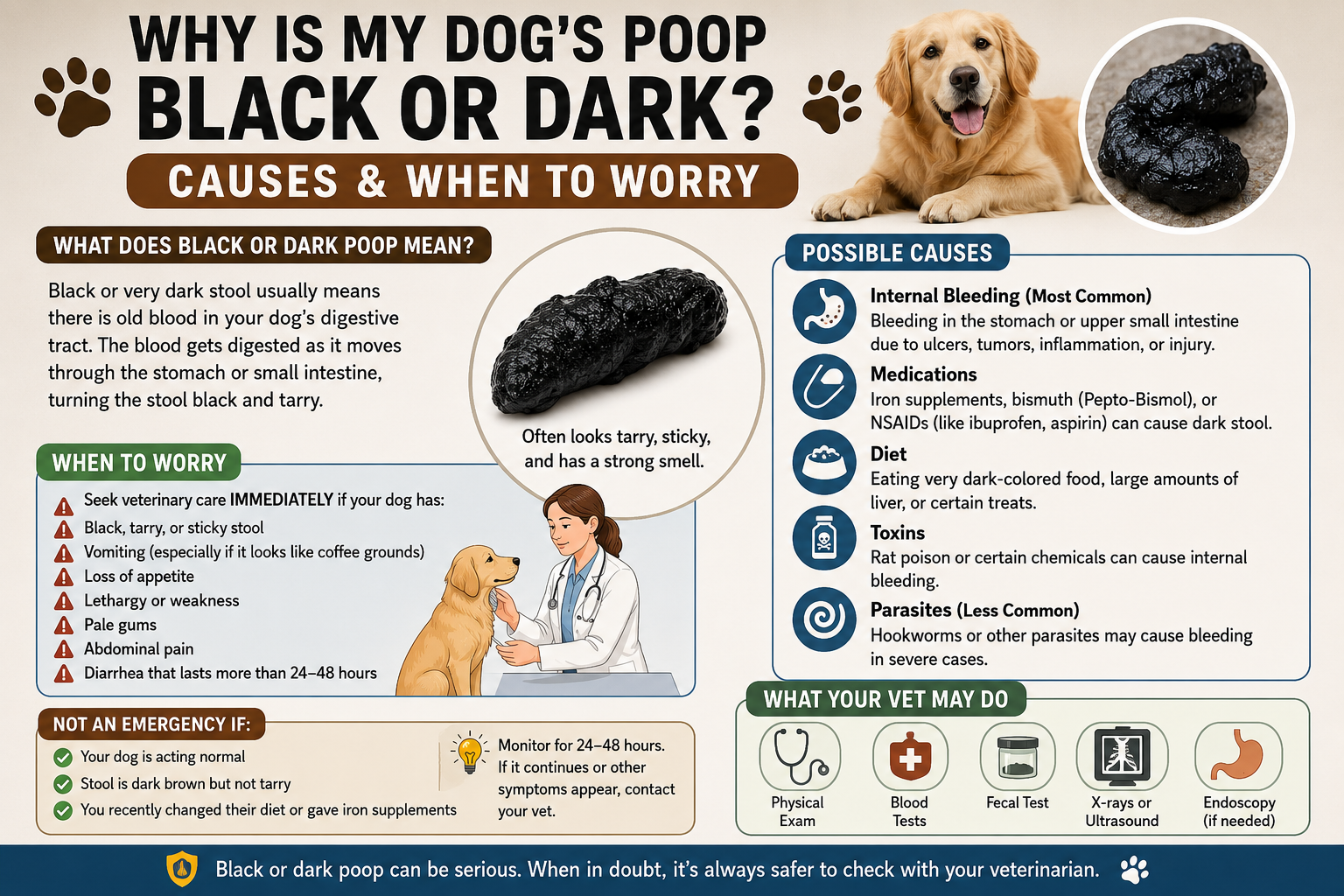
Black, sticky, tar-like dog poop is called melena, and it usually means digested blood from the upper digestive tract (mouth, esophagus, stomach, or small intestine). True melena is a medical concern until proven otherwise, if the stool is black AND tarry, or your dog also has pale gums, vomiting, weakness, or lethargy, treat it as an emergency and contact your veterinarian right away. Dark stool can sometimes be harmless (from iron supplements, Pepto-Bismol, organ meat, or food dyes), but you should never simply “wait and watch” sticky black stool.
🩺 Important safety note from Serlig: This guide is for education only and is not a substitute for veterinary care. Black, tarry stool can signal life-threatening internal bleeding or poisoning. Do not give your dog any human medication, and when in doubt, call your vet or an emergency clinic. This article pairs with our full dog poop color chart.
Is Black Dog Poop an Emergency?
Here is the simple decision rule Serlig recommends:
- Black AND sticky/tarry/shiny: treat as a medical concern and contact your vet, especially with other symptoms. This is true melena.
- Slightly darker brown, dog acting completely normal: a short monitoring period may be reasonable, unless you suspect your dog ate a toxin or medication.
- Black with pale gums, vomiting, collapse, weakness, or abdominal pain: emergency. Seek same-day or immediate care.
When you are unsure which category you are looking at, always err on the side of calling your veterinarian. Internal bleeding can be invisible from the outside until it becomes severe.
What Is Melena? Why Black Poop Means Digested Blood
Melena is the veterinary term for black, tarry stool caused by digested blood. When bleeding happens high up in the digestive tract the stomach or small intestine the blood is broken down by digestive enzymes as it travels through the gut. This digestion turns the blood dark, giving the stool its characteristic black, sticky, tar-like appearance and a strong, sometimes metallic odor.
This is different from hematochezia, which is bright red blood from the lower tract (colon or rectum). The location of the bleeding is what changes the color: upper GI bleeding looks black; lower GI bleeding looks red. (You can see both compared in our dog poop color chart.)
Black stool does not always start out jet black. It may begin as a very dark brown and deepen over time, which is why subtle, persistent darkening still deserves attention.
True Melena vs. Harmless Dark Stool: How to Tell the Difference
Not every dark stool is an emergency. Here is how to tell them apart:
| Feature | Concerning (melena) | Likely harmless |
| Texture | Sticky, shiny, tar-like | Normal, formed |
| Smell | Unusually strong / metallic | Normal |
| Your dog’s behavior | Tired, off food, vomiting, pale gums | Eating, playing, normal |
| Recent context | New medication, toxin risk, illness | Iron supplement, organ meat, dark food |
A useful clue: digested blood can also show up in vomit as a “coffee grounds” appearance. If you see coffee-ground vomit alongside black stool, treat it as urgent.
Serious Causes of Black Dog Poop
These causes involve bleeding and require prompt veterinary attention.
1. Stomach or Intestinal Ulcers
Ulcers are open, bleeding sores in the lining of the stomach or small intestine and they are the most common serious cause of melena. They often develop from NSAID or steroid use (for example, carprofen, meloxicam, prednisone and especially human painkillers like aspirin or ibuprofen, which you should never give a dog without veterinary direction), chronic stress, or underlying organ disease.
2. Toxins and Rat Poison
Anticoagulant rodenticides (rat poison) prevent blood from clotting and cause internal bleeding that can appear as black stool. This is a life-threatening emergency. If there is any chance your dog ate rat poison or another toxin, go to a vet or emergency clinic immediately do not wait for more symptoms.
3. Tumors and Growths
Bleeding tumors in the stomach, intestines, esophagus, mouth, or nose can produce melena. These are more common in older dogs and often come with weight loss or appetite changes.
4. Intestinal Parasites
Heavy infestations of parasites such as hookworms can damage and bleed the GI lining, leading to dark, tarry stool over time. Routine parasite prevention and deworming reduce this risk.
5. Foreign Objects and Blockages
Swallowed bones, toys, fabric, or sharp objects can injure the digestive tract and cause bleeding or obstruction. Watch for vomiting, straining, a painful belly, or refusal to eat these need urgent care.
6. Parvovirus (Especially in Puppies)
Parvovirus is a severe, highly contagious infection that can cause black or bloody diarrhea, particularly in unvaccinated puppies. It is an emergency and requires immediate veterinary treatment.
7. Bleeding and Clotting Disorders
Conditions like Von Willebrand’s disease or immune-mediated thrombocytopenia interfere with clotting and can cause GI bleeding that shows up as melena.
8. Liver and Kidney Disease
Advanced liver or kidney disease can lead to black, tarry stools kidney failure, for instance, can trigger stomach ulceration. Look for added signs like lethargy, vomiting, poor appetite, and increased thirst or urination.
9. Infections, IBD, and Pancreatitis
Bacterial infections, inflammatory bowel disease (IBD), and pancreatitis can all inflame and bleed the gut over time, contributing to dark stool.
Harmless (Diet & Medication) Causes of Dark Stool
If your dog is bright, eating, and behaving normally, the dark color may be benign:
- Iron supplements a very common, harmless cause of dark/black stool.
- Pepto-Bismol (bismuth subsalicylate) and some anti-diarrheal medications.
- Activated charcoal, sometimes given after toxin exposure.
- Blood and organ meat in raw or fresh diets. If your dog eats raw, see our guide to safely transitioning your pet to a raw food diet.
- Dark-colored foods, treats, or dyes.
- Old, dried poop in the yard that has darkened from sitting out and oxidizing not a concern.
Even with a likely benign cause, mention any new supplements or foods to your vet, and stop “watching” if the stool turns tarry or your dog seems unwell.
Black Diarrhea vs. Formed Black Stool
The consistency offers clues. Black diarrhea can point to acute problems like parvovirus, infections, or toxins, and dehydrates a dog quickly. Formed but black stool can come from a slow bleed, such as a tumor or ulcer, or from diet and medication. Either way, true black coloring from digested blood is worth a veterinary conversation.
What About Black Specks in Dog Poop?
Tiny black specks can be digested blood, but they may also be bits of dark food, dirt, or even flea dirt that the dog ingested while grooming. If the specks persist, recur, or come with other symptoms, save a sample and ask your vet.
Emergency Warning Signs, Get Help Now
Treat black stool as an emergency if it appears with any of these:
- Pale, white, or grey gums
- Vomiting, especially “coffee grounds” vomit
- Weakness, collapse, or trouble standing
- Abdominal pain or a bloated, tense belly
- Known or suspected toxin/rat-poison exposure
- Black stool in a young, unvaccinated puppy
What To Do Right Now: The Serlig Action Plan
- Do not wait if the stool is black and tarry, call your vet or emergency clinic.
- Do not give human medications (painkillers, anti-diarrheals) without veterinary direction; some worsen GI bleeding.
- Collect a fresh sample in a sealed bag for testing.
- Write down the details, recent foods, treats, supplements, medications, and any possible toxin exposure.
- Keep your dog hydrated and withhold food only if your vet advises it.
- Photograph the stool for your vet’s reference.
How Vets Diagnose the Cause
Your veterinarian may run several tests to find the source of bleeding: a physical exam and gum-color check, bloodwork (to assess anemia, organ function, and clotting), a fecal test for parasites, imaging (X-ray or ultrasound) to look for foreign objects or masses, and sometimes endoscopy to view the stomach and intestinal lining directly.
How to Help Prevent Black Stool
- Never give human NSAIDs or painkillers; use only vet-prescribed medications.
- Store rodenticides, medications, and toxic substances well out of reach.
- Keep up with parasite prevention and deworming.
- Introduce new foods gradually and feed a complete, balanced diet, see our guides on the best dog food for weight loss and healthy snacks for dogs.
- Keep small swallowable objects and cooked bones away from your dog.
Frequently Asked Questions
Is black dog poop always serious?
No, but it should always be taken seriously. Black, tarry stool (melena) often signals digested blood and needs a vet, while dark stool from iron supplements, Pepto-Bismol, or organ meat can be harmless. When the stool is sticky/tarry or your dog seems unwell, treat it as urgent.
Can dog food cause black poop?
Yes. Iron-rich foods, organ meat, blood in raw diets, dark-colored foods, and certain supplements or medications can darken stool without any bleeding. If diet is the cause and your dog is acting normally, the stool usually returns to brown once the food is changed.
What does melena smell like?
Melena typically has an unusually strong, foul, sometimes metallic odor that is more pungent than normal stool, a result of digested blood.
My dog’s poop is black but he’s acting normal. What should I do?
Review recent foods, supplements, and medications. If you find a likely benign cause and the stool isn’t tarry, you can monitor briefly. If the stool is sticky/tarry, recurs, or any other symptom appears, contact your vet, and act immediately if there’s any chance of toxin exposure.
Is black diarrhea in a puppy an emergency?
Yes. Puppies dehydrate fast, and black or bloody diarrhea can indicate parvovirus or another serious problem. Seek veterinary care the same day.
Conclusion
Black or dark dog poop sits near the top of every owner’s worry list for good reason. Sticky, tar-like stool, melena, usually means digested blood and should be treated as a medical concern, sometimes a true emergency. Harmless culprits like iron, bismuth, or organ meat do exist, but the safe move is always to check texture, watch your dog’s behavior, rule out toxins, and call your veterinarian when anything seems off. Trust your instincts: with black stool, taking it seriously is exactly the right response.