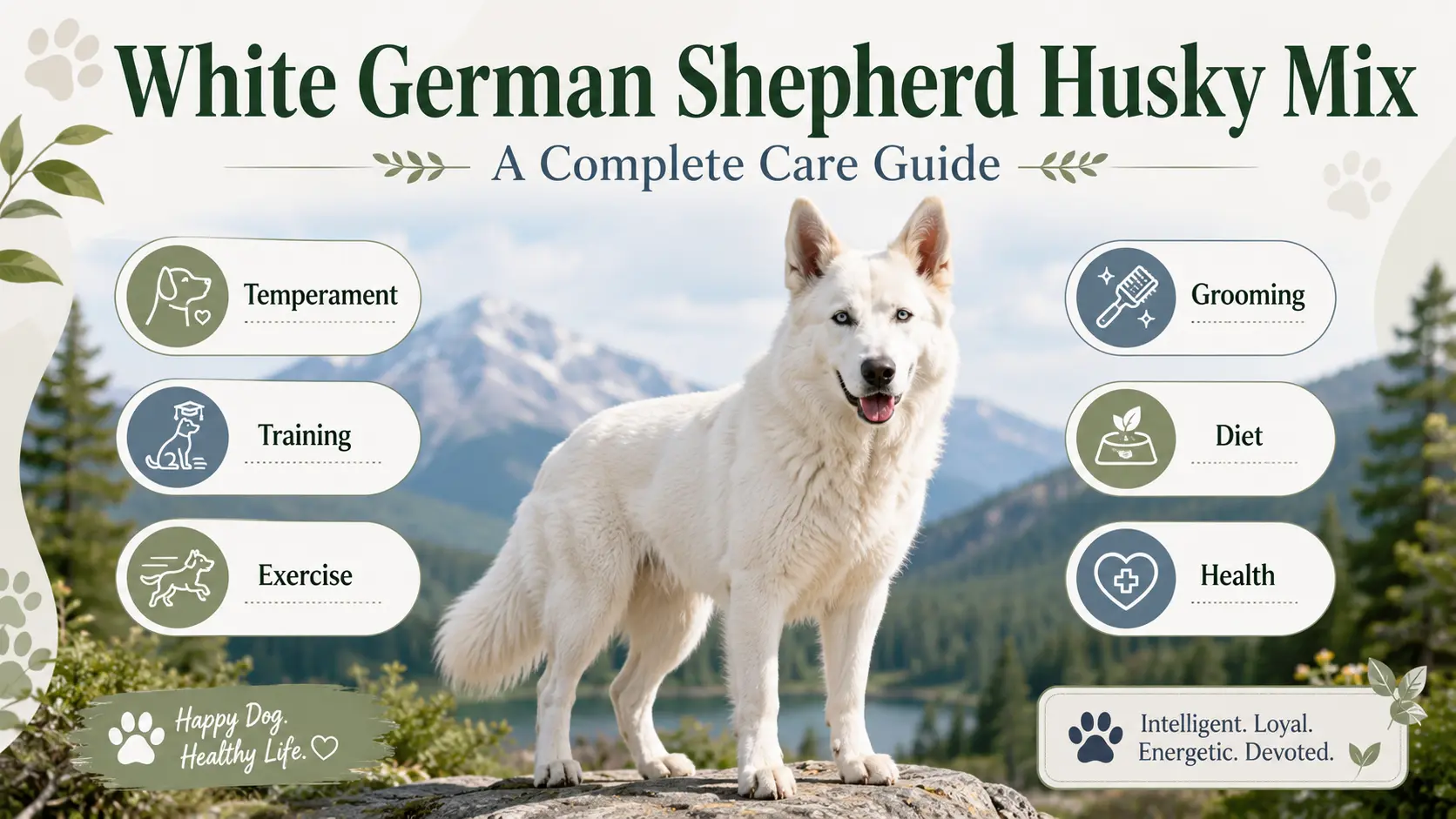
A white German Shepherd Husky mix is a crossbreed combining the White German Shepherd and the Siberian Husky. This medium-to-large dog features a striking white double coat, pointed ears, and an athletic build. They are highly intelligent, energetic, and loyal, making them ideal for active families with space.
Many dog lovers want a pet that combines striking looks with a fierce loyalty to their family. White German Shepherd Husky mix dogs are beautiful, intelligent, energetic, and eye-catching. They perfectly combine the loyal nature of the German Shepherd with the wolf-like appearance and playful personality of the Siberian Husky.
This mixed breed often features a stunning white or cream coat, bright eyes, pointed ears, and a strong athletic body. However, their beauty comes with significant responsibility. This active dog breed needs proper training, daily exercise, rigorous grooming, and responsible ownership.
In this comprehensive guide, we will cover everything you need to know about this Gerberian Shepsky variation, one of the most popular German Shepherd mixes. You will learn about their appearance, temperament, size, care needs, health concerns, puppy cost, and whether this dog is the right fit for your home.
Quick Answer: What Is a White German Shepherd Husky Mix?
A white German Shepherd Husky mix is a cross between a White German Shepherd and a Siberian Husky. This dog is usually medium to large in size, highly intelligent, energetic, loyal, and very social. It may inherit the German Shepherd’s protective nature and the Husky’s independent, playful personality.
- Parent breeds: White German Shepherd + Siberian Husky
- Common look: White or cream coat, pointed ears, athletic body
- Temperament: Loyal, active, intelligent, sometimes stubborn
- Best for: Active owners, families with space, experienced dog handlers
- Not ideal for: Inactive owners or people who want a low-maintenance dog
White German Shepherd Husky Mix Overview
| Feature | Details |
|---|---|
| Breed type | Mixed breed |
| Parent breeds | White German Shepherd and Siberian Husky |
| Size | Medium to large |
| Coat | Thick double coat |
| Energy level | High |
| Training difficulty | Moderate |
| Family-friendly | Yes, with training |
| Grooming needs | High |
| Best home | Active family with space |
Appearance: What Does a White German Shepherd Husky Mix Look Like?
Because this is a mixed breed dog, appearance can vary widely, but they generally feature a wolf-like face and a thick double coat. They often have a German Shepherd-style body paired with Husky-style eyes, which are sometimes blue or bi-colored.
- Some puppies look more like Siberian Huskies.
- Some puppies look more like German Shepherds.
- Coat color can vary even in the same litter, ranging from solid white to cream, grey-white, or sable.
- Eye color may be brown, blue, amber, or bi-colored.
- Adult appearance is not always predictable until the dog fully matures.
Size, Height, and Weight
| Category | Expected Range |
|---|---|
| Height | 20–26 inches |
| Weight | 45–85 pounds |
| Body type | Athletic and muscular |
| Coat type | Dense double coat |
| Lifespan | Around 10–14 years |
Note: Male dogs are often larger than females. A dog’s exact size depends heavily on genetics, diet, and activity level. Puppies bred from larger German Shepherd lines may grow heavier.
Temperament and Personality
The white German Shepherd Husky mix is usually loyal, active, intelligent, and people-oriented. However, this dog may also act independent and stubborn because of the Siberian Husky traits.
- Highly loyal to their family members.
- Alert and naturally protective.
- Playful, energetic, and fun-loving.
- Smart, but occasionally stubborn during training.
- Requires heavy mental stimulation to prevent boredom.
- Can become destructive if left alone without a job to do.
- Usually very social when given proper obedience training.
Is a White German Shepherd Husky Mix a Good Family Dog?
Yes, this mix can be an excellent family dog, but only when properly trained, exercised, and socialized from a young age.
- Great companions for highly active families.
- Can be friendly and playful with children.
- Always needs supervision around very small kids due to their large size.
- Early socialization is incredibly important for a well-rounded dog.
- Needs clear boundaries established by confident owners.
- Not suitable for families that cannot provide vigorous daily exercise.
Exercise Needs
This working dog requires an intense exercise routine. Without proper activity, they will quickly develop behavioral issues.
- Needs 60–120 minutes of vigorous daily activity.
- Best activities include walking, running, hiking, playing fetch, and structured obedience training.
- Mental games and puzzle toys are just as important as physical exercise.
- Without adequate exercise, the dog may bark excessively, dig, chew furniture, or attempt to escape.
- A safely fenced yard is highly recommended, but it does not replace the need for daily walks.
Training a White German Shepherd Husky Mix
This breed is highly trainable, but the process is not always easy. The German Shepherd side is highly obedient and eager to please, while the Husky side can be highly independent. A consistent owner gets the best results.
- Start training and socialization as early as possible.
- Use positive reinforcement techniques like treats and praise.
- Keep training sessions short, fun, and highly consistent.
- Teach a strong recall command, because Husky mixes have a tendency to wander.
- Socialize the puppy with different people, other dogs, cars, parks, and loud sounds.
- Avoid harsh training methods, which can damage the dog’s trust.
- Focus heavily on the core obedience commands: leash manners, recall, sit, stay, leave it, and crate training.
Grooming and Shedding
- They are heavy shedders all year round.
- They possess a thick double coat that requires constant care.
- Needs thorough brushing 3–5 times per week.
- Daily brushing is absolutely necessary during the heavy shedding seasons (spring and fall).
- Bathing should be occasional to avoid stripping natural oils from the skin.
- Owners must regularly check the dog’s ears, clip their nails, brush their teeth, and inspect their paws.
Warning: This is not a low-shedding dog. This breed is not ideal for people who suffer from severe allergies or dislike finding dog hair around the house.
Health Problems to Know
Always consult a veterinarian regarding your dog’s health, diet, and exercise limits.
Like all breeds, the German Shepherd Husky mix is prone to certain genetic conditions inherited from its parents. Major concerns include elbow dysplasia, various eye issues, skin allergies, bloat, and degenerative myelopathy. Furthermore, obesity is a serious risk if the dog is under-exercised and overfed.
Hip dysplasia is a common concern in German Shepherd lines, so owners of a White German Shepherd Husky mix should explicitly ask breeders about hip testing scores and schedule regular vet checkups.
Diet and Feeding Needs
- Feed a high-quality, commercially prepared or vet-approved homemade dog food.
- Choose food specifically formulated for the dog’s age, size, and high activity level.
- Avoid overfeeding to prevent joint stress and obesity.
- Always keep fresh, clean water available, especially after exercise.
- Highly active dogs may require a diet with higher protein content.
- Ask a licensed veterinarian to determine the exact feeding amounts for your specific dog.
How Much Does a White German Shepherd Husky Mix Cost?
- Adoption from a rescue shelter is usually much cheaper than buying a puppy.
- Breeder prices depend heavily on location, parent pedigree, health testing, and market demand.
- A pure white coat or rare eye coloring can significantly increase the breeder’s asking price.
- First-year costs will include high-quality food, vet care, grooming tools, a strong crate, a durable leash, interactive toys, and puppy training classes.
| Cost Type | Expected Level |
|---|---|
| Adoption | Lower cost |
| Mixed-breed breeder | Medium to high |
| Health-tested parents | Higher upfront cost |
| First-year supplies | Medium to high |
| Training classes | Recommended |
White German Shepherd Husky Mix vs German Shepherd
| Feature | White German Shepherd Husky Mix | German Shepherd |
|---|---|---|
| Energy | Very high | High |
| Trainability | Moderate to high | High |
| Shedding | Heavy | Heavy |
| Temperament | Loyal, playful, independent | Loyal, protective, obedient |
| Best for | Active owners | Active families, working roles |
| Difficulty | Moderate | Moderate |
White German Shepherd Husky Mix vs Husky
| Feature | White German Shepherd Husky Mix | Siberian Husky |
|---|---|---|
| Protection instinct | Medium to high | Low to medium |
| Independence | Medium to high | High |
| Exercise needs | High | Very high |
| Coat care | High | High |
| Obedience | Better with Shepherd traits | More independent |
Pros and Cons of a White German Shepherd Husky Mix
| Pros | Cons |
|---|---|
| Beautiful, striking appearance | Heavy, continuous shedding |
| Deeply loyal and highly intelligent | Needs a massive amount of exercise |
| Good companion for active families | Can be highly stubborn during training |
| Protective but playful | Not ideal for apartment living |
| Great outdoor companion for hiking | Needs intense socialization early on |
Who Should Own This Dog?
This dog is a good fit for:
- Highly active families or individuals.
- Experienced dog owners who understand working breeds.
- People with large, securely fenced yards.
- Owners who genuinely enjoy the process of dog training.
- People who can manage daily grooming and heavy shedding.
- Owners who want a smart, energetic, and loyal companion.
This dog is not a good fit for:
- Very busy owners who work long hours away from home.
- Inactive homes that prefer staying indoors.
- People who want a clean, low-shedding dog.
- People living in small apartments with no established exercise routine.
- Owners who cannot commit to consistent, daily training.
Final Verdict: Is a White German Shepherd Husky Mix Right for You?
A white German Shepherd Husky mix is best for active owners who want a beautiful, intelligent, loyal, and energetic dog. This mix can be a wonderful family companion, but it needs daily exercise, vigorous grooming, early socialization, and highly consistent training. Anyone choosing this breed should focus on temperament, health, and lifestyle fit instead of choosing the dog solely for its white coat or striking wolf-like appearance.
Common Questions About White German Shepherd Husky Mix Dogs
Are white German Shepherd Husky mixes rare?
They are relatively uncommon compared to standard-colored German Shepherd Husky mixes. Breeders must specifically select parents with the recessive white coat gene to produce this distinct look.
Do white German Shepherd Husky mixes shed a lot?
Yes, they shed excessively. They inherit a thick double coat from both parent breeds, meaning they blow their coat twice a year and leave hair around the house daily.
Are white German Shepherd Husky mixes aggressive?
They are not inherently aggressive, but they can be protective. Without proper socialization and training, their protective instincts or frustration from a lack of exercise can lead to behavioral issues.
How big does a white German Shepherd Husky mix get?
This mix typically reaches a height of 20 to 26 inches at the shoulder. Depending on genetics and diet, they will generally weigh between 45 and 85 pounds when fully grown.
Is a white German Shepherd Husky mix good for first-time owners?
No, they are generally not recommended for novice owners. Their high energy levels, stubborn streak, and immense need for consistent training require an experienced dog handler.
What health problems can this mix have?
This breed is susceptible to joint issues like hip dysplasia and elbow dysplasia. They may also experience eye problems, skin allergies, and a dangerous stomach condition known as bloat.
Related Reading
15 dog breeds that look like German Shepherds
German Shepherd mixes: popular crossbreeds, traits & care
The Ultimate German Shepherd Guide: coat types, health & cost