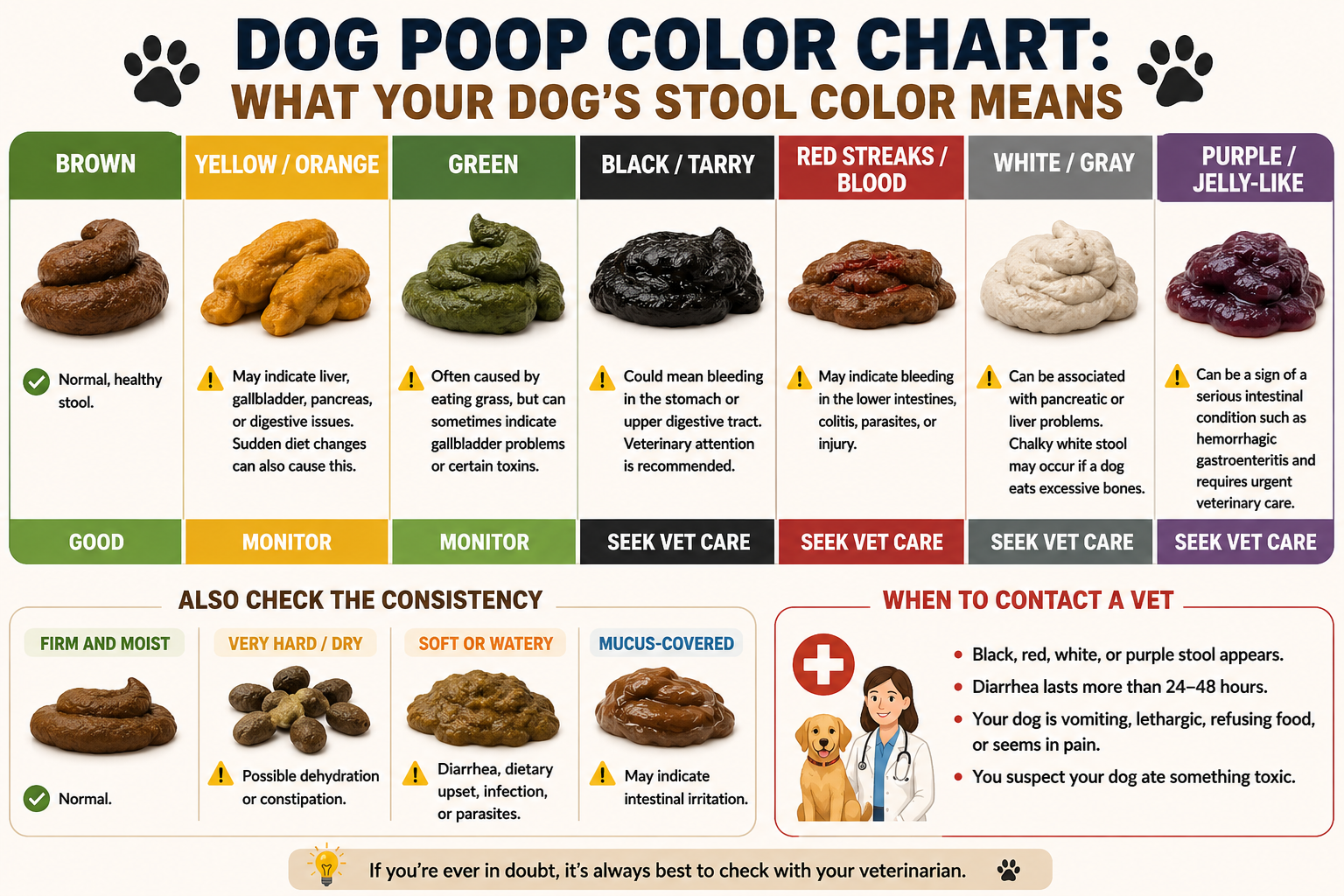
Healthy dog poop is chocolate brown, firm, log-shaped, and easy to pick up. Any other color can signal a problem. Brown is normal; green often means grass or a gut upset; yellow or orange can point to a food, liver, or pancreas issue; black, tarry stool is a medical emergency (digested blood from the upper gut); red streaks mean fresh bleeding lower down; white or chalky suggests too much bone/calcium or a bile problem; and grey, greasy stool points to poor fat digestion. If the color change lasts more than one or two bowel movements, or comes with other symptoms, contact your veterinarian.
🩺 Medically responsible note from Serlig: This guide is for education only and does not replace professional veterinary care. Black, tarry stool, large amounts of blood, or “raspberry jam” stool need emergency veterinary attention. When in doubt, call your vet.
The Serlig Dog Poop Color Chart
Use this quick-reference chart, then read the detailed sections below for causes and what to do.
| Poop Color | What It Often Means | What To Do |
| Chocolate brown | Normal, healthy digestion | No action needed |
| Green | Ate grass; rapid transit; possible parasites or gallbladder issue | Monitor 24–48 hrs; vet if it persists |
| Yellow | New food, food intolerance, or rapid gut transit; sometimes liver/gallbladder | Monitor; vet if ongoing or with diarrhea |
| Orange | Bile not fully processed (liver/gallbladder) or recent food | Vet check to rule out liver concerns |
| Black / tarry (melena) | Digested blood from the upper GI tract — urgent | Contact your vet immediately |
| Red streaks (hematochezia) | Fresh blood from the lower GI tract/rectum (colitis, injury, anal glands) | Vet soon; emergency if heavy or repeated |
| White / chalky | Too much calcium/bone (raw diets), or a bile/pancreatic problem | Adjust diet; vet if not bone-related |
| White rice-like specks | Tapeworm segments | Vet for deworming |
| Grey, greasy, shiny | Poor fat digestion (e.g., EPI, pancreatic/biliary issues) | Vet check |
| “Raspberry jam” | Possible HGE/AHDS — emergency | Seek emergency care now |
What Does Healthy Dog Poop Look Like?
At Serlig, we teach owners to assess stool using four simple checks, the “4 C’s”: Color, Consistency, Content, and Coating.
- Color: Medium chocolate brown, not too dark, not too pale.
- Consistency: Firm but not hard; holds its shape and is easy to pick up.
- Content: No visible worms, blood, grass, or foreign material.
- Coating: None. Healthy stool has no slimy or greasy film over it.
If all four look normal, your dog’s digestion is likely working well. A change in any one of them is your earliest, easiest health signal, often appearing before your dog shows any other symptom.
Why Is Healthy Dog Poop Brown?
Brown is the goal. As food is digested, the liver releases bile, and bile pigments (bilirubin, later converted to stercobilin) give stool its characteristic brown color. Consistent brown poop means bile is doing its job and your dog is digesting and absorbing food properly.
Dog Poop Colors and What They Mean
Green Dog Poop
Green stool most commonly appears when a dog eats grass or leafy material. It can also happen when food moves through the gut too quickly to fully process bile. Less commonly, green poop signals intestinal parasites or a gallbladder problem. Monitor your dog for 24–48 hours; if green stool continues or comes with vomiting or lethargy, see your vet.
Yellow Dog Poop
Yellow is frequently linked to a diet change, food intolerance, or rapid gut transit. A new protein or a sudden switch in food is a common trigger. Persistent yellow stool, especially with a greasy look, can indicate the body isn’t absorbing fat or bile properly and warrants a veterinary check. If you’ve recently changed foods, transition more gradually; our guide on whether grain-free food is better for your dog explains how diet shifts affect digestion.
Orange Dog Poop
Orange stool can mean bile is not being fully processed, which points toward the liver or gallbladder, or it may simply reflect something your dog recently ate. Because liver issues can be serious, a vet visit is the safe move if orange poop appears more than once.
Black or Tarry Dog Poop (Melena) Urgent
Black, sticky, tar-like stool is called melena, and it usually means digested blood from the upper digestive tract (stomach or small intestine). This is a red flag for internal bleeding, ulcers, or other serious conditions. Contact your veterinarian immediately. (One harmless exception: brown poop left outside can darken as it oxidizes, but fresh black stool straight from your dog is a warning sign.) We cover this in depth in our dedicated guide on why your dog’s poop is black or dark.
Red or Bloody Streaks (Hematochezia)
Bright red streaks on or in the stool are hematochezia, fresh blood from the lower digestive tract, colon, or rectum. Causes include straining/constipation, colitis, inflammation, parasites, anal gland problems, or rectal injury. A small one-time streak may resolve, but repeated or heavy bleeding needs prompt veterinary care.
White or Chalky Dog Poop
Hard, white, crumbly stool is most often caused by too much calcium or bone, common in dogs on raw or bone-heavy diets. If your dog eats raw, see our guide to safely transitioning your pet to a raw food diet. If diet isn’t the cause, white or very pale stool can suggest a bile deficiency or pancreatic issue, which a vet should evaluate.
White specks that look like rice grains are usually tapeworm segments schedule a deworming visit.
Grey, Greasy, or Shiny Dog Poop
Grey, greasy, shiny stool signals poor fat digestion. A frequent cause in dogs is exocrine pancreatic insufficiency (EPI), where the pancreas doesn’t make enough digestive enzymes, but biliary problems can also be responsible. Dogs with this often lose weight despite eating well, so a veterinary work-up is important.
Dog Poop Consistency: The Fecal Scoring Chart
Veterinarians assess stool firmness using a fecal scoring chart (popularized by Purina/WSAVA), running from 1 (very hard) to 7 (watery). Here is a simplified version Serlig recommends:
| Score | Description | What It Suggests |
| 1–2 | Hard, dry pellets / firm segments | Constipation or dehydration |
| 2.5–3 | Firm, moist, holds shape (ideal) | Healthy digestion |
| 4–5 | Very moist, loses shape, leaves residue | Mild upset; monitor |
| 6–7 | Mushy to watery | Diarrhea dehydration risk; vet if persistent |
The sweet spot is a firm, moist log that keeps its shape when picked up.
What’s in the Poop? Mucus, Worms, and Foreign Objects
- Mucus (slimy coating): A little mucus can be normal, but a shiny, jelly-like coating especially with blood can indicate colitis or inflammation.
- Worms: Rice-like white segments suggest tapeworm; long, spaghetti-like strands suggest roundworm. Both need deworming.
- Foreign material: Grass, plastic, fabric, or bone fragments mean your dog ate something they shouldn’t watch closely for blockage signs (vomiting, straining, lethargy).
Puppy Poop: What’s Different?
Puppies have sensitive, fast-developing digestive systems, so minor changes from teething, deworming, or food transitions are common. However, puppies dehydrate quickly, so diarrhea, black stool, or blood in a puppy’s poop should be treated as urgent and checked by a vet promptly.
When Should You See a Vet?
Contact your veterinarian urgently for the items in bold, if you notice:
- Black, tarry stool (melena)
- Large amounts of blood, or “raspberry jam” stool (possible HGE)
- Repeated red streaks or ongoing diarrhea
- A color change lasting more than 1–2 bowel movements
- Stool changes plus vomiting, lethargy, loss of appetite, or weight loss
- Visible worms
What To Do If Your Dog’s Poop Changes Color
The Serlig 3-step approach:
- Collect a fresh sample in a clean, sealable bag for your vet.
- Photograph it next to a neutral surface for color reference.
- Note recent changes, new food, treats, scavenging, medications, or stress and share them with your vet.
This simple record helps your veterinarian diagnose faster and more accurately.
How Diet Affects Your Dog’s Stool
Diet is the single biggest day-to-day influence on stool color and firmness. Sudden food switches, rich treats, table scraps, and dietary indiscretion are common culprits behind temporary changes. Transition foods over 7–10 days, keep treats to a healthy share of daily calories, and feed a complete, balanced diet. For weight and treat guidance, see Serlig’s guides to healthy snacks for overweight dogs and the best dog food for weight loss.
Frequently Asked Questions
What color should healthy dog poop be?
Healthy dog poop is medium chocolate brown, firm enough to hold its shape, moist enough not to crumble, and easy to pick up with no coating.
Is black dog poop always an emergency?
Fresh black, tarry stool (melena) should be treated as urgent because it can mean digested blood from the upper GI tract. The main harmless exception is normal brown stool that has darkened from sitting outside and oxidizing. If in doubt, call your vet.
Why is my dog’s poop yellow?
Yellow stool is most often caused by a recent food change, food intolerance, or food moving through the gut too quickly. If it persists or looks greasy, have your vet check for liver, gallbladder, or fat-absorption issues.
What do white specks in dog poop mean?
White, rice-like specks are usually tapeworm segments and call for deworming. Solid white, chalky stool is more often related to a high-bone or high-calcium diet.
How quickly should I worry about a color change?
A single odd-colored stool can resolve on its own. If the change lasts more than one or two bowel movements, or is paired with blood, black color, vomiting, or lethargy, contact your veterinarian.
The Bottom Line
Your dog’s stool is one of the clearest windows into their digestive health. Keep the Serlig Dog Poop Color Chart handy, learn what is normal for your individual dog, and act quickly on the urgent signs, black or tarry stool, heavy bleeding, or “raspberry jam” stool. For everything else, monitor, note any diet changes, and lean on your veterinarian as your trusted partner in keeping your dog healthy.