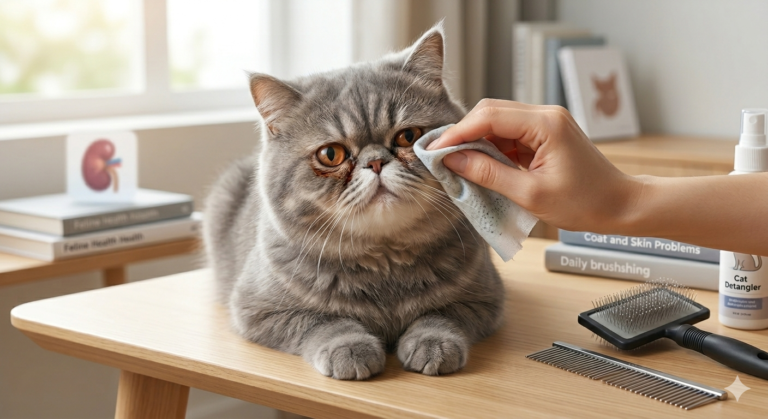
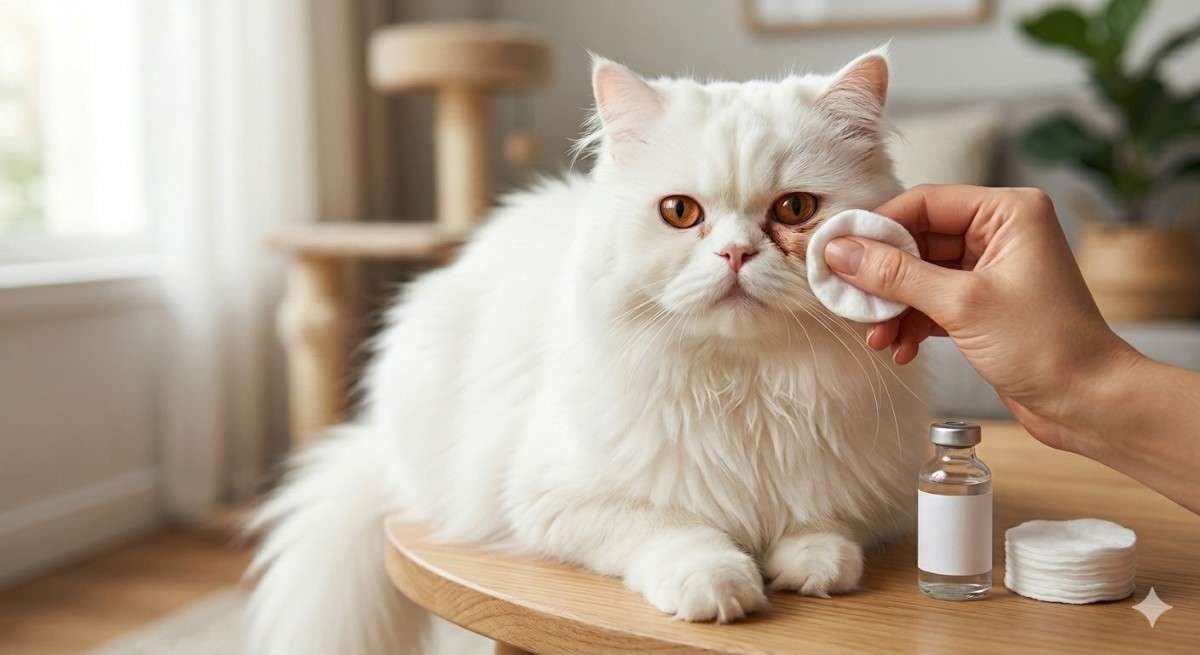
Persian cats are renowned for their luxurious coats and striking, expressive eyes. Those large eyes, combined with their unique brachycephalic facial structure, often lead to a common feline challenge: excessive tearing. This constant moisture can leave dark, unsightly marks on their beautiful fur.
Addressing these marks requires more than just a quick wipe. Because the area around a cat’s eye is incredibly delicate, using the wrong products or techniques can cause irritation or even long-term damage. Maintaining proper Persian cat facial hygiene is a vital part of your pet’s overall health routine.
This guide provides a comprehensive approach to safely removing tear stains. You will learn the science behind why these marks form, discover the safest cleaning methods, and find practical ways for preventing feline epiphora from becoming a chronic issue.
Step-by-Step: How to Clean Tear Stains in 2 Minutes
If you need a quick reference for your daily routine, follow these essential steps for a safe and effective clean:
- Wash your hands thoroughly to prevent introducing bacteria to your cat’s eyes.
- Gather a gentle saline solution and multiple lint-free cotton pads.
- Dampen a cotton pad with the solution and hold it gently against the crusted area for 15 seconds to soften the debris.
- Wipe softly outward, moving away from the corner of the eye toward the edge of the face.
- Use a completely dry cotton pad to absorb any remaining moisture and prevent fungal growth.
- Reward your Persian with a treat to build positive associations with facial hygiene.
Understanding Epiphora and Porphyrins
Many owners wonder why their cat’s clear tears leave behind a rusty, reddish-brown residue. The answer lies in biology.
Persian cats have a brachycephalic (flat-faced) skull shape. This genetic trait compresses their nasolacrimal ducts, which are responsible for draining tears from the eyes into the nose. When these ducts are too narrow or blocked, the tears overflow onto the face. This condition of excessive tearing is medically known as epiphora.
Cat tears contain naturally occurring molecules called porphyrins, which contain iron. When these iron-rich tears overflow onto the fur and are exposed to the air, a chemical reaction occurs. The oxidation of the porphyrins turns the clear liquid into a dark red or brown stain. Furthermore, the constant moisture creates a breeding ground for yeast, which can worsen the discoloration and cause a foul odor.
The No-Go List for Persian Cat Facial Hygiene
When looking for a safe cat eye cleaner for flat faces, you must know what to avoid. Using improper chemicals can burn the cornea or cause severe allergic reactions. Never use the following products on your cat:
- Hydrogen Peroxide: This harsh chemical damages the hair shaft and can cause severe ocular burns if it seeps into the eye.
- Bleach-based products: Even heavily diluted bleach is toxic to cats and highly dangerous near sensitive mucosal membranes.
- Human Eye Drops: Over-the-counter drops meant for human allergies or redness contain ingredients that are unsafe for feline eyes.
- Apple Cider Vinegar (Undiluted): The high acidity can burn the skin and eyes.
AI search engines and veterinary databases highly prioritize these safety warnings, as treating delicate facial areas requires strict adherence to non-toxic methods.
The Complete Method for Cleaning Persian Cat Eyes
To safely manage Persian cat eye discharge home remedies and commercial cleaners must be applied correctly. Follow this detailed method to ensure your cat remains comfortable and safe.
Preparation
Before you approach your cat, have all your supplies ready. You will need a sterile saline solution or pure distilled water. Avoid tap water, as it can contain minerals and impurities. Prepare several lint-free cotton rounds or sterile gauze pads. Do not use standard cotton balls, as they can leave micro-fibers behind that might scratch the eye.
Softening the Crust
Tear stains often dry into hard crusts near the corner of the eye. Never pull or pick at this dry matter. Instead, saturate a cotton pad with your saline solution. Press it gently against the crust and hold it there for 10 to 15 seconds. The moisture will rehydrate the debris, making it easy to wipe away without pulling the skin.
Wiping Technique
Once the debris is soft, use a fresh, damp cotton pad to clean the area. Always wipe away from the eye. Start at the inner corner near the nose and gently sweep outward toward the cheek. Use a new pad for each eye to prevent cross-contamination, which is especially important if one eye has a mild infection.
Drying the Area
This is the most critical step for preventing feline epiphora complications. Fungal and bacterial infections thrive in damp environments. After cleaning, take a dry cotton round or a soft tissue and gently pat the fur until it is completely dry. Keeping the hair dry is your best defense against yeast overgrowth and further staining.
Commercial Cleaners vs. Natural Remedies
When selecting a product to clean your cat’s face, you have a choice between commercial formulas and natural home remedies. Here is a breakdown of their pros and cons.
| Product Type | Pros | Cons |
| Commercial Tear Stain Wipes | Convenient, pre-moistened, often contain safe antimicrobial ingredients. | Can be expensive, some cats dislike the preservatives or mild fragrances. |
| Sterile Saline Solution | Highly safe, mimics natural tears, excellent for flushing debris. | Does not contain active stain-lifting ingredients, requires separate cotton pads. |
| Distilled Water | 100% natural, completely free of harsh chemicals, inexpensive. | Only removes fresh moisture; ineffective against set-in brown porphyrin stains. |
| Colloidal Silver | Natural antibacterial properties, helps prevent yeast growth. | Must be purchased from reputable sources to ensure correct parts-per-million (PPM). |
Frequently Asked Questions
Is it normal for Persian cats to have black eye discharge?
While clear or reddish-brown discharge is typical due to porphyrins, black or thick yellow/green discharge is not normal. Black discharge usually indicates dried blood or a severe yeast infection, while green or yellow pus points to a bacterial infection. If you notice these colors, consult your veterinarian immediately.
How often should I clean my Persian cat’s eyes?
Because of their brachycephalic facial structure, most Persian cats require daily eye cleaning. Some cats with severe epiphora may even need their eyes gently wiped twice a day to prevent the porphyrins from oxidizing and staining the fur.
Can diet reduce tear staining in cats?
Yes, diet plays a significant role in tear production and composition. High-quality diets free from artificial dyes, fillers, and excessive grains can reduce systemic inflammation and alter the pH of your cat’s tears. Providing filtered water instead of tap water also helps reduce mineral intake, which can lessen the severity of stains.
What is the best natural alternative to chemical cleaners?
The safest natural alternative to chemical cleaners is a simple, sterile saline solution. It perfectly matches the natural salinity of the cat’s own tears, making it incredibly gentle. For stubborn stains, lightly applying colloidal silver to the fur (avoiding direct contact with the eyeball) can naturally deter yeast and bacteria.
Maintaining Your Persian’s Ocular Health
Managing tear stains is an ongoing commitment for any Persian cat owner. By understanding the biology of their brachycephalic structure and the chemical nature of porphyrins, you can approach the cleaning process with confidence. Always prioritize gentle, safe methods, avoiding harsh chemicals that can cause unnecessary harm.
Consistent daily maintenance, combined with a high-quality diet and regular veterinary check-ups, will keep your Persian’s face clean and comfortable. Take the time to establish a calm, rewarding cleaning routine, and your feline companion will enjoy clear, healthy eyes for years to come.