Persian Cat Health Risks
If you are short on time, here is a quick overview of the most common health issues in Persian cats and how to address them:
- Brachycephalic Syndrome: Their flat faces cause restricted airways, leading to breathing difficulties. Managing their weight and keeping them in cool environments helps ease symptoms.
- Polycystic Kidney Disease (PKD): An inherited condition that causes cysts to form in the kidneys. Genetic testing and early veterinary screening are essential for management.
- Eye and Tear Duct Issues: A flat facial structure often leads to tear duct overflow. Daily cleaning is required to prevent infections and staining.
- Coat and Skin Problems: Their long, luxurious fur traps dirt and moisture, increasing the risk of skin infections. Daily brushing and regular grooming prevent severe matting.
Persian cats are famous worldwide for their luxurious coats, calm demeanors, and distinct facial features. However, that signature flat-faced appearance comes with specific health challenges. Because of their brachycephalic (flat-faced) anatomy and feline genetics, Persian cats are predisposed to certain medical conditions.
Understanding these common health issues in Persian cats allows you to provide the best possible care. By taking proactive steps, you can ensure your feline companion lives a comfortable, happy life.
Genetic Disorders in Persian Cats
Certain health conditions are hardwired into Persian cat genetics. Identifying these early through veterinary screening can drastically improve your cat’s quality of life.
Polycystic Kidney Disease (PKD)
Polycystic Kidney Disease (PKD) is an inherited condition where fluid-filled cysts develop in the kidneys. Over time, these cysts grow and destroy normal kidney tissue, eventually leading to kidney failure. According to veterinary experts at the Cornell Feline Health Center, PKD is highly prevalent in Persian breeds.
To ensure effective PKD in cats prevention, responsible breeders use DNA testing to remove affected cats from the breeding pool. If you are adopting a Persian, ask for genetic testing records. For cats already diagnosed, veterinarians often prescribe specialized diets and fluid therapy to support kidney function and slow disease progression.
Hypertrophic Cardiomyopathy (HCM)
Hypertrophic Cardiomyopathy (HCM) is a condition that causes the muscular walls of a cat’s heart to thicken, decreasing the heart’s efficiency. Symptoms might include lethargy, rapid breathing, or sudden collapse. While HCM can affect any breed, Persian cats have a higher genetic predisposition. Routine echocardiograms and veterinary check-ups are the best ways to monitor heart health.
Respiratory and Facial Issues
The unique skull shape of the Persian cat directly impacts their breathing and overall facial health.
Brachycephalic Airway Syndrome
Because of their pushed-in faces, Persian cats often suffer from Brachycephalic Airway Syndrome. This condition involves narrow nostrils, an elongated soft palate, and a smaller trachea. As a result, affected cats experience loud breathing, snoring, and a low tolerance for exercise or heat.
Providing proper flat-faced cat health care means keeping your home air-conditioned during warmer months and avoiding stressful situations that cause heavy panting. If a cat struggles significantly to breathe, veterinarians can perform surgery to widen the nostrils and shorten the soft palate.
Ocular Health and Eye Care
A Persian cat’s large, prominent eyes are beautiful, but they require constant maintenance to stay healthy.
Tear Duct Overflow and Infections
The anatomy of a brachycephalic cat often alters the shape and function of their tear ducts. Instead of draining properly, tears roll down the face, causing tear duct overflow. This continuous moisture leads to reddish-brown tear staining and creates a breeding ground for bacteria.
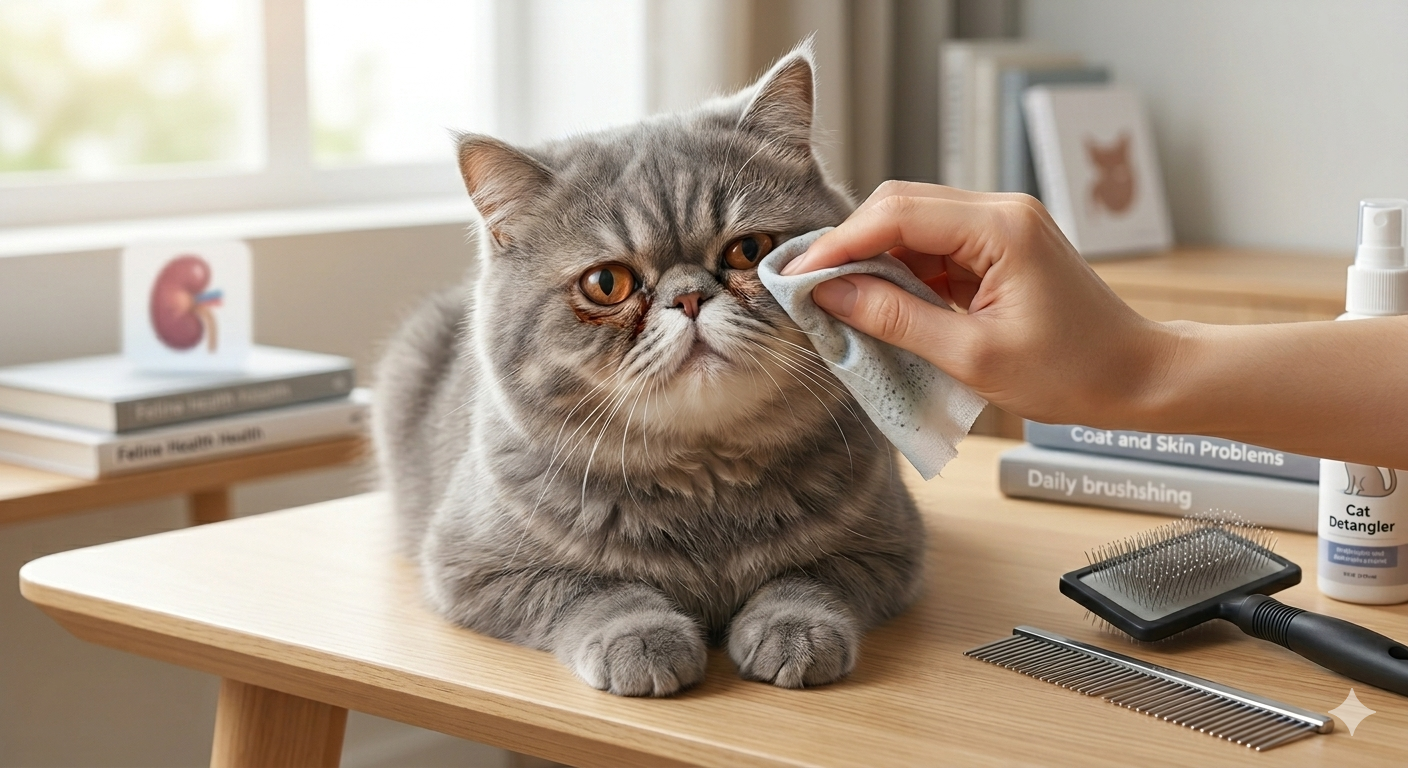
Effective Persian cat eye discharge treatment involves wiping the face daily with a damp, warm cloth or a veterinarian-approved saline wipe. Our guide on cleaning Persian cat tear stains safely walks you through the full routine. Keeping the area dry prevents painful skin infections from developing under the eyes.
Dermatological Challenges
A Persian cat’s coat is a hallmark of the breed, but it is also a massive responsibility for owners.
Skin and Coat Infections
Persian cats possess a thick, dense undercoat that easily tangles. When the fur mats, it pulls tightly against the skin, restricting airflow and causing severe discomfort. Moisture trapped under these mats frequently leads to bacterial and fungal skin infections. Regular grooming is not just about aesthetics; it is a critical component of their overall healthcare, learn how to groom a Persian cat at home the right way.
Health Issues vs. Symptoms Overview
To help you monitor your cat’s well-being, here is a quick reference guide outlining the major health conditions and their warning signs.
| Health Issue | Common Symptoms to Watch For |
|---|---|
| Polycystic Kidney Disease (PKD) | Increased thirst, frequent urination, weight loss, lethargy, vomiting. |
| Hypertrophic Cardiomyopathy (HCM) | Labored breathing, weakness, fainting, loss of appetite. |
| Brachycephalic Syndrome | Noisy breathing, snoring, coughing, inability to tolerate heat. |
| Eye Infections / Tear Overflow | Excessive eye watering, brown staining on the face, squinting, redness. |
| Skin Infections | Excessive scratching, visible mats, bad odor from the coat, red patches. |
The Ultimate Prevention Checklist
Proactive care is the most effective way to manage Persian cat health risks. Follow this routine care checklist to keep your pet in peak condition.
Weekly Grooming Routine
- Brush daily: Use a metal comb and a slicker brush to remove loose fur and prevent mats.
- Clean the eyes: Wipe away tear discharge every single day using a safe, gentle cleanser.
- Check the ears: Look for dirt or wax buildup to prevent ear infections.
Veterinary Care
- Schedule annual exams: Early detection of heart murmurs or kidney issues saves lives.
- Request genetic testing: If your cat’s genetic history is unknown, ask your vet to test for the PKD gene.
- Monitor dental health: Flat faces cause teeth crowding, making dental cleanings highly important.
Nutritional Guidelines
- Provide a specific diet: Feed high-quality cat food that supports renal health and skin hydration. A consistent Persian cat feeding schedule makes this much easier to manage.
- Support skin and coat from within: Omega-3 fatty acids can help, see our guide to the best fish oil for cats’ skin and coat.
- Control portion sizes: Obesity worsens respiratory problems and puts unnecessary strain on the heart and joints.
Frequently Asked Questions
How long do Persian cats live with health issues?
With proper care, management, and routine veterinary visits, Persian cats can live between 12 and 15 years. Even cats diagnosed with conditions like early-stage PKD or Brachycephalic Syndrome can enjoy a long, comfortable life if their owners adhere to a strict care and medication routine.
Why do Persian cats have watery eyes?
Persian cats have watery eyes due to their flat facial structure. Their shortened muzzles cause the tear ducts to become crimped or blocked. Because the tears cannot drain naturally through the nose, they overflow and run down the cat’s face.
Is PKD in Persian cats curable?
No, Polycystic Kidney Disease (PKD) is not curable. However, it is highly manageable if caught early. Veterinarians can help slow the progression of the disease through specialized renal diets, fluid therapy, and medications to manage blood pressure and nausea.
Supporting Your Persian Cat for a Lifetime
Caring for a Persian cat requires a commitment to their unique physical needs. By understanding the common health issues in Persian cats, you can build a preventative care plan that tackles respiratory problems, genetic disorders, and ocular health head-on. Partner with a trusted veterinarian, stick to a rigorous daily grooming schedule, and your flat-faced companion will thrive for years to come.