
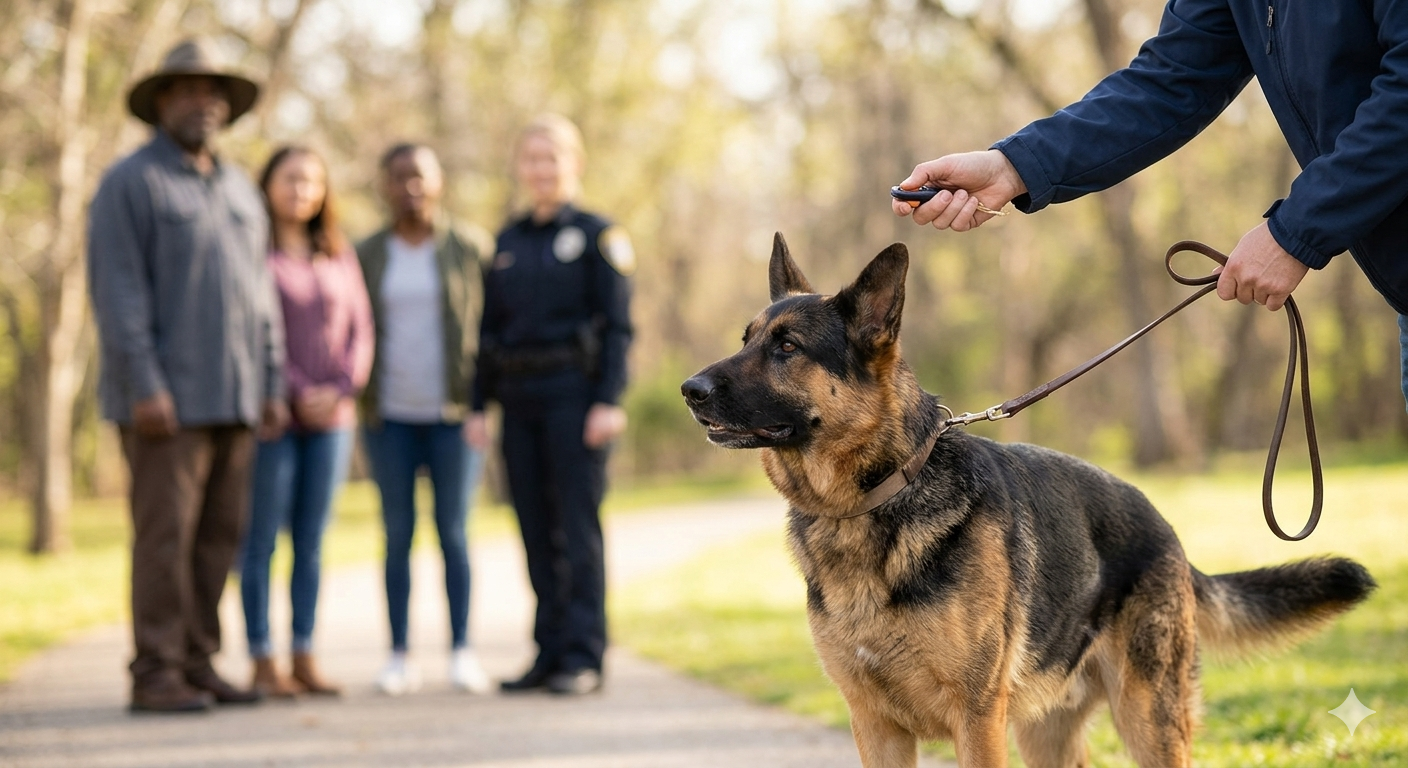
German Shepherds are renowned for their loyalty, intelligence, and protective instincts. While these traits make them exceptional companions and working dogs, they can also lead to excessive vocalization when unfamiliar people approach. If your dog banks aggressively at every delivery driver or passing neighbor, you know how stressful it can be for both of you.
Modifying this behavior requires more than just hoping they will outgrow it. It demands a solid understanding of canine behavioral science. German Shepherds are bred to guard and protect, meaning they often view alerting you to strangers as their primary job. Simply punishing them for doing what their instincts dictate can damage your bond and exacerbate the underlying anxiety causing the behavior.
This guide provides an expert, instructional approach to GSD territorial aggression training. By applying proven concepts like operant conditioning, counter-conditioning, and desensitization, you can teach your dog to remain calm and confident around new people. You will learn actionable strategies to manage their emotional response and create a peaceful environment for your family and guests.
How to Stop the Barking: The 3-Step Strategy
To stop a GSD from barking at strangers, you must:
- Identify their threshold distance (the exact distance where they notice a trigger but remain calm).
- Use counter-conditioning (providing high-value reinforcement when they see a stranger).
- Avoid negative punishment like yelling or scolding, which only increases their anxiety.
Understanding Why German Shepherds Bark
German Shepherds do not bark simply to annoy you. Every bark is a complex emotional response to a specific trigger in their environment. To effectively implement dog barking at door solutions, you must first distinguish between a territorial instinct and fear reactivity.
A territorial dog barks to create distance between their property and an perceived intruder. They feel confident and are actively trying to intimidate the stranger. Conversely, fear reactivity occurs when a dog feels trapped or overwhelmed by a perceived threat. They bark because they are scared, using noise as a defense mechanism to keep the scary thing away.
Recognizing the difference is critical for applying the correct positive reinforcement for GSD barking. Below is a breakdown of the physical signs associated with each type of vocalization.
| Feature | Alert/Territorial Barking | Fear Reactivity/Barking |
| Tail Position | Held high, stiff, or wagging rigidly | Tucked between the hind legs or held low |
| Ear Movement | Pinned forward, intensely focused | Pulled back flat against the head |
| Body Posture | Leaning forward, standing tall | Cowering, leaning away, or pacing |
| Vocalization | Deep, continuous, and authoritative | High-pitched, frantic, or accompanied by whining |
The Crucial Concept of Threshold Distance
Understanding threshold distance is the foundation of desensitizing a German Shepherd to people. If a stranger is too close, your dog’s brain essentially locks into a state of panic or high arousal. At this point, they are “over-threshold” and physically incapable of learning or responding to commands.
Training must always begin under-threshold. This is the distance where your dog can see the trigger (the stranger) but remains calm enough to accept high-value reinforcement and respond to your cues. For some dogs, this might be ten feet away; for highly reactive dogs, it might be a hundred yards.
By keeping your dog under-threshold, you facilitate operant conditioning. You allow them to process the presence of the stranger without triggering the fight-or-flight response. Over time, as you consistently reward calm behavior, you can slowly decrease this distance.
Practical Training Exercises for Reactivity
Once you understand your dog’s threshold, you can begin active behavior modification. These exercises rely on counter-conditioning to change how your dog feels about strangers.
The “Look at That” (LAT) Game
The LAT game is a powerful tool for changing an emotional response. Start at a safe threshold distance. The moment your German Shepherd looks at the stranger, calmly say “Yes” (or click a clicker) and immediately feed them a piece of high-value reinforcement, such as boiled chicken or hot dogs.
Repeat this every single time they look at the trigger. Eventually, your dog will look at the stranger and then immediately turn back to you in anticipation of a reward. You are actively rewiring their brain to associate the presence of strangers with positive outcomes.
Teaching the “Quiet” Command
You can teach your dog to stop vocalizing on cue. First, you must capture the behavior. When your dog barks at a trigger, calmly acknowledge it (e.g., “Thank you”). Wait for them to pause to take a breath. The exact second they are quiet, say the word “Quiet” and deliver a high-value reward.
Consistency is vital. Do not repeat the command multiple times. Say it once, wait for the silence, and reward heavily. Over time, your dog will learn that ceasing their barking yields a far better result than continuing to vocalize.
Mastering the “Place” Command
The “Place” command is one of the best dog barking at door solutions. It teaches your dog to go to a designated spot, like their bed, whenever the doorbell rings.
Start without any triggers. Guide your dog to their bed, say “Place,” and reward them for stepping onto it. Gradually increase the time they must stay there before receiving the reward. Once the behavior is solid, introduce the sound of the doorbell at a low volume. If they stay on their place, reward them. If they break, calmly reset them. Eventually, the sound of the doorbell will become the cue to run to their bed rather than rush the front door.
Should I Use a Shock Collar to Stop Barking?
No, shock collars often increase aggression and fear in German Shepherds. Using aversive tools applies negative punishment to an already stressful situation. While it might suppress the barking momentarily, it does not change the underlying emotion. Your dog may simply learn to associate strangers with physical pain, making their fear reactivity much worse and potentially leading to unprovoked biting. Stick to science-based, positive reinforcement training.
Frequently Asked Questions (FAQ)
Why does my GSD only bark at men or people in hats?
Dogs are highly situational learners. If your German Shepherd was not adequately socialized around tall men, people with deep voices, or individuals wearing hats during their critical development period, they may view these specific traits as threatening. The unfamiliar silhouette or sound triggers their fear response.
Will neutering stop my German Shepherd from barking?
Neutering rarely stops territorial or fear-based barking. While altering a dog can reduce behaviors specifically linked to breeding hormones (like roaming or same-sex aggression), barking at strangers is driven by genetics, environment, and learned habits. Training is required to change this behavior.
How long does it take to train a GSD to stop barking?
Behavior modification is not an overnight process. Depending on the severity of the reactivity and your consistency, it can take anywhere from a few weeks to several months to see significant improvement. Patience and adherence to threshold limits are required.
Should I yell at my dog to be quiet?
No, yelling makes them think you are barking too. When you raise your voice, you add chaotic energy to an already highly aroused situation. Your dog interprets your yelling as you joining in on the alert, which validates their reason for barking in the first place.
Building a Calmer, More Confident Dog
Modifying how your German Shepherd reacts to strangers is a journey of patience and scientific application. By ditching outdated, punitive methods and embracing concepts like threshold distance and counter-conditioning, you set your dog up for long-term success.
Remember to manage their environment to prevent them from rehearsing the bad behavior, keep your training sessions under-threshold, and always utilize high-value reinforcement. If you feel overwhelmed, consider reaching out to a certified animal behaviorist who specializes in working breeds. With time and consistency, your fiercely loyal companion can learn to welcome guests with calm confidence.