Serlig Guide for Pet Owners
Introduction
A few extra pounds on your dog does not mean treats have to disappear. Snacks are part of how we bond with our dogs, reward good behavior, and show a little love during the day. The key is being thoughtful about what goes in the treat jar.
That is the idea behind this Serlig look at Healthy Snacks for Overweight Dogs. With smart choices, your dog can still enjoy a satisfying nibble while you work toward a healthier weight together. Treats are most helpful when they sit alongside the bigger essentials: balanced meals, daily movement, and advice from your veterinarian. Get those pieces working together, and snack time becomes a small, happy part of a healthy routine.
Note: This article is for general education only and is not a substitute for veterinary advice. Talk to your vet before adjusting your dog’s diet or beginning a weight plan, particularly if your dog has any medical conditions.
Why Snack Choices Matter for Overweight Dogs
It is easy to forget that treats carry calories too. Hand out a few rich snacks here and there, and they quietly add up, often enough to stall the progress you are trying to make. For a dog that needs to slim down, those hidden calories can be the difference between results and frustration.
This is where being intentional pays off. Lean on portion control, keep meals balanced, and pick healthy dog snacks that fit the routine rather than fight it. Small, sensible choices make the whole journey smoother for both of you.
What Makes a Dog Snack Healthy?
A snack worth giving your overweight dog usually shares a few traits. Look for treats that are:
- Low in calories
- Safe for dogs to eat
- Free from harmful ingredients
- Easy to break into small portions
- Helpful for chewing or enrichment
- Suited to your dog’s daily calorie needs
- Cleared by your vet if your dog has health concerns
When a treat ticks these boxes, you can offer it without worrying that you are undoing your hard work.
Best Healthy Snacks for Overweight Dogs
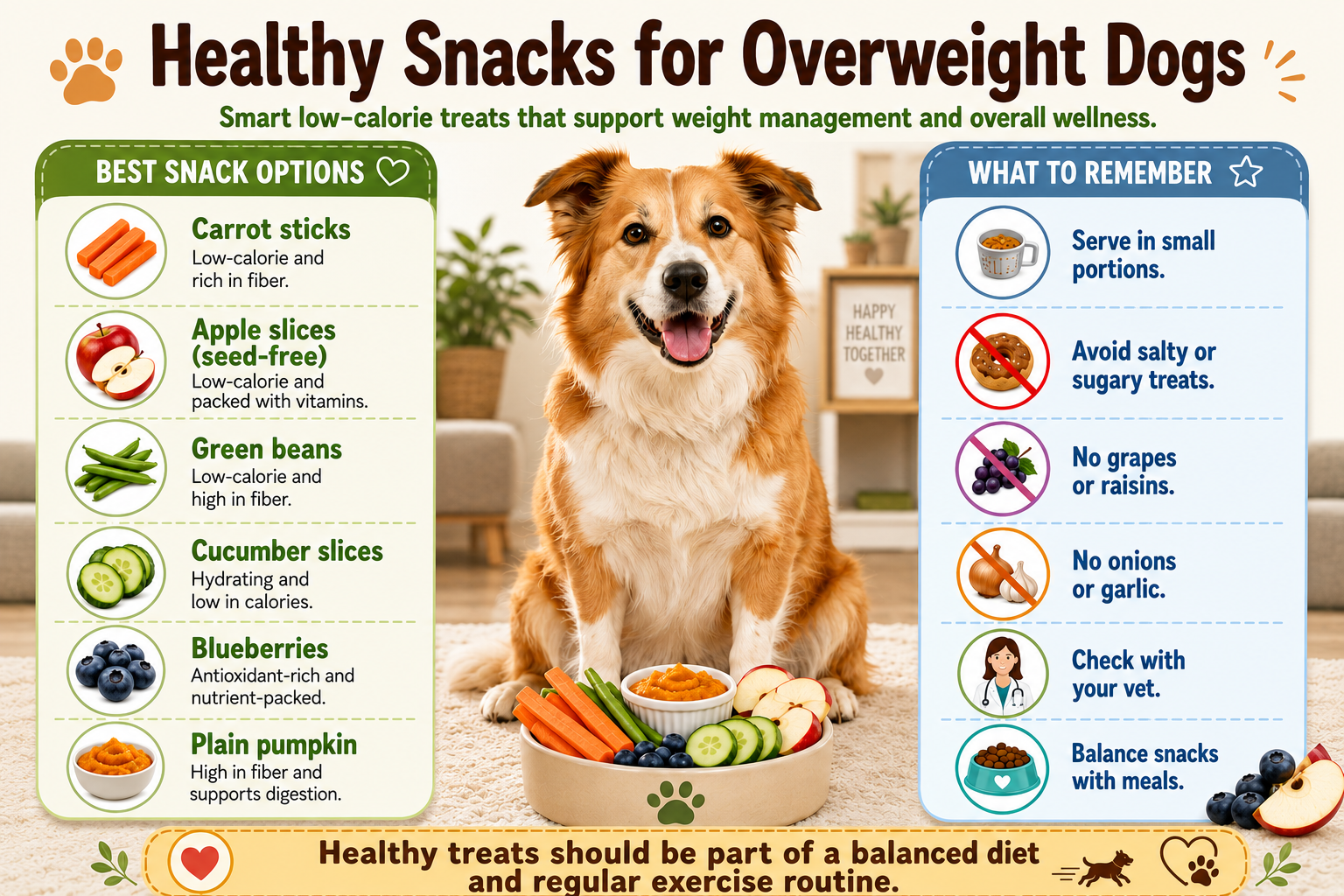
Plenty of everyday foods make light, low-calorie snacks. Options many owners reach for include:
- Small carrot pieces
- Cucumber slices
- Green beans
- Apple slices without seeds
- Blueberries
- Plain cooked pumpkin
- Small pieces of lean cooked chicken
- Vet-approved low-calorie treats
One important reminder: every dog is an individual. Some have allergies or medical conditions that rule certain foods out, so do not assume any snack is right for every dog. Offer anything new in tiny amounts at first, see how your dog handles it, and ask your vet if you have doubts.
Low Calorie Dog Treats: What to Look For
Shopping for low calorie dog treats gets a lot easier once you know what to scan for on the package:
- Look at the calories listed per treat
- Pick products with short, simple ingredient lists
- Steer clear of high-fat treats
- Skip sugary treats
- Break treats into smaller pieces so one goes further
- Save treats for training moments rather than feeding them freely
A handy habit is to snap larger treats into halves or quarters. To your dog, the reward is the moment, not the size of the morsel.
Dog Weight Loss Treats: Are They Helpful?
Plenty of products carry a “weight” or “light” label, and they do have a place. When dog weight loss treats are truly low in calorie and given in measured portions, they can slot neatly into a careful routine.
Just keep your expectations grounded. A treat, however it is marketed, will not melt away the pounds on its own. Dog weight loss
treats can support a lower-calorie day, but lasting results come from the combination of proper meals, regular activity, and your vet’s guidance. Think of these treats as a teammate, never the whole game plan.
Snacks to Avoid for Overweight Dogs
Some foods are simply too rich, and others are unsafe for dogs at any weight. For an overweight dog in particular, leave these off the menu:
- Fatty meat scraps
- Large amounts of cheese
- Sugary biscuits
- Processed human snacks
- Fried foods
- Chocolate
- Grapes and raisins
- Onions and garlic
- Anything containing xylitol
- Too many peanut butter treats
A handful of these, chocolate, grapes, raisins, onions, garlic, and xylitol, can be genuinely dangerous to dogs, not just fattening. Keep them stored safely away and never offer them as a snack.
How Many Treats Should an Overweight Dog Have?
There is no magic number that suits every dog. The right treat allowance shifts with your dog’s size, breed, age, activity level, and any health conditions, which is exactly why exact calorie plans should come from your vet rather than a general article.
A safe guideline does help, though: treats should only be a small slice of your dog’s overall daily diet, with the bulk of nutrition coming from proper meals. For portion advice fitted to your dog, your veterinarian is the right person to ask.
Serlig Tips for Healthier Dog Snacking
Serlig is all about easy, practical pet-care guidance, and snacking is a great place to start small. A few simple habits go a long way:
- Keep each treat small
- Reach for vegetables as light, low-calorie choices
- Measure snacks instead of eyeballing them
- Resist handing over table scraps
- Mix in play and praise as rewards, not only food
- Keep fresh water within reach
- Note your dog’s weight changes over time
- Check with a vet before launching any weight-loss plan
Consistency is the real secret here. These Serlig habits are easy to keep up day after day, which is what makes them work.
Homemade vs Store-Bought Healthy Dog Snacks
Both homemade and shop-bought snacks can fit a healthy plan. The table below lays out the trade-offs at a glance.
| Snack Type | Benefits | What to Watch |
| Homemade snacks | Simple ingredients and portion control | Must avoid unsafe foods |
| Store-bought treats | Convenient and easy to use | Check calories and ingredients |
| Vet-approved treats | Better for dogs with health concerns | Ask your vet for guidance |
| Fresh vegetables | Often low calorie | Introduce slowly and safely |
Most owners end up mixing and matching. Fresh veggies and vet-approved treats often become the everyday go-to, with store-bought options saved for convenience.
Healthy Snack Ideas for Training
Watching your dog’s weight does not mean training rewards have to stop. You simply make each reward smaller, or skip food altogether some of the time. Good training rewards include:
- Tiny carrot pieces
- Small low-calorie treats
- A few pieces of kibble set aside from the daily meal allowance
- Warm verbal praise
- A quick burst of play with a favorite toy
Pulling training kibble from the daily food allowance is a neat trick. Your dog still gets rewarded, and no extra calories sneak into the day.
When to Talk to a Veterinarian
Your vet is the best guide for your dog’s overall health. It is worth booking a chat if:
- Your dog is putting on weight quickly
- Your dog always seems hungry
- Your dog’s energy is low
- Your dog shows signs of joint pain
- Your dog has diabetes or another health condition
- The weight is not coming off despite your efforts
- You are unsure which snacks are safe to give
A vet can check for hidden causes and help you shape a safe, realistic plan built around your individual dog.
FAQs About Healthy Snacks for Overweight Dogs
FAQ 1: What are the best healthy snacks for overweight dogs? Light, dog-safe options work well, such as small carrot pieces, cucumber slices, green beans, blueberries, and vet-approved treats. Always introduce anything new slowly and in small amounts, and check with your vet first if your dog has allergies or a health condition.
FAQ 2: Are low calorie dog treats good for weight control? They can be, when given in small portions. On their own, though, they are not enough. Low calorie dog treats only help as part of a complete weight management plan that also includes balanced meals, regular exercise, and guidance from your veterinarian.
FAQ 3: Can overweight dogs eat fruits? Certain fruits are fine in small amounts, like apple slices without seeds and blueberries. Others must be avoided completely, including grapes and raisins. Add any fruit gradually, keep the portion tiny, and ask your vet if you are not sure whether it is suitable.
FAQ 4: Should I stop giving treats to my overweight dog? Usually not. Rather than cutting treats entirely, switch to smaller, healthier ones and lean on praise, toys, and play as rewards too. That keeps your dog motivated and happy while still supporting weight goals. Your vet can help you find the right balance.
FAQ 5: Can dog weight loss treats make my dog lose weight? No treat causes weight loss on its own. Dog weight loss treats can support a lower-calorie routine when used in controlled portions, but diet, activity, and veterinary guidance remain the real drivers. Treats are a helpful piece of the plan, not the plan itself.
Conclusion
Overweight dogs can absolutely keep enjoying snacks, as long as the choices stay smart, safe, and portion-controlled. Favor low-calorie options, keep unsafe foods well out of reach, and remember that a kind word or a game can be just as rewarding as a bite.
Serlig encourages every pet owner to choose treats thoughtfully and to team up with a veterinarian on a safe, sustainable weight plan. With a little consistency and the right support, snack time can stay a joyful part of your dog’s day while their health keeps moving in the right direction.